


 Francais
 Deutsch
 Italiano
Refine Your Search
V2 stock footage and images
- Showing 7027 to 7032 of 9941 results more
more Hide
Hide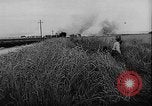
German Ju 87 aircraft dive bombing on suburb area of Warsaw in Poland during Warsaw Uprising.
German Luftwaffe Junkers Ju 87 aircraft bombing suburbs of Warsaw in Poland during 1944 Warsaw Uprising of World War 2. German soldier looks at bombing raid from a bunker. Formation of German Ju 87 aircraft attack large buildings in suburbs of Warsaw. Explosions on two buildings targeted. Aerial closeup view of Ju 87 dive bombing intended target building. Massive explosion as building blows up. Fire and smoke and debris in the air.
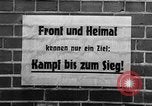
Propaganda Minister, Joseph Paul Goebbels speaks at Rhineland tank factory in Germany; review of Tiger II tanks
Joseph Paul Goebbels addresses German workers, officials and some soldiers at Rhineland tank factory in Germany during World War 2. Posters on wall with German slogans. The Nazi symbol with 'Koln' written under it. (Speech possibly in Cologne?). Minister of propaganda Joseph Paul Goebbels speaks while large crowd of audience listens carefully to Propaganda Minister's speech. Scenes changes to exposition and review of a large number of German Tiger II tanks (King Tiger), being displayed for dignitaries to review. Closeup of tank commander standing up through open hatch in turret as his tank rolls by scores of other Tiger II tanks in formation on a large field.
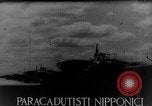
Japanese paratroopers attack Palembang in Dutch East Indies during World War II.
Japanese attack on Palembang, Dutch East Indies, during World War 2. Japanese paratroopers debark from a plane before an attack on oil field in Palembang, Dutch East Indies. Fleet of Japanese aircraft in flight. Pilot and co-pilot seated inside the aircraft. Japanese paratroopers descend on ground with parachutes. Paratroopers run and gather their equipment after descending and engage in fire fights. A destroyed American aircraft is seen. smoke rising from Japanese bombardment of the city and oil processing installations.
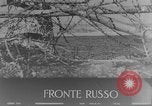
German troops fire machine guns and artillery on Russian Front.
German troops advance with heavy artillery and tanks on Eastern Front against Soviet Russian soldiers in World War 2. Close up views of German troops and tanks. German soldiers form bucket brigade to put out fire in a small building using water pulled from a hole in the ice of a frozen lake. Close up of German tank hatch opening and German soldier looking out top of tank. German soldier inside tank operating tank. German gun crew fires machine guns. German troops fire artillery and German tanks fire on Russian positions. Shells hitting target area. German soldier fires machine gun from bunker. German soldier in seated, legs extended position operating a 20mm Flak 38 antiaircraft gun in an infantry support role. German soldiers putting on heavier winter coats. German Sturmgeschütz III Ausführung G (StuG III Ausf.G) assault gun advances. Dead Russian soldiers on ground.
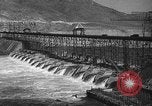
Workers clear towns, farms and forests to make way for rising water behind Grande Coulee dam in Washington.
Area cleared for Grande Coulee dam in Washington. 2,400 workers clear entire towns, farms and forests to make way for the rising water behind the dam. A group of men work in the field. A house is burned down. The owners hug and cry looking at their burning house.

United States Army soldiers use sound deception to deceive the German in Film 'Sonic Deception'.
Film 'Sonic Deception' shows the use of sounds to deceive the enemy (sometimes described as the "Ghost Army" in World War 2). Dramatization shows United States troops crossing river in small boats and arriving on beach. They establish beachhead on river bank and defeat German troops located there, having arrived by suprise. Film recounts through actors how a German spy at a German army corps headquarters informs about the presence of United States tanks and trucks. Film demonstrates how sound recordings were used by U.S. soldiers to create false impression of troop activities including bridge building and tank and vehicle movements, in order to serve as a decoy and mislead Germany enemy forces about U.S. Army activities. Dramatization shows German officials consulting and looking at maps. German soldier looks through binoculars and informs officials through phone. Tanks cross a bridge and artillery on field. Actual scenes of front gate of Army Experimental Center station headquarters at Pine Camp in Great Bend, New York (upper New York State). U.S. Army soldiers are shown recording via microphone the sounds of actual bridge construction at the center. The microphone routes to a recording truck where a turntable for pressing recordings is running, creating a phonograph recording of the bridge building decoy sounds. Recording of other sounds is shown, including sound of a bulldozer at work, sounds of men unloading trucks, and sounds of tanks crossing a bridge. Soldier is seen selecting a phonograph record from the Army Experimental Station Library.
CRITICALPAST.COM: About Us | Contact Us | FAQs - How to Order | License Agreement | My Account | My Lightboxes | Shopping Cart | Advanced Search | Featured Collections | Website Terms & Conditions | Privacy Policy ©2026 CriticalPast LLC.
License Agreement |
Terms & Conditions |
Privacy Policy
©2026 CriticalPast LLC.