


 Francais
 Deutsch
 Italiano
Refine Your Search
V2 stock footage and images
- Showing 7081 to 7086 of 9941 results more
more Hide
Hide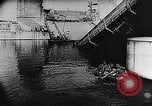
German troops attack and invade Holland during World War II.
German troops invade Holland during World War 2. German soldiers seen crossing a river, in small boats, next to destroyed bridges, during the Nazi invasion of the Netherlands They move quickly past buildings in a city. Momentary Glimpse of a Dutch marine defending a bridge over the Waal river in Rotterdam. He is firing what appears to be a Lewis machine gun with a protected cover over its magazine. Otherwise there is no sign of armed resistance to the German troops. A bomb, dropped from an unseen German bomber, creates a huge explosion that sends smoke billowing into the air. Aerial view of a squadron of German Ju-87 Stuka dive bombers in flight. A formation of German Heinkel He 111 bombers in flight. Closeup of He 111 in flight. German paratroopers jumping from Junkers Ju-52 trimotor transport aircraft. Closeups of the Ju-52s. Guns and ammunition airdropped, and floating to ground in the city, where they are gathered up and employed by German ground troops. A group of paratroopers on a bridge where a supply parachute is seen entangled and hanging by its shroud lines. Explosions in distance. German tanks, and Ju-87 dive bombers in action. German heavy artillery firing. Buildings being destroyed by bombing in Rotterdam. Civilians fleeing their homes. Lines of civilian refugees clogging roads, including a group of nuns in habit. Bombs seen falling from He-111 bombers. View from a bomber of explosions below. Various targets being bombed, including a ship in the Rotterdam harbor. Nightime views of the city of Rotterdam in flames. German aerial reconnaissance views of the destroyed city following the bombings. Dutch military officer proceeding to formally surrender.
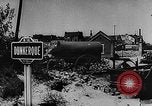
Allied evacuation from Dunkirk, France, during World War II.
Evacuation of Allied Troops at Dunkirk, France, during World War 2. Opening scene shows black smoke rising from beach area. Sign reads "Dunkerque". A German Henschel He 126 aircraft rolls over and dives toward Dunkirk. A formation of British Spitfire aircraft are seen, providing air cover over the beach during the Allied evacuation. They have dogfight with a German Fockwulf FW 190 fighter and engage a Heinkel He-111 bomber, and down a German Dornier Do 17 bomber. Allied antiaircraft guns firing from the beach area down a Henschel He 126 aircraft. Contrails in the air from dog fighting airplanes. Gunners fire from open cockpit airplanes. An Allied airplane is downed and crashes in an explosion. German Ju 87 (Stuka) dive bombers dive on targets. View from cockpit of one aiming for a transport ship. The plane pulls out and releases a bomb that explodes in the water next to the ship. View from distance of bombs exploding on a ship. British ships and boats of all kinds being employed to evacuate Allied forces. Soldiers being helped to board them, including some wounded on stretchers. Survivors from bombed ship make way in lifeboats. More smoke on the horizon from bombed ships. A wrecked British Spitfire on the beach. A crashed German Messerschmitt Bf 109 on the beach. A crashed German Heinkel He 111 bomber, inland. View of bomb damage in City of Dunkirk. Roadsides littered with abandoned Allied vehicles and equipment. A dead Allied soldier lying next to a truck. Abandoned antiaircraft guns and variety of military equipment left on the beach.

U.S. President Roosevelt emphasizes on increasing expenditure on Army during his annual message to the Congress,Washington D.C.
Congress hears U.S. President Franklin D Roosevelt's annual State of the Union message in Washington D.C. President Roosevelt talks about how no one expects the United States to send American youth again to fight on the soil of Europe (to be involved in World War 2) and he asserts that is still the United States position "for nobody expects such an undertaking." He recalls that President George Washington warned against entangling foreign alliances. He calls on congress to levy sufficient additional taxes to meet emergency spending needs for national defense (due to threat of war). Members of the Congress clap during President's State of the Union speech.

Fire fighters clear debris and search for bodies following Marlborough Hotel fire in Minneapolis, Minnesota.
Fire in the Marlborough Hotel (1301 2nd Ave S, Minneapolis, MN 55404, United States), built in 1890, in Minneapolis, Minnesota. Fire blaze damage visible all through the apartment hotel. Snow and ice cover vehicles and buildings nearby. Fire fighters dig to get the bodies of the victims. They clear the debris. (World War II period).
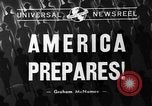
United States engineers make warplanes at Chanute Field, Illinois.
United States engineers at Chanute Field, Illinois. Engineers and war production workers building and assembling aircraft engines and airplanes inside an aircraft factory, early in World War 2, before America's entry into the war. Americans build equipment to aid allies and prepare for defense as war accelerates in Europe during World War II. Banks of spark plugs being tested, men assembling engines and propellers for airplanes. Man testing gear for lowering landing wheels on aircraft.
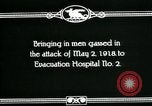
Soldiers affected by a poisonous gas are brought to Evacuation Hospital and advanced field hospital at Vesle Front, France.
A United States Army training film about defense against chemical warfare. U.S. soldiers affected by a poisonous gas in World War I are brought to Evacuation Hospital number 2 after an attack in 1918. United States troops put wounded soldiers on army trucks. Wounded soldiers at the advanced field hospital of the Fourth Division at Vesle Front, France in August 1918. (World War 1. World War I. WWI.)
CRITICALPAST.COM: About Us | Contact Us | FAQs - How to Order | License Agreement | My Account | My Lightboxes | Shopping Cart | Advanced Search | Featured Collections | Website Terms & Conditions | Privacy Policy ©2026 CriticalPast LLC.
License Agreement |
Terms & Conditions |
Privacy Policy
©2026 CriticalPast LLC.