


 Francais
 Deutsch
 Italiano
Refine Your Search
V2 stock footage and images
- Showing 7507 to 7512 of 9941 results more
more Hide
Hide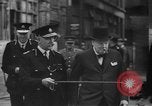
King George VI and Winston Churchill inspect blitz-ravaged areas in London, England during World War II.
Aftermath of early German blitzkrieg bombings in England during the Battle of Britain in World War 2. King George VI and British Prime Minister Winston Churchill inspect damage and seek to raise morale of citizens. Two British citizens stand in the doorway of an Anderson Shelter air raid shelter, unharmed, with much debris from a bombing around them. Crowd gathers to look at the dignitaries. Churchill, smoking a cigar, talks to fire fighters who have hoses trained on a building fire. Ruined buildings and debris on street. A car rammed into the debris.
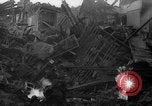
Wreckage and firefighting in London following Germany Blitz. Scene of devastation as worker clear rubble at bombed house.
Aftermath of Nazi blitz bombings on London, England during World War 2. Debris piled up. People in a street. A bombed house as smoke rises from it. Auxiliary Fire Service sprays water to extinguish fire. ARP men clear away rubble.
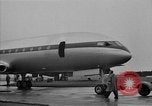
Prototype of the de Havilland DH106 Comet 3 Jetliner rolled out on the tarmac at Hatfield, Airfield in Hertforshire, England
British aviation manufacturer de Havilland unveils the prototype of the DH106 Comet 3, a jetliner model derived from the earlier DH106 Comet 1 and 2. The Comet 3 (G-ANLO) reverses into place on the tarmac of de Havilland’s H Hatfield Airfield in Hertfordshire, England. The Comet 3’s tail displays the aircraft identifier (G-ANLO) and the British Union Jack flag.
Displaced persons (mostly Russian) carry Russian flags and celebrate victory over Germany in Wiesbaden
A victory celebration in Wiesbaden Germany near the end of World War 2 in Europe. Mostly Russian Displaced Persons (DPs) carrying Russian flags gather in a street in Wiesbaden, Germany to celebrate the Allied victory over Germany. A band plays at the center of the people as men stand around. Russian women march. (See also prior clip clarifying April date, despite slate in this clip stating February.)
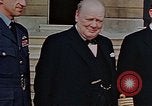
Winston Churchill and King George VI on 'Victory in Europe Day' in London, England.
"Victory in Europe Day" or VE Day, in London, England. Prime Minister Winston Churchill and King George VI along with other British high ranking officers outside a building on 'Victory in Europe Day'. Churchill and King George VI enter the building. People gather in large numbers outside Buckingham Palace. British citizens gathered around the Victoria Memorial and celebrating German surrender ending World War 2 in Europe.
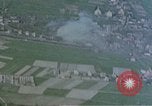
United States Army Air Force Group 362 strafes marshaling yard and fields and fires rockets at German targets.
Allies bombard German targets during World War 2. United States Army Air Force Group 362, Squadron 378, Pilot Easton strafing a railroad marshaling yard in Germany during World War II. Rockets fired. A train bombed and smoke rises. Targets in field areas bombed by pilot Easton.
CRITICALPAST.COM: About Us | Contact Us | FAQs - How to Order | License Agreement | My Account | My Lightboxes | Shopping Cart | Advanced Search | Featured Collections | Website Terms & Conditions | Privacy Policy ©2026 CriticalPast LLC.
License Agreement |
Terms & Conditions |
Privacy Policy
©2026 CriticalPast LLC.