


 Francais
 Deutsch
 Italiano
Refine Your Search
V2 stock footage and images
- Showing 8581 to 8586 of 9862 results more
more Hide
Hide
Scenes of Japanese attack on Pearl Harbor in World War II; launching of cargo ships and ships at sea
The legislative and maritime history of the U.S. Merchant Marine. Japanese air raid on Pearl Harbor in Hawaii on 7th December 1941. Dramatized view of Japanese airplanes in flight over Pearl Harbor. They drop bombs over the target area. Actual footage of Japanese attack on Pearl Harbor with heavy columns of smoke rising as ships explode. U.S. sailors on the deck of a ship. The activities at a U.S. shipyard. Launching in July 1942 of the SS Ocean Viceroy, built by Permanente Metals Corp in Richmond California for the British Ministry of War Transport. People gather at the shipyard as the SS Ocean Viceroy is launched. A ship convoy underway at sea of various cargo ships and Liberty Ships in World War 2. The U.S. flag flying from a flag pole on a ship. The sailors march on the deck.
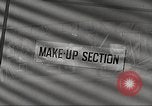
Make up artists apply make up on the faces of actors in a make up section in Culver City, California.
Hollywood activities as part of the war effort in World War 2: Activities of the First Motion Picture Unit of the United States Army Air Forces in Culver City, California during World War II. A sign board reads: 'Make Up Section'. Make up experts work in a make up room. They apply make up on the faces of actors to prepare them for crash scenes. An actor acting in a film. The actor seated in the cockpit of an airplane. His face shows scars and injury.
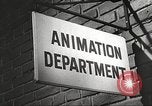
Animation artists prepare sketches at First Motion Picture Unit in Culver City, California; animation of how airplane flight works.
Activities of soldiers in the First Motion Picture Unit (FMPU) of the United States Army Air Forces in Culver City, California during World War 2. A sign board reads: 'Animation Department'. Cartoon animation artists apply their skills to the war effort, working inside the building. They make sketches on drawing sheets. Artists seen include Joe Smith and Gus Arriola, and possibly the back of Rudy Larriva and Jules Engel. Minute mechanical details of aircraft, armament, and equipment are illustrated with the help of drawings and animation sequences in films. Narrator describes how complicated technical subjects can be illustrated. The explanation of the theory of flight with the help of an animation. Animation shows factors responsible for the flight of an airplane. Animation describe how thrust, drag, lift, and gravity all affect flight and aerial physics.

Personnel edit films using moviolas in the editorial department of the First Motion Picture Unit in Culver City, California.
Activities during World War 2 of the First Motion Picture Unit of the United States Army Air Forces in Culver City, California. A sign reads: 'Editorial Department'. Men at work inside. View of many motion picture film cans. The personnel are seated at moviola machines and seen editing various films scenes to make a film. View of the moviola in use from over the right shoulder of one of the film editors.
"Movies at War" about Motion picture films being made by and for the U.S. Army during World War II.
Moviemaking and distribution by the U.S. Army during World War 2. Scenes of New York City skyline at night and street scenes in daytime. U.S. Servicemen in South Pacific, the arctic, and in Egypt. Soldiers marching and watching training films.Scenes on set of training film being made about care of wounded. Soldiers checking out films and motion picture projection equipment at an Army library. Comments regarding popularity of the "Fighting Men," "Why we fight,"and other series of war time motion pictures. Soldier technicians inspecting and repairing films and equipment. Discussions and sample slates of films translated into various languages. Views of soldier actors, producers, directors, and technicians enter movie studio buildings to produce films.
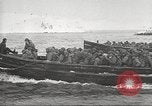
Centers for distribution of U.S. Army films throughout the world in World War II.
Scenes of U.S. troops training in amphibious assaults and manning and firing antiaircraft guns. Animated map showing U.S. Army film distribution centers in various countries during World War 2.
CRITICALPAST.COM: About Us | Contact Us | FAQs - How to Order | License Agreement | My Account | My Lightboxes | Shopping Cart | Advanced Search | Featured Collections | Website Terms & Conditions | Privacy Policy ©2026 CriticalPast LLC.
License Agreement |
Terms & Conditions |
Privacy Policy
©2026 CriticalPast LLC.