


 Francais
 Deutsch
 Italiano
Refine Your Search
V2 stock footage and images
- Showing 8665 to 8670 of 9862 results more
more Hide
Hide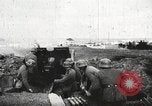
Germany attacks Poland, September 1, 1939, precipitating World War II
The German attack on Poland, at Danzig (Gdansk) triggering World War 2. Views of German artillery firing at fort and buildings across a stretch of water. German artilleryman looking through periscopic binoculars. Smoke rising from the shelling. German troops firing machine guns. German battleship Schleswig-Holstein is seen bombarding Polish army defenses at Westerplatte. (The battleship had entered the harbor and anchored off Westerplatte, in August, under the false pretense of a friendly visit.) Columns of smoke rising from fires started by the shelling. German troops advancing toward Gdynia in armored cars and trucks. A German officer on horseback. A German soldier on a motorcycle. Two German Panzer II tanks moving down a muddy slope as invasion begins. Army vehicles on wet roads and infantry making their way across a shallow streams. Infantry marching along a road. Closeups of the German soldiers as they pass the camera. Officers in a staff car. View from a height of smoke rising from fires on the ground in distance, mixing with cumulus clouds above. (Note: some English narrative begins late in the film, around TC: 00:58)
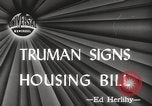
United States President Harry Truman signs housing bill in Washington D.C . that will help provide homes for the homeless.
United States President Harry S. Truman signs Housing Bill in Washington D.C., United States. President seated at desk as he signs the the Veterans Emergency Housing Act of 1946, during a housing shortage for veteran soldiers and their families after World War 2. Officials stand behind him at the White House. President Truman signs the bill that will help provide homes for the homeless. He speeds authorization of $250,000,000 for emergency homes.
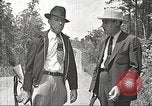
Mix of reenactment and actual footage shows Bob Alcorn and Ted Hinton shooting Clyde Barrow and Bonnie Parker in Louisiana
Retribution of Clyde Barrow and Bonnie Parker in Bienville Parish, Louisiana. Initial part of clip is reenactment showing two of the posse members, Bob Alcorn and Ted Hinton, shooting Clyde Barrow and Bonnie Parker. Bob Alcorn and Ted Hinton hide in bushes and wait for the couple's car. They open fire on the car with Clyde Barrow and Bonnie Parker in it. Actual footage follows of the bodies of Bonnie and Clyde inside the car. Bullet holes in the car. View of two sawed off shot guns, 2 Machine rifles, 10 automatic pistols found in the back of Clyde Barrow's car. Close up view of bullet holes in windshield and door of car.
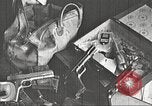
Ammunition, guns, and license plates of many states inside Clyde Barrow's car near Arcadia, Louisiana
Scenes following the death of Clyde Barrow and Bonnie Parker in Bienville Parish, Louisiana. Close up views of two shot guns, 2 machine rifles, 10 automatic pistols found inside Clyde Barrow's car. Bonnie Parker's vanity box with feminine make-up items. Various license plates from different states found in the car. Scene on streets of Arcadia Louisiana, with a crowd gathered in front of the combination Furniture store and Undertaker company where the bodies of Clyde Barrow and Bonnie Parker were taken.
Vietnamese children in a zoo and the Capitol Military Assistance Command building in Saigon, Vietnam.
Vietnamese women and children at the Saigon Zoo and Botanical Gardens (2B Nguyen Binh Khiem Street, District 1, Ho Chi Minh City) in Saigon, Vietnam. Vietnamese children visit the zoo. They look at a python in the cage. Children drink an energy drink. United States soldiers take pictures of the Vietnamese children. Vehicles parked in front of the City Hall building. Men ride bicycles. Board reads Capitol Military Assistance Command'. Antennas on roof of the building. (Vietnam War period).
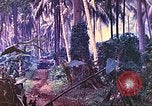
U.S. Marines Invading Talasea, New Britain, Papua New Guinea, during World War II
U.S. 1st Marine division riflemen advance cautiously behind Sherman M4 tanks on a trail through heavy jungle in Talasea, New Britain, Papua New Guinea, during World War 2. Tank crews fire their guns point blank at Japanese positions. Marine in tank turret fires machine gun. Tanks rake side of trail with gunfire as they lead riflemen along the trail. They pass a metal building in Japanese installation.
CRITICALPAST.COM: About Us | Contact Us | FAQs - How to Order | License Agreement | My Account | My Lightboxes | Shopping Cart | Advanced Search | Featured Collections | Website Terms & Conditions | Privacy Policy ©2026 CriticalPast LLC.
License Agreement |
Terms & Conditions |
Privacy Policy
©2026 CriticalPast LLC.