


 Francais
 Deutsch
 Italiano
Refine Your Search
V2 stock footage and images
- Showing 8863 to 8868 of 9860 results more
more Hide
Hide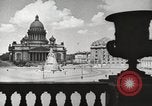
The German siege of Leningrad in World War II
Views about 10 months into the German siege of Leningrad in World War 2. Isaakievskiy (St. Isaac's) cathedral and other buildings on Vorovsky Square (Isaak Square) in Leningrad (St. Petersburg) as viewed from Mariinsky Palace. (They appear relatively unscathed.) The Monument to Nicholas I is in the center. Boats and ships are docked along the Neva River. Two youths stand atop a building and look at smoke rising across the river from buildings being shelled by German forces. Closeup of buildings being destroyed by German shelling. A small boy helps pick up rubble from the streets. A woman is helped to her feet by a Soviet soldier. Scenes of destruction everywhere. Broken windows, stones falling from buildings, an abandoned doll on a window sill. A dead child lying on stairs. A woman weeping. A young boy holding his hat in his hands and looking sadly in mourning. A mother with a baby. People standing about in sorrow and shock. 14-inch Soviet coastal guns firing, from under camouflage netting, at German positions.
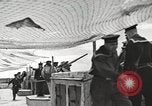
Soviet Hawker Hurricane Lend Lease aircraft shoot down a German Me-110 aircraft in World War II
Soviet sailors manning antiaircraft guns under camouflage netting on Black Sea coast, during World War 2. Soviet pilot outdoors, shaving. A Hawker Hurricane Lend Lease fighter plane parked in background. Armorers installing belt ammunition in Hawker Hurricane aircraft. Man fires flare gun pistol on the field, and pilots run to their aircraft. A pilot climbing into his cockpit, wearing a seatpack parachute. Pilots closing conopies of their aircraft. A flight of 3 Hawker Hurricanes in formation. A lone German Me-110 in flight. It is shot down, streams white smoke and then, trailing black smoke crashes into ground and explodes. A Hawker Hurricane landing on sandy airstrip. The Soviet pilot jumps from his cockpit and is congratulated by his commanding officer.
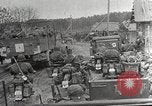
German army assault on a Soviet city during Operation Barbarossa in World War II
German forces are seen jamming a road towards a Soviet city as they invade during Operation Barbarossa in World War 2. Some trucks carry infantry. Others carry motorcycles and their drivers along with their equipment. Several German soldiers ride their motorcycles on the road. The German troops are in camouflage clothing. Some carry M42 light machine guns. A long line of horse-drawn wagons, with camouflaged loads, takes up the right side of the road, allowing mechanized vehicles to pass to the left. Huge black clouds from fires obscure the background. A truck carrying troops passes the camera. German troops ride in a personnel carrier towing a 3.7cm PAK 40 antitank gun. With heavy black smoke obscuring much of the area, German gunners fire a 37mm PAK 40 gun. Smoke rising from artillery fire. One shell strikes a tall smoke stack, knocking its upper half down. View from breech as German soldiers load and fire the 37mm PAK 40 gun. Explosions and fire are seen in Soviet town across a river. German infantry hunkered down with white smoke rising from fire burning in the field behind them. Some are partway up a slope. Next, German troops are seen firing artillery pieces from a bunker on a railroad track. Infantry walk along a railroad track past some boxcars. Contents of an open rail car are burning in the background. They pass destroyed buildings and contents burning in an open rail car. A Panzer III tank rolls into a village followed by two tractors pulling artillery field pieces. German Army infantry set up a 37mm PAK 40 gun in the backyard of a house and fire at Russian forces from there. Troops walk single-file close to buildings as they enter deeper into the city. More PAK guns being brought in and fired. Soldiers moving through the burning city. Flames leaping from windows and doors of a shop. Everything obscured by black smoke. Infantry moving toward the center of the city, taking cover as they go. More fires burning. The German soldiers work to clear a building of snipers, who are seen leaving the building with hands over their heads as they are taken under armed guard.
Film shows German forces in Operation Barbarossa on the Eastern Front from summer through fall, 1941, in World War II
Scenes of German forces operating on the Eastern front against the Soviet Union during Operation Barbarossa in World War 2. Film begins showing German 250 series half track armored personnel carriers camouflaged by pieces of shrubbery. They pull camouflaged artillery pieces. German infantry advance rapidly along with the armor. Glimpses of horses legs as they move on dusty road. A German soldier stands beside a Panzer III tank, alongside a road over which small military vehicles are traveling. Views of German forces making way with difficulty as Fall rains make it difficult for vehicles to move in the water and mud. German staff cars and half tracks slowed by the conditions. German troops on foot, in horse-drawn wagons and on bicycles, are Silhouetted against a light sky as they move along a ridge road.
Soviet units defend against German invasion on the Eastern Front during World War II..
Soviet units in action against the Germans on the Eastern Front during World War 2. Soviet soldiers, tanks and artillery concealed in a forest. Camouflaged Soviet trucks and tanks move along a road. Soldiers confer at a map. German Pz.III and Pz.IV tanks, of 11th Panzer Division, and trucks advance. A soldier looks through binoculars at an enemy position. A Soviet heavy gun is fired from a concealed position in the woods. Soviet soldiers crawl across a field and throw flaming grenades. They fire water-cooled machine guns. Wounded Soviet soldier being treated by medics. German Messerschmitt aircraft in flight. British Hawker Hurricane aircraft (provided to Soviets under lend-lease) takes off to engage German airplane. Flaming wreckage of German aircraft on the ground. A Soviet pilot records the victory in a log book. Soviet fliers smile, as they pose in front of radial-engined biplanes. Wreckage of German aircraft strewn on the ground. German prisoners being marched under Soviet guard.

USAAF B-25 Mitchell aircraft take off from an air base in China and drop bombs over Hong Kong during World War II.
Although narrator states "General Chennault's United States 10th Air Force," this film actually depicts Chennault's 14th Air Force formed in 1943. Its B-25s and P-40s are shown during an attack on Hong Kong during World War 2 U.S. Army Air Force B-25 Mitchell aircraft take off from an air base in China to attack Hong Kong. The aircraft in flight. Propellers of the aircraft. Aerial view of the area below. Bombs being released over Hong Kong. View of crew in cockpit of B-25.The aircraft landing at an air base in China after the mission. P-40s with tiger teeth paint job parked on the airport tarmac. Aircrews relax with refreshments on the ramp.
CRITICALPAST.COM: About Us | Contact Us | FAQs - How to Order | License Agreement | My Account | My Lightboxes | Shopping Cart | Advanced Search | Featured Collections | Website Terms & Conditions | Privacy Policy ©2026 CriticalPast LLC.
License Agreement |
Terms & Conditions |
Privacy Policy
©2026 CriticalPast LLC.