


 Francais
 Deutsch
 Italiano
Refine Your Search
V2 stock footage and images
- Showing 8869 to 8874 of 9860 results more
more Hide
Hide
Polish Refugees travel three years and 3 thousand miles to Iran during World War II.
Many Polish refugees are seen in the final phase of their monumental trek of three years and three thousand miles from Poland, during World War 2. Scene shifts to Poland in 1939, where polish refugees crowd roads carrying their belongings in wooden carts and other conveyances. They are seen at a rest stop where they obtain food. Animated map shows path of refugees fleeing East into the Soviet Union, following the German invasion in August, 1939. The path continues Southeast in 1941, as they flee from the German campaign, Operation Barbarossa, into the Soviet Union. Their journey continues along the west coast of the Caspian Sea, through the Caucasus, to Persia (Iran). Views of refugees arriving at the Persian border, where they are seen near many tents, and being provided with articles of clothing from British and American Red Cross Stations. Refugees donning new shoes and other items. Young girls having their hair styled. Refugees sit at long tables where they receive hot meals. A teacher conducts an outdoor class for Polish refugee children. Closeup of children at their desks. Refugee women are seen tilling soil to plant crops, while fathers and grown sons and daughters leave to join the new armies of the Polish Government in Exile. Views of Polish women, in uniforms marching and of uniformed armed Polish soldiers, as well becoming part of the Allied war against the Axis powers. Polish refugees at an outdoor shrine, offering prayers for the safety of their members in the military. New polish refugee arrivals at the Persian border being greeted by others, many of whom are family members.
Field Marshal Erwin Rommel visits home of Joseph and Magda Goebbels, during World War II, where he is welcomed by Goebbels' children.
German Field Marshal Erwin Rommel visits the home of Propaganda Minister Joseph Goebbels, while he has some time between command assignments, during World War 2. The six Goebbels children line up to greet him on the doorstep of their home, holding bouquets in their hands.From left to right, they are: youngest daughter, Heidrun "Heide" Elisabeth (who also salutes for the camera at start of the scene); Hedwig "Hedda" Johanna; Holdine "Holde"Kathrin; Helmut christian; Hildegard "Hilde" Traudel; and Helga Susanne (interesting that they all have first names beginning with H). Field Marshal Rommel arrives in a staff car. He is formally greeted by each child and accepts their flowers. He chats with Mrs. Goebbels (Magda), who also greets his military aides. Then they all enter the house.
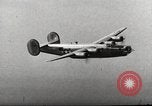
Ford B-24 bombers being assembled at Ford's Willow Plant in Michigan, during World War II
Production of Ford B-24 aircraft in Michigan, United States during World War 2. Ford B-24 aircraft in flight. Interiors of the Ford Willow Run aircraft manufacturing plant. B-24 bombers on an assembly line at the factory. Men and women war production workers are seen working on the assembly line, wiring, and assembling airplane component pieces. Workers install canopy, a twin-tail section and aircraft engines. A landing gear is seen as an aircraft moves on the assembly line. Propellers being installed. Workers polish a finished airplane. A woman cleans a bombardier's window.
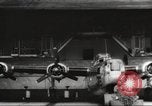
A New Ford B-24 bomber takes off for a test flight in Michigan, during World War II
Production of Ford B-24 aircraft in Michigan, United States during World War 2. A Ford B-24 aircraft rolls out of an assembly line. The aircraft taxis along a field. The aircraft takes off during a test flight. Aerial view of the ground below. The aircraft in flight.
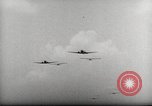
CG-4A gliders being assembled at Ford glider plant near Iron Mountain, Michigan during World War II.
Production of Waco CG-4A gliders at a Ford plant in Michigan, United States during World War 2. C-47 aircraft towing gliders. view of a glider from open door of a C-47. A CG-4A glider landing on a grass field and sliding to a halt just in front of the camera. A pilot seated in the front with a glass panel across the top half of the cabin. Soldiers march to load up in CG-4A gliders. A glider comes in for a landing in sand on a beachhead, followed by another. Exteriors of Ford glider plant near Iron Mountain, Michigan. Workers cover a part of a fuselage and set up wings. They attach wings to the glider.
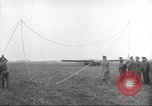
Scenes involving U.S. World War II CG-4A gliders
U.S. Army Glider operations in World War 2. Men set up two poles 20 feet apart on a field, for a so-called "Snatch" operation. (This involves a flying pickup, by an airborne tow plane, snatching the towline of a glider that is still on the ground. It is intended for glider retrieval. The actual operation is not shown in this sequence.) A C-47 aircraft takes off towards the camera, towing two CG-4A gliders. Close view from nearby airplane, of a glider being towed (its tow line visible).
CRITICALPAST.COM: About Us | Contact Us | FAQs - How to Order | License Agreement | My Account | My Lightboxes | Shopping Cart | Advanced Search | Featured Collections | Website Terms & Conditions | Privacy Policy ©2026 CriticalPast LLC.
License Agreement |
Terms & Conditions |
Privacy Policy
©2026 CriticalPast LLC.