


 Francais
 Deutsch
 Italiano
Refine Your Search
V2 stock footage and images
- Showing 2245 to 2250 of 9860 results more
more Hide
Hide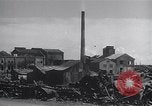
U.S. and Japanese collaborate to rebuild Japan during American Military Occupation, following World War 2
Japanese civilians and military watch American soldier using bulldozer to clear debris and begin reconstruction during American military occupation of Japan. Japanese soldiers and laborers working to clear the detritus of war and rebuild. Japanese businessman discussing reconstruction with an American military officer in his office. Signs in office reading: "Bid Room, P&C Div, Mr. P.E. Pagliocca." Japanese businessmen obtaining U.S. requests for bids on reconstruction projects. Bessemer Converter is charged and fired in Japanese steel plant. Hot steel Ingot is rolled out on cart. Hot ribbon of steel in placed into wire extrusion machine.
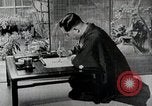
Child naming ceremony or Miyamairi at local Shinto shrine in Japan (WW2)
Parents take a newborn baby for a Miyamairi (literally "shrine visit") to pray for good health at a Shinto shrine in Japan, during World War II. A Japanese man writes his child’s name using a calligraphy pen. Man displays his child’s name in front of an altar. A Japanese couple takes their newborn child to a Shinto shrine. The couple and the child’s grandmother sit in front of a clerk. The grandmother holds the child as mother sits next to her. The Shinto priest recites a prayer and swings a tamagushi right and left. The priest gives holy sake to the mother for the child. She feeds sake (symbolically) to child and then she drinks it. Priest folds the paper of Japanese writing and gives it to the family.
Modern buildings in Tokyo, Japan shortly before outbreak of World War 2.
Tokyo, Japan before World War II. Views of bridge over river and birds fly near the Tokyo Imperial Palace. View of the Niju-bashi Bridge. Flock of birds flying in Tokyo. Japanese crowd in streets and residential area. Many views of modern buildings for government, offices, businesses, and residential areas of Chiyoda, Tokyo. National Diet Building (1 Chome-7-1 Nagatachō, Chiyoda City, Tokyo 100-0014, Japan) in Chiyoda City. Embassy buildings of foreign governments. Point of view street views of busy Tokyo streets as seen from a moving vehicle or streetcar (beneath streetcar or trolley wires). View of buildings at Ginza district. View of the iconic Wako Clock Tower (4 Chome-5-11 Ginza, Chuo City, Tokyo 104-0061, Japan) in Ginza. Night views of lighted neon signs in busy Tokyo urban center.
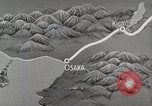
Ships at harbor in Kobe Japan, and passenger ship underway from dock in Japan shortly before World War 2.
Views of Japan soon before World War II. Animated map shows Osaka and movement to Kobe. Elevated sweeping views of Kobe Japan harbor, ships at harbor, freight loaded in ship and ship 'Argentina Maru'. Streets of downtown Kobe with buildings and shops, and 1930s automobiles passing by pedestrians. Dock and harbor views in Kobe. Goods loaded onto ships at harbor for transport. Boxes being hoisted by cranes onto ships. Japanese citizens in passenger cruise ship wave the flag of Japan. School children in uniform stand on docks and wave at departing ship as it leaves dock. View of ocean water churning behind ocean going passenger cruise ship underway. wish the troops in the ship 'Argentina Maru'. View of sea and cherry blossoms.

Gliders are retrieved by 9th Troop Carrier Command C-47s in Eindhoven, Netherlands (WW2)
Gliders are retrieved by TCC C-47s in Eindhoven, Netherlands during World War II. Animated map of Eindhoven. Gliders at Eindhoven, Netherlands. Men are in operation to overhaul the plane. 9th Troop Carrier Command C-47 lands. General P.L. Williams inspects the military operation. Men prepare for picking up gliders. Gliders are towed and ends of the ropes are tied to gliders and C-47's. A man gives signal for take off of C-47. Men use the gliders pick up device. Glider is ready for pick up. C-47 pick the glider up and flies with glider.
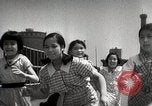
Japanese children practicing sports including martial arts like Kendo and swimming (WW2)
Small school girls play. Japanese children practice and compete in traditional Japanese martial arts Kendo with bamboo sticks. Japanese school children play tug of war and run through a line of showers on the way to a swimming pool to swim and play with a ball. (World War II period)
CRITICALPAST.COM: About Us | Contact Us | FAQs - How to Order | License Agreement | My Account | My Lightboxes | Shopping Cart | Advanced Search | Featured Collections | Website Terms & Conditions | Privacy Policy ©2026 CriticalPast LLC.
License Agreement |
Terms & Conditions |
Privacy Policy
©2026 CriticalPast LLC.