


 Francais
 Deutsch
 Italiano
Refine Your Search
V2 stock footage and images
- Showing 2251 to 2256 of 9860 results more
more Hide
Hide
Japanese adult and children in volunteers work corps toil in Japan (WW2)
Children and adults volunteer and are recruited to work for ammunition factories and community work in Japan during World War II. Japanese schoolchildren with brooms head to a Shinto shrine. Children and adults worship at the Shinto shrine. They bow in front of the shrine. Japanese volunteers salute the Japanese flag. Volunteers cut grass in the field. Schoolchildren carrying buckets. Middle school students pile up rocks, cut grass and bushes on the hillside and clean up the temple. Japanese student volunteers march in a parade on the beach.1945.

Japan's possible shortages of material for clothing in World War 2. Japanese domestic production of cotton, wool, and silk
Illustrated discussion of Japan's limitations in natural resources prior to World War II. Workers shown in textile mills which employed more than half of Japan's factory workers prior to the war, satisfying domestic and export needs. Analysis of the natural resources. Cotton thread is rolled on the spindles in the Textile mills in Japan. Textile mills produce fabric in Japan. Japanese women work in the textile mills. Bales of raw cotton imported from Japanese possessions in Korea and Formosa, and from the United States,India, Brazil and China. They are transported via horse carts and manually pushed on small rail carts to storage buildings for stockpiling. People cultivating some of the small amount of cotton grown in Japan. Horses and cattle used to pull plows in rice paddies. Pigs used as scavengers. Woolen fabric is produced from wool. Some of Japan's very few sheep being sheared for wool. Women working in fields of mulberry trees where silk worms flourish on their leaves. Views of the silk being spun onto spindles in a factory. Silk fabrics being stacked. Illustrated summary highlights Japanese domestic shortages of cotton, wool, and leather needed for clothing.
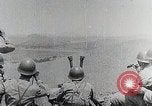
Role of metals in Japanese war against China during 2nd Sino-Japanese Conflict
Scenes of Second Sino-Japanese War, circa 1938. Japanese soldiers observing battlefield from a ridge. Japanese artillerymen firing field pieces. Flight of two Mitsubishi Ki-15-1 light bombers in formation, later called "Babs" by the Allies and known as a C5M in Japanese Navy usage. Aerial view of Japanese bombs falling on Chinese cities. Chinese citizens, including an injured woman, seeking shelter from bombing. Aerial view of Chinese ship being strafed by Japanese aircraft. The ship explodes. Downed Japanese warplanes burning. Scenes of destruction from bombing of oil facilities. Iron ore being moved in Japanese rail cars. Steel plants around Yawata, Japan. Numerous containers of molten steel inside a steel plant. Hot Steel ingots being moved. Animated map shows locations of iron ore deposits in Japan. Scrap steel being imported that, narrator states, helped boost Japanese wartime production to 12 million ingot tons in the Sino-Japanese war. More views of open rail cars moving alloying elements to a steel mill. Open mining using explosives. Mining operations for copper and bauxite (aluminum ore). Japanese miners shoveling ore by hand into open rail cars. Open rail cars moving in both directions on parallel tracks. (Note: Although some narration refers to 1941 Japanese production, the images are from earlier period.)
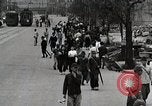
Demolished Office Buildings and Stores in Tokyo, Japan seen a month after the end of World War 2.
Shows Japanese crowd along street in Tokyo and demolished department stores and office buildings. Demolished safety deposit vault. Demolished buildings. Demolished Shinbashi theater.13 September 1945.
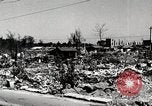
Demolished Warehouse in Shiba District of Tokyo Japan, soon after end of World War 2
Demolished warehouse in Shiba district, Minato Ward, Tokyo, Japan. B-29 in flight to the ruins of Shiba district. Bomb damage and devastation from aerial bombardment in World War II. Damaged Buddhist club. Demolished residential district.13 September 1945.

Demolished Homes in Shiba District of Tokyo city soon after end of World War 2
Demolished homes in Shiba district. Demolished Shiba district. Rubble on the ground from bomb damage and destruction. A woman cooks in a shanty dwelling during time of poverty.
CRITICALPAST.COM: About Us | Contact Us | FAQs - How to Order | License Agreement | My Account | My Lightboxes | Shopping Cart | Advanced Search | Featured Collections | Website Terms & Conditions | Privacy Policy ©2026 CriticalPast LLC.
License Agreement |
Terms & Conditions |
Privacy Policy
©2026 CriticalPast LLC.