


 Francais
 Deutsch
 Italiano
Refine Your Search
V2 stock footage and images
- Showing 2731 to 2736 of 9862 results more
more Hide
Hide
Training film shows importance of cryptographic security in sending military messages (WW2)
A United States WWII era training film about cryptographic messaging. Many tanks seen driving on a field as a fighter plane drops a smoke screen in front of them. Radio towers. Teletype operator typing. The words "Message Center" overlaid on view of War Department building. Speeding motorcycle on road at night. Major Doyle hands paper to soldier at his desk and says, "rush these priority messages by radio." Doyle instructs officers as he leads them into a secure gated officer and points to safes on wall next to men working together as a cryptographic team. He notes that, "we must assume that every message we send out...may be intercepted by a potential enemy." View of a spy listening on a radio at night. Doyle continues, saying, "the enemy is quick to take advantage of our mistakes...." Doyle describes the difference between secret, confidential, and restricted government information.
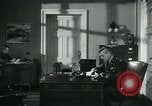
Officers read and then burn secret cryptographic messages during WW2.
United States training film about handling of cryptographic messages during WWII. Colonel receives secret documents in his office. Hand stamping of documents with word, "SECRET" View of warning page reads in part, "THE MAKING OF AN EXACT COPY OF THIS MESSAGE IS FORBIDDEN" A message center envelope is opened and then given to several different officers. Colonel sitting at his desk tears and burns a paper message and throws it into an ash can. Major Doyle reads sample secret message saying, "D-Day is 30th of October...." A soldier burns a paper message and stirs the ashes in his ash can. Colonel opens a secret message and then looks in a file cabinet. He burns a paper message. Major Doyle warns that "cryptographic and clear text versions are never pursed together in the same file" as he leads officer into a secure office and locks a steel gate behind them.
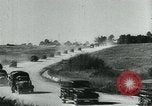
WW2 USA training film about protecting cryptographic messages
A United States military convoy on a road during WWII. Some footage dramatized. Aerial view of convoy from fighter plane. Smoke screen dispersed by plane next to military convoy. Fast moving tanks drive through smoke screen. A very fast tank takes air as it jumps over large mound and comes crashing to the ground. A tank blasted by howitzers loses its tread in explosion. Major Stewart Doyle talks to officers and notes that "it is the duty of every officer when capture is imminent to destroy all codes, documents, and cypher device settings...." In dramatization, a United States army officer transcribes a radio message onto a piece of paper and hands it to a soldier. The soldier, wearing goggles, gets onto a motorcycle and speeds away. View of German sniper shooting motorcycle messenger speeding down road. German soldier steals message bag. German cryptographic decipher team working. Close up of clock as time changes in montage. German radio officer receives message. Convoy on road. German pilots receive command in office. Allied convoy being attacked by fighter planes. Major Doyle reminds viewers to "know your rules on cryptographic security measures...."
Doreen Garwick, wife of a United States Navy officer, taken as prisoner by Japanese being interviewed in Manila, Philippines (WW2)
Interview with Doreen Garwick, wife of United States Navy officer Warren Garwick from Los Angeles, California. Garwick recounts her experience taken as a prisoner by Japanese forces during World War II in Manila, Philippines. During the interview she hopes of meeting her husband soon after the liberation of Manila.
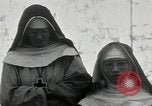
Roman Catholic nun Sister Helena expresses her relief after the Liberation of Manila from Japanese forces (WW2)
Sister Helena, a Chinese nun of the Roman Catholic Order of St Anne from Hankow, China (Shashi, Hubei, China) expresses her relief at the World War II coming to an end in Manila, Philippines. Standing beside her is interpreter Sister Ursula Mary. She speaks about her gratitude to the American forces and their experience living under a concentration camp in Manila in her mother tongue.
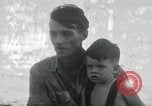
Churchill Scott during an interview states how his son was born at a Japanese concentration camp in Manila, Philippines (WW2)
Churchill Scott of Richmond, Virginia holds his son Richard during an interview with United States Army forces. Mr. Scott states how his son Richard was born in a Japanese concentration camp in Baguio, Philippines during World War II.
CRITICALPAST.COM: About Us | Contact Us | FAQs - How to Order | License Agreement | My Account | My Lightboxes | Shopping Cart | Advanced Search | Featured Collections | Website Terms & Conditions | Privacy Policy ©2026 CriticalPast LLC.
License Agreement |
Terms & Conditions |
Privacy Policy
©2026 CriticalPast LLC.