


 Francais
 Deutsch
 Italiano
Refine Your Search
V2 stock footage and images
- Showing 3097 to 3102 of 9862 results more
more Hide
Hide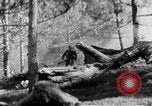
A U.S. Army training film about soldiers using gun and hand grenade during a war (WW2)
A United States Army training film about use of different weapons by soldiers of the United States in World War II. A soldier fires a gun and kills other soldier. Three soldiers see a dugout. They lay on ground and throw a hand grenade on it.
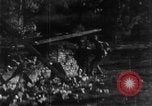
A U.S. Army training film about soldiers using different weapons to save their lives during a war (WW2)
A United States Army training film about use of different weapons by soldiers of the United States in World War II. A soldier hides behind a damaged building. He attacks a soldier from the back and kills him with a knife. Two soldiers in a close fight. One soldier hurts another's eye and kills him. A soldier sees another in a field and fires from a prone position. Players in a boxing ring. Soldiers fight in a field.
United States Army troops communicate with field telephones in the front (WW2)
'Your Job in the Signal Corps' discusses the importance of communication lines in the army during World War II. A sign on the door of the office of a Major General. U.S. Major General H. G. Ingles, Chief Signal Officer speaks about the U.S. Army Signal Corps and their role in all the three divisions of army. Major General Ingles speaks from his office. A soldier on top of a moving tank. Tanks in a field. Mechanized units in a field during a war. The troops communicate from the field. U.S. Army Air Force aircraft in flight and view of pilot and copilot in cockpit. Bomb bay door opens. Soldier on aircraft operates bomb sight device. Bombs fall from bombers and hit the ground. Artillery is fired. A U.S. soldier reads a map and talks over a field phone. Gun crew fires artillery. Railway gun firing. U.S. Nayg guns firing from ship. A boat lands on a beach head. Troops walk in a jungle. A soldier blows a whistle. Allied soldiers fire a bazooka on a moving German armored vehicle. Soldier sends a morse code transmission using a telegraph machine. A soldier calls with a telephone. Another soldier uses the radio for communication. Carrier Pigeons and rockets are also used to stay in touch. A hand fires a signal rocket. A messenger hand delivers a message. Officers making calls from their desks, field telephones and telephones on trees.
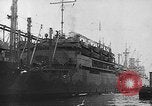
Infantry troops using field telephones; soldiers and civilian telephone operators connecting calls (WW2)
Communication equipment available to the United States Signal Corps in World War II. A ship at a port waits for freight to be brought aboard. Crates containing signal equipment from the United States Signal Corps at a dock. The freight is lowered. Bomber aircraft in flight. Infantry troops communicate from trenches and gun emplacements through telephone. An infantry soldier calls with field telephone. A soldier on the phone at an observation post. Soldiers and civilian telephone operators connecting calls on their switchboards. Men typing on typewriters. View of the U.S. Capitol in Washington DC. Animation shows communication to all parts of the world from the headquarters. Weathervanes and balloons of the Signal Corps. A man marks a weather report on a map at a station. Soldiers work with a landmine detector. A fighter plane takes off from an aircraft carrier. Soldiers moving artillery in a field.
The procedure of decontamination after a gas attack - a U.S. Army training film (WW2)
A U.S. Army Training film about Decontamination Procedures during World War II. The film is tilted 'Decontamination Procedures', 'equipment'. An aircraft attack with poison gas on trucks. The trucks go from the gas contaminated area to a safer place. The driver and the assistant driver of the truck, wearing gas masks, open the door and clean the steps and the door of the truck. Members of decontamination team arrive wearing protective clothes. They wash the truck with a solution of kerosene or gasoline. They remove the canvas cover from the truck and spread it on the ground. They put a warning sign board there. They spray the decontamination liquid all over the truck. Cans are refilled with non corrosive powder and chloride mixture, it is mixed well till it is transparent. It is then poured into cans and sprayed on the truck. Then truck is tested with a detector crayon. A 400 gallon apparatus is used to clean the truck. Then truck is washed with a mix of lime and water. It is mixed well and lumps are dissolved. It is then filled in cans. Then pressure pump is used to build pressure in the cans.
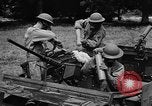
The procedure of decontamination after a gas attack on open vehicles and tanks in the United States (WW2)
A U.S. Army training film about decontamination procedures during World War II. Soldiers decontaminate an open vehicle like a half truck. They hand spray on the vehicle and rub it with a swab. They clean it on up wind side then turn it around and clean. Tanks are brought to a safer area and are turned facing the wind. A soldier opens a hatch and rubs the entrance with decontamination saturated rag. He then uses one o one half quarter sprayer. Then the soldiers clean the surface of the tank. They clean all the other parts of the tank especially openings air ways. A three gallon apparatus filled with non coronation and chlorinated lime is applied on the tank.
CRITICALPAST.COM: About Us | Contact Us | FAQs - How to Order | License Agreement | My Account | My Lightboxes | Shopping Cart | Advanced Search | Featured Collections | Website Terms & Conditions | Privacy Policy ©2026 CriticalPast LLC.
License Agreement |
Terms & Conditions |
Privacy Policy
©2026 CriticalPast LLC.