


 Francais
 Deutsch
 Italiano
Refine Your Search
V2 stock footage and images
- Showing 3103 to 3108 of 9862 results more
more Hide
Hide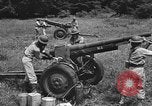
The procedure of decontaminating vehicles and persons in the United States (WW2)
A U.S. Army training film about decontamination procedures during World War II. A thick coat of contaminated solution is swabbed off with kerosene or gasoline. Then a solution of a non corrosive substance is applied. After it evaporates, the vehicle is washed with soap and water and is left to dry. The vehicle is then covered with a layer of oil. Machine guns and artillery are cleaned in the same way. Clothes and rags used for cleaning are then burned or buried. The land is covered with chlorinate lime. Men shuffle their shoes in the lime mixture. They then remove their shoes and clothes with the help of each other. The clothes are spread in air. They remove their socks and underwear and wash themselves in a stream. Then they wear fresh uniforms.
United States ships in the bay and troops and vehicles at the beach line of Iwo Jima, Japan (WW2)
D-Day on Iwo Jima, Japan during World War II. The beach area of Iwo Jima. Trucks underway. Ships in the bay. U.S. troops and vehicles in the foreground. Ships in the background. Wreckage on the beach.
Landing Craft Transporter (LST)787 and 1032 discharge troops on a beach of Iwo Jima, Japan (WW2)
D-Day on Iwo Jima, Japan during World War II. Beach area of Iwo Jima. Landing Craft Transporter (LST)787 with bow doors open, unloading 6-by truck into surf. Tractor pulls truck from ramp of 787. Beach master waves a flag. LST 1032 comes onto the beach. LSTs in the background. LST 1032 at beach. Ramp of boat comes down. Tractor pulls out. LST 787 discharge troops.
Training film about The Battle of Coral Sea between Japanese and United States Navy and Air forces in the Pacific Ocean (WW2)
A 1950 United States Naval Training Film about the 1942 Battle of Coral Sea in World War II. Film titled 'The Battle of The Coral Sea'. Diagram shows the location of Coral Sea on the globe. Phase I of the battle from 1st to 4th May described. II Phase from 4th to 7th May explained. III Phase 7th to 11th May, of the battle that saw double action from both sides discussed. Animation shows the area captured by Japan after the battle. Japanese cut communication between United States and Australia. Japanese battleship at sea. Japanese troops in field. Doolittle raid on japan, U.S. plan described through animation. Bombing of Tokyo. Japanese Commander in Chief Admiral Yamamoto on ship. Location of Commandant 4th Fleet. Japanese Commander gives information about U.S. planes. He talks about plans and strategies of U.S. for war. Allied forces on Japanese land. United States submarines in Japan. Japanese plan of defense explained. Two invasion forces of Japan, Moresby and Tulagi described through animation. Allies counter attack Japanese targets. Allied TF 17 and TF 11 in Japanese province. Allied attack on Tulagi, Japanese counter attack.
U.S. B-24 aircraft bomb targets in Japanese occupied Hanoi and Haipong, Indochina, during World War 2
U.S. Army Air Force B-24s bombing targets in Japanese-held areas of Indochina, during the Second World War. View of U.S. Army Air Force B-24 from waist gun position of another B-24. View from B-24 (below 10,000 feet) over an airfield. Waist gunner poses, without oxygen mask, at his machine gun (not firing). View from 17,500 feet as B-24s bomb a supply depot in Hanoi. Clouds of smoke rise from numerous bomb explosions. B-24s on mission to bomb Haiphong, Indochina. Aerial view of B-24 named "80 Days," with two dice (a Five and a Three) pictured under its name. Bombs falling from B-24s as they bomb smelting and foundry plants from 17,000 feet over port city of Haiphong. Smoke rising from targets.
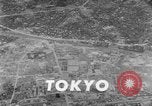
Ruins in the city, and free U.S. military prisoners leave for home, in Tokyo, Japan (WW2)
Bomb damaged cities of Japan during World War II. Aerial view of Tokyo. People in the damaged city of Tokyo. Ruins on ground. Damaged buildings. American planes fly over the Japanese Imperial Palace. People bow and pray in the garden. Group of happy, freed U.S. prisoners at the liberated Ofuna Japanese prisoner of war camp. Japanese prison guards bow as former prisoners leave in truck.
CRITICALPAST.COM: About Us | Contact Us | FAQs - How to Order | License Agreement | My Account | My Lightboxes | Shopping Cart | Advanced Search | Featured Collections | Website Terms & Conditions | Privacy Policy ©2026 CriticalPast LLC.
License Agreement |
Terms & Conditions |
Privacy Policy
©2026 CriticalPast LLC.