


 Francais
 Deutsch
 Italiano
Refine Your Search
V2 stock footage and images
- Showing 5059 to 5064 of 9941 results more
more Hide
Hide
Variety of scenes involving British air and sea activities early in World War II.
Under the glare of bright lights in otherwise pitch darkness, German prisoners of war are being taken aboard a British ship during World War 2. Some are wounded on stretchers. Change of scene shows a British Short Stirling bomber being "bombed Up" at an RAF station in the UK during World War 2. Closeup of bombs being transported on dollies. Closeup of a General Purpose 1000 pound bomb. British airmen raising bombs into the bomb bay of a Short Stirling bomber. British aircrew standing in full flight gear in front of their aircraft. One crewman holds up a toy monkey by the tail. Next the last few crew members are seen boarding the aircraft by a rear door. Pilots in the cockpit. Copilot looking back over his seat toward the camera. Tail gunner seen in his position with belt ammunition visible. The aircraft taxiing out from its parking place. Next a De Havilland DH102 (Mosquito II) with radial engines, is seen taking off. It appears to have a special sensor package fastened underneath it. View of the aircraft in flight directly overhead. A Hawker typhoon aircraft taking off and then performing aerobatics overhead. The De Havilland Mosquito II maneuvering overhead. A Supermarine Spitfire aircraft maneuvering overhead. Shift to gun camera footage from numerous British aircraft strafing German ships. Views of British submarines being welcomed as they return from missions. Closeup of the deck gun on one submarine. Battle damage on part of the submarine. The British Royal Navy White Ensign flying at the Conning Tower of a captured German submarine. Closeup of bearded German U-boat officer. Several sailors on deck of a British submarine. Men waving their caps and cheering on shore to welcome returning submarines.
U.S. Douglas A-20 Havoc (aka Boston) aircraft take off from airfield in North Africa during World War II
North African Campaign in World War 2. U.S. Army Air Forces fliers of the 47th Bomb Group, , assemble for mission briefing outside a large tent at Allied airfield in North Africa, in World War 2. They look at aerial photos of targets. Red Cross women hand out refreshments to fliers. Crew members climbing, via top canopy, into an A-20 solid nose model Havoc bomber (called Boston, in British service). The aircraft is named "Boomerang." Numerous bombs are painted on its side for missions completed. An A-20 (with glass bombardier nose) is starting engines, as fireguard stands nearby. It has 38 bombs painted on its fuselage. A-20s taxiing for takeoff. One, of the 97th Bomb Squadron, with number 80 painted on its tail, takes off. A parked A-20, number 72, of the 86th Bomb Squadron. An instantaneous glimpse of several British Spitfire aircraft parked on the field. The bombers are seen flying in formation overhead. Closeup of one inflight. Aerial view of target area below. Waist gunner firing downward from a B-26 aircraft.
D-Day invasion of Europe at Normandy by British and American allied air, sea, and land forces in World War II
Views from ships in the Normandy invasion convoy of World War 2. American flag above a ship and barrage balloon aloft. The British naval ensign on another ship. U.S. Motor torpedo boat USS PT-541 signalling by lights. Blinker light signals by Allied ship. Allied naval warships bombarding the French coast. Troops of 2nd assault wave climb down rope nets from transport ships. Allied fighter planes strafing German flak towers, german airplanes, and railroad trains. Allied troops leaving their transport ships in landing craft. Landing Craft Tank (Rocket),aka LCT(R) firing barrages of rockets. Allied B-26 and B-24 bombers attacking ground targets. Allied troops being hampered by obstacles and some falling to German gunfire as they hit the beaches of Normandy. Survivors of sunk and damaged landing craft being helped ashore. British landing craft firing at beach houses. U.S. troops pinned under shore cliffs at Omaha Beach. Soldiers giving blood plasma to wounded. British troops leaving landing craft. Allied troops on beachhead and moving inland. U.S. troops wading ashore. Troops wading ashore from LCI(L)-537. An American M4 Sherman wading tank (with intake and exhaust funnels) and equipped with dozer blade, labeled: DT-7.
U.S. reconstructs captured Japanese airfield at Munda Point, New Georgia Island, in World War II.
Wreckage and debris on Munda Point airfield, New Georgia Island, after its capture by U.S. forces during World War 2. Dead Japanese soldiers. Destroyed aircraft on island as result of U.S. bombing. Reconstruction workers clear and enlarge runway and operations tower as Americans improve and expand the airbase for their own operations. U.S. flag raised on pole. Seen are the first aircraft to land at Munda Point (on August 14, 1943). The first is a Royal New Zealand Air Force P-40 with letter K and white stripe on fuselage and a white tail. It is followed by a J2F Duck carrying U.S.Marine Brigadier General Francis P. Mulcahy to set up his new headquarters at Munda Point.
Views of Japan and its militarism from 1937 through 1943 . Construction of B-29 bombers in the United States
Volcanic eruption and creation of island of Japan. Glimpse of map of Japan. Gardens and rivers. Two men demonstrate samurai sword techniques. Japanese soldiers advance through smoke carrying rising sun flag. Chinese suffering under Japanese military occupation. Two executed with rifles. Japanese soldiers waving weapons and red ball flags. A DC-3 aircraft flying over a Japanese Pagoda. Vies of Old Japan. Farmers at work. One manually turning a water pump with his feet. A man using a pole to propel a boat. Modern methods adopted in Japan for terraced farming. Japanese building railroads. Japanese modern locomotive on South Manchurian Railway. in 1934. A Japanese twin engine bomber taking off. The Japanese ocean liner, Asama Maru, in the 1930s. Glimpse of numerous ships in Tokyo harbor. Western style architecture in modern Tokyo buildings. Neon lights on the Grand Palace Hotel and other establishments in Tokyo. Industrial smoke stacks. Women at work in a silk factory. Finished product stamped "Made in Japan."Steel ingots being made in a Japanese steel mill using scrap iron imported from the U.S.A. Chinese victims of 2nd Sino-Japanese War. Japanese troops on parade. Dead American Marines on shore of Tarawa Atoll in the Pacific in World War 2, killed in battle. Japanese high ranking officers reviewing troops on parade. Japanese warships underway. Troops parading beneath the Imperial Palace in Tokyo. American B-25 bombers on flight deck of the USS Hornet, headed to bomb Tokyo.A crew of Doolittle's Raiders standing by their plane. B-25 taking off from the Hornet. Formation of B-25s in flight. View from bomber of smoke rising from bombing of Tokyo below. Brigadier General Jimmie Doolittle pledging to repeat bombing of Tokyo. Supply train entering a Boeing Company defense plant. United States war production workers being scrutinized as they enter the facility and punching in at a time clock. Poster in the plant picturing a B-29 bomber aircraft on a message in German describing it as an instrument for a "Destruction Battle against the Luftwaffe." Bold letters, above, in English read: "They're Promised-Let's Deliver 'em!" And, below, the words: "B-29, Super Bombers." Slabs of aluminum sheets fill a factory room. Overhead traveling cranes move them. Workers in airplane manufacturing and assembly plant use heat and brakes to shape the aluminum sheets. Multiple views of the aluminum being machined and stamped to specifications. Wings being fabricated. Relatively unskilled labor using jigs to perform the work. Woman war worker operating an overhead crane moving a wing in the plant. Views of plane parts moving across the ceiling via cranes. Women workers driving rivets into wings. Men and women employees working inside fuel fuel compartments of wings. A floor full of engine nacelles. A floor full of 2200 HP radial engines. A skeleton nose section being fabricated. Midsections and bomb bays being assembled. Workers crawling through the airframe during aircraft assembly. A woman working on a connecting tunnel. Sub-assemblies made by contractors arriving at the plant. More views of Boeing employees including young, old, men, and women, at work in the plant.
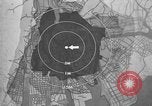
Damage in the range of 1 mile to 6 miles from impact in Hiroshima, following atomic bomb attack in Japan.
Damage in Hiroshima, Japan after the atomic bomb attack in August 1945. Views within 1 mile to 1.5 miles from center and 1.5 to 2 and 2 to 6 miles. Damaged wooden buildings in the 1.5 mile range. Damaged Hirosaki railway station. Damaged buildings. A steel beam twisted out of shape and a center wall stand undamaged. Building of a school with its north wall specially damaged. The school building is not damaged. A bent high school wall. Shattered glasses of a chapel on a hill 4 miles away from the center. (World War II period).
CRITICALPAST.COM: About Us | Contact Us | FAQs - How to Order | License Agreement | My Account | My Lightboxes | Shopping Cart | Advanced Search | Featured Collections | Website Terms & Conditions | Privacy Policy ©2026 CriticalPast LLC.
License Agreement |
Terms & Conditions |
Privacy Policy
©2026 CriticalPast LLC.