


 Francais
 Deutsch
 Italiano
Refine Your Search
V2 stock footage and images
- Showing 5095 to 5100 of 9941 results more
more Hide
Hide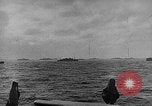
Montage of scenes showing the continuous close coordination between the United States and Britain during World War II
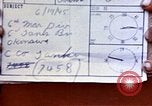
Film shows an invasion task force at sea overwritten by a slate reading, "Casablanca." Narrator speaks of January, 1943, in World War 2. View of the city of Casablanca in Morocco. U.S. President Franklin D. Roosevelt seated next to British Prime Minister, Winston Churchill as they meet in Casablanca, at the Anfa Hotel, January 14–24, 1943, during World War 2. Roosevelt wears a black armband on his left sleeve in mourning over the death of his mother, in 1941. Backs of Military officers seen from behind, with Churchill and Roosevelt on chairs in the background. Then a closeup of Roosevelt and Churchill seated with high ranking Allied military officers behind them, including U.S. Admiral Ernest King and U.S. General George Marshall. View from directly overhead of marching American soldiers. Huge number of British soldiers led by a Rolls Royce armored car, are seen walking across the desert, celebrating their victory over German forces at Tunisia. Prime Minister Churchill and President Roosevelt seated on the lawn in front of the White House during the third Washington Conference (code-named Trident) held in Washington DC, from May 12 to May 25, 1943. Closeups of both men. Scene shifts to a U.S. invasion task force in the Pacific. Glimpse of a Benson-Livermore class destroyer near hills in the Pacific. A navy Douglas Dauntless dive bomber flies over ships in an invasion task force. U.S. troops are seen in a Higgins Boat landing craft from the transport ship USS President Jackson (APA-18). Troops storming ashore from landing craft. U.S. troops firing artillery field pieces, and raising the U.S. flag on a captured island in the Pacific. Scene shifts to European theater, where an Allied warship is firing its guns during Allied invasion of Sicily, code named Operation Husky, 9 July – 17 August 1943. Amphibious assault taking place. A jeep is seen pulling an artillery piece through shallow surf. An army truck drives through shallow surf, out of a landing craft. Breech view of artillery gun being fired and shell ejecting. A shell exploding near the camera. Camouflaged antiaircraft guns firing. Series of brief scenes showing Soviet Russian infantry and tanks advancing against German forces in Russia. Next scene shows Benito Mussolini in military dress uniform, giving a speech, and then posing next to a Bronze statue of Roman emperor, Julius Caesar, in Rome, Italy, as troops march past him. A bust of Mussolini being pulled down. Rioting Italians. Axis defenders in Sicily, carrying a white flag as they surrender to Allied powers. Views of Lieutenant General Mark Clark and a Major General pleased at the surrender. American troops being cheered by Sicilians as they ride in jeeps. Italian men receiving food after the surrender, as a British soldier stands nearby. U.S. Army Air Force B-24 Liberator bombers in flight over the Northwest Pacific. Aerial view of Kiska in the Aleutians. B-17 flying Fortress bomber in flight with bomb bays open. Bombardier at his station in the aircraft he presses button to release bombs. Formation of B-24 bombers dropping bombs. View from aircraft of them exploding on the ground. Aerial view of surfaced German submarine being strafed by Allied aircraft. After several attacks it is sunk. B-24 bombers raining bombs over Germany. Huge explosions on the ground raising plumes of white smoke. Bombed out remains of Coventry Cathedral in England. Religious services being held in the ruins. View of the Pentagon building just outside Washington DC, and the British Prime Minister's residence at 10 Downing Street, London, England. View of Quebec Canada. A Canadian sentry on a hill. The Wolfe–Montcalm Monument in Governors' Garden beside the Château Frontenac, Quebec, Canada. Views of the Chateau Frontenac. Canadian troops patrolling around the Hotel. Royal Northwest Mounted Police on the grounds. Canadian soldiers with antiaircraft guns, scanning sky for possible threats. Armed couriers loading bags of official dispatches into a car. The dispatches being delivered to waiting aircraft. Censors examining postal mail. Conference attendees showing their passes to Canadian Mounted police officers at the hotel entrance. Closeup of an actual pass issued to a U.S. Army Major.
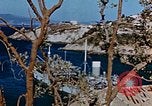
Wrecked buildings and rubble strewn streets at a port town in Italy during World War II
Scenes of destruction in Italy, during World War 2. Partially obscured by foliage, a ship is seen, anchored in cove on Italian shore of the Tyrrhenian Sea. Wrecked buildings at the shore. A destroyer (probably British) seen briefly offshore . An old woman. Refugees at side of road near a Bailey bridge over the Garigliano river. Sign reads: "Kimble Bridge." Woman with baby. Vehicles pass over the bridge. Civilians walk in streets. Horse-drawn cart passes. A young boy takes the hand of a little girl, as they walk through rubble strewn street and he guides her as they skirt around a skeleton in the rubble. Military tent set up with mosquito netting. ( Note: the area shown is likely in the vicinity of Monturno, near where the Garigliano river empties into the Tyrrhenian Sea. As part of the heavily defended German Gustav Line, this area suffered great destruction during World War 2.)
United States 6th Battalion tanks fire over plain in Okinawa, Ryukyu Islands.
Marines of 6th Marine Regiment 22nd Marines advance in Okinawa. Tanks move across plain. Tanks fire out over plain. M4A3 tank and Marines moves along road. Four M4A2 tanks move out from cover onto plain. M4A2 under cover of trees. Marine behind the turret of tank uses binoculars. (World War II period).
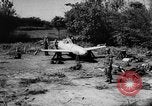
Captured Japanese suicide bomb rocket (Yokosuka MXY-7 Ohka) disassembled and disarmed by U.S. troops in Okinawa.
U.S. troops with captured Japanese suicide bomb rocket in Okinawa. Japanese suicide bomb (Yokosuka MXY-7 Ohka) is described and disassembled. Tail section is detached by men showing the rear units of bomb. Man works on cockpit of bomb. Men disarm bomb. (World War II; WWII;World War 2; WW2)
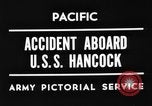
Firefighting and repairs aboard USS Hancock in the Pacific Ocean following bomb explosion from aircraft landing on flight deck.
Accident aboard USS Hancock (CV-19) in the Pacific Ocean. Fire breaks out on carrier when a returning TBM Avenger landed on flight deck of USS Hancock and one of its bombs exploded. Burning deck of USS Hancock. Men hose deck on carrier. Fire put out by firefighting crews. Wounded men on deck. Steel plates are laid over deck as emergency repairs. (World War II; WWII;World War 2; WW2)
Japanese plane makes a bombing run over hills of Okinawa.
Action in Okinawa. Japanese plane makes a bombing run over hills. Japanese plane attacks advancing U.S. Marine units on hill. Explosions on hill. Dogfight between American and Japanese plane. The Japanese plane comes down in flames and crashes on hill. Marines advance up the hill. Marine fires rifles at Japanese snipers hiding in village. (World War II; WWII;World War 2; WW2)
CRITICALPAST.COM: About Us | Contact Us | FAQs - How to Order | License Agreement | My Account | My Lightboxes | Shopping Cart | Advanced Search | Featured Collections | Website Terms & Conditions | Privacy Policy ©2026 CriticalPast LLC.
License Agreement |
Terms & Conditions |
Privacy Policy
©2026 CriticalPast LLC.