


 Francais
 Deutsch
 Italiano
Refine Your Search
V2 stock footage and images
- Showing 5173 to 5178 of 9941 results more
more Hide
Hide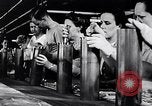
American women actively working and participating in the National Defense Program of the United States in World War II.
Wartime activities of women in United States during World War 2. American women war production workers busy in an ammunition factory helping men with war production. They check the shells at the munitions plant. A woman gives a lecture. A chart on wall. Other women attend the lecture. They wrap surgical dressings for the Red Cross. A woman gives blood to blood bank. Doctor and nurses take the blood in a glass container and put it in a box. The women participate in the defense program and war effort, filling many roles previously occupied by men fighting in World War 2.

Vendors of New York City, lower east side street markets, businesses and New York Stock Exchange stock market activity
German propaganda film released during World War 2 shows scenes in New York City during the Great Depression in the 1930s. Shows a woman being honored by a group of men in New York as she receives an award. A crowded shopping and market area of New York City, with street vendors and laundry service. An African American shoe shine man wearing a top hat finishes shining a customer's shoes, bows, and then performs a dance on the sidewalk. A busy shopping and market area on Orchard Street in the lower east side of Manahattan, with many stores including Guiradi's Antiques Sol Moscot Optical at address 119, Cohen's Optical at 117 Orchard Street, and others. Street area filled with push carts and market activity in a densely populated area of New York City. Workers inside a busy garment factory in New York. Hebrew signs in front of Jewish stores and businesses in New York. View of New York Stock Exchange floor with scenes of frenzied buying and selling as buyers and sellers yell their orders in a trading pit prior to the crash of the stock market in 1929. Hands of a man counting a pile of cash bills. View of Mayor Fiorello H. La Guardia talking to a man, a group of well dressed business men, and LaGuardia addressing a gathering of people. Clip is from an anti Jewish propaganda segment of a newsreel produced by Nazi Germany during World War 2.

OPM chief Knudsen visits Boeing factory in Seattle.
Chief of the Office of Personnel Management OPM Knudsen visits Seattle's Boeing manufacturing factory. Knudsen inspects factory accompanied with factory officials. This is probably Plant 2 on the Boeing grounds. Assembly line production of various Boeing planes goes on. Overhead view of 3 Boeing fuselages under construction. This is a few months before the United States' entry into World War 2.
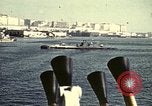
Activity in Port of Tunis, Tunisia, after it falls to Allies in World War II
Opening scene shows Port of Tunisia as viewed from a British warship in its harbor, during World War 2. Foreground shows QF 2-pounder 40-millimetre (1.6 in) British autocannon (commonly called "pom pom" and used as an anti-aircraft gun by the Royal Navy). An Italian submarine moves slowly through the harbor and docks. Sustained view of Italian sailor aboard a warship looking through binoculars. Italian Naval officer at the helm looking through binoculars. Closeup of another Italian naval officer with pipe in his mouth. Landing craft side by side at a stone pier. British soldiers disembarking from a ship onto a dock, with all their gear, and proceeding to the main pier. Change of scene shows a deep sea diver in suit and helmet being helped to descend into the water from a dock. As he sinks underwater, many bubbles rise from his air supply. Another view of a deep sea diver being prepared to descend. Men assist him with hoses and helmet.

Recap of slavery, the Civil War, and job integration in the United States, in the context of the civil rights movement.
African American and white children swim and play in an integrated swimming pool in the United States in the 1960's. A black man beside a white man working on an integrated engine car assembly line. A black shoe shine man. A black street sweeper. Narrator indicates that African American workers are in increasingly skilled jobs and supervisory positions. A black draftsman in an officer environment. A black bank manager gives an application to a black woman. Huey Newton leads the Black Panthers in a protest. Stills portray trade and transport of African American slaves. Stills show the Civil War in the United States, and aftermath of war showing blacks voting and as politicians during reconstruction. Footage of African American people working on farms in cotton fields picking cotton, including boy and girl child laborers picking cotton. Footage of a Rust Cotton Picker machine in operation as African American workers watch. American troops, including African American soldiers of the U.S. Army 369th Infantry "Harlem Hellfighters", marching in victory parade in the United States after returning from World War 1. View of segregated African American soldiers in the parade in New York City cheered by parade attendees. Brief scene with Henry Johnson on the side of the parade route being congratulated by civilians. (Johnson and Needham Roberts received the Croix de Guerre for exceptional heroism). Black and white workers entering or exiting a factory during World War 2. Black American troops and Tuskegee Airmen pilots in segregated units during World War 2. The Tuskegee pilots in uniform gathered together during a briefing on an airfield. View of U.S. military forces comprised of white and black personnel, integrated beginning in 1947. A white officer gives binoculars to a black soldiers.

Saga of the Allied invasion of Normandy in World War II, with emphasis on role of African American soldiers
Opening scene shows U.S. soldiers firing rifles as they advance in the hedge rows (Bocage) of Normandy after the D-Day invasion in World War 2. Lightning is seen as a storm begins. Various invasion ships and boats are seen being pummeled by wind and waves. Some ships are seen tilted against the shore and damage to beachhead installations is evident all across the shore the wake of the storm. Landing craft of various sizes are left where they had been driven by the storm onto the shore. Twisted steel and damaged boats are seen everywhere. Views of U.S. infantry advancing into the interior of Normandy, under fire. A Sherman tank camouflaged with foliage, moves past demolished building. Troops marching single file along the sides of a rural road. At TC: 00: 57, the film continues with enactments of German officers in conference. At TC: 01:06, the actual Normandy beachhead is seen again with troops and war materiel being delivered without port facilities. Amphibious 2 and a half ton trucks (DUKWs) are seen making their way from transport ships to the shore. View of cargoes being lowered from a transport ship to a DUKW. Views of crew on the ship's deck, including an African American operating the cargo hoist. Closeup of cargo net with supplies dropping into a DUKW. Closeup two soldiers (one an African American) riding in a DUKW. Trucks and cranes on the beach. A soldier operates a crane placing ammunition into a truck. Crew member on a transport ship passes Jerry cans of fuel to a soldier in a DUKW. An M36 tank destroyer (90 mm Gun Motor Carriage, M36) filled with soldier, drives from ashore from an LST. Numerous trucks gathered on the beachhead. Closeups of two soldiers at the front. Closeup of M36 tank destroyer moving toward the camera. Aerial overview of a beachhead. Soldiers with shovels fill holes in a roadway as trucks pass. A destroyed railroad yard. A destroyed airfield. A destroyed harbor. Destroyed rail line and communications lines at Valognes, in Normandy, France. African American soldiers using special equipment to string communications lines onto telephone poles. Closeups of them in vehicles designed for that purpose. Closeups of wires being unspooled. American soldiers connecting wires atop a pole. A group of African American soldiers working on telephone lines. Others are seen using mine detectors. An African American soldier operating a mobile crane. African American soldiers installing pierced steel plank (Marsden matting) on an airfield. A team of African American soldiers placing rails in place for a railroad. Others working on pipeline. One uses an acetylene torch to weld a pipe. Fuel gushing from a hose refueling an armored vehicle. The destroyed port of Cherbourg occupied by American troops. View a week later of the harbor in full operation. Cranes unloading a locomotive at the port. View of port operations on July 4, 1944. A German aircraft overhead and bombs exploding. More views of work being done on the port. Stockpiles of supplies at the port. A Sherman tank moving with infantry. Troops moving along sides of a road. An M36 tank destroyer is welcomed by local civilians as it moves through their town. A 75 mm Howitzer Motor Carriage M8 moves through a town 25 miles from Paris. American infantry marching through a town. Heavy army trucks carry supplies. Sign posted for the "Red Ball Express." Columns of trucks carrying supplies from the port of Cherbourg to the front. Mines exploding nearby as the trucks move at night. Closeup of an African American soldier driving one of the trucks.
CRITICALPAST.COM: About Us | Contact Us | FAQs - How to Order | License Agreement | My Account | My Lightboxes | Shopping Cart | Advanced Search | Featured Collections | Website Terms & Conditions | Privacy Policy ©2026 CriticalPast LLC.
License Agreement |
Terms & Conditions |
Privacy Policy
©2026 CriticalPast LLC.