


 Francais
 Deutsch
 Italiano

Refine Your Search
Vietnam Bien Hoa Air Base 1965 stock footage and images
- Showing 2545 to 2550 of 13268 results more
 Hide
Color Sound
U.S. Air Force film about the Military Airlift Command (MAC)
Opening scene shows a C-130 aircraft on final approach, and about to land on an airfield, at dusk. Next, a MAC Lockheed C-141 Starlifter aircraft is seen flying over a body of water. Its tail number is 63-8075. (Nicknamed "Petunia Pig," it was flown in accelerated operations beginning in 1964, and eventually logging about 15 hours a day in regular service, to provide the Air Force advance information about the operational capabilities of this type aircraft.) The next airplane shown is a MAC Lockheed C-5 Galaxy, about to land. Its unique 28-wheel landing gear is clearly visible as it approaches and touches down. Scene shifts to the MAC Command and Control Center, at Scott Air Force Base, Illinois, where Air Force controllers are monitoring MAC worldwide operations. The wall in the background is covered by a map of the world showing numerous MAC air routes. A civilian narrator speaks about the Military Airlift Command. Camera pans over the Command Center wall map, showing North and South America and associated MAC routes and then across the Atlantic to Europe and Africa. Bucolic scenes of farmland and fields in the vicinity of Scott Air Force Base, Illinois. Next, three large jet transport aircraft are seen on an airfield ramp. Suddenly, one explodes and is destroyed in fire and smoke. Rescuers carry and injured person on a stretcher. Another scene shows a bus and cars consumed in flames.
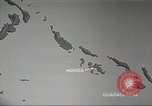
U.S. 13th Air Force plans an attack on Japanese locations on the Solomon Islands during World War II.
U.S. Army Air Forces plans an attack at Munda Point on New Georgia group of Islands, Solomon Islands during World War II. An animated map highlights locations from where the attack is to be launched and the Japanese locations to be attacked including Munda, Ballale Island, Vila, Kahili, Buka and Rabaul. Aerial views of various U.S. air bases on the Solomon Islands. U.S. aircraft in flight. An animation depicts the air cover for U.S. convoy moving between New Georgia and Guadalcanal and the need for fighter patrol. An animated map depicts air attack on Japanese land positions to neutralize air bases and disrupt shipping. The map also depicts direct cooperation of tactical group without ground forces to attack concentrated Japanese troops.

The United States 3rd surgical hospital at Camp Dong Tam, in Mekong Delta region of South Vietnam, during the Vietnam War.
Hospital facilities at Camp Dong Tam. Typical outdoor covered walkway of a military hospital is seen at Camp Dong Tam, in Mekong Delta of South Vietnam, during the Vietnam War. Sign above the walkway identifies it as the 3rd Surgical Hospital. Camera pans sandbagged quonset huts housing elements of the hospital. Outdoor cooling unit with pipes running to provide air conditioning to quonset huts. Closeup of areas between sand bagged quonset huts. The feet of a soldier seen as he raises dust while walking across the barren terrain in the area.

United States jet fighter bomber aircraft attacks North Vietnam Communication and boat repair facilities in Vietnam.
Air raid by U.S. jet fighter bomber aircraft during Vietnam War. U.S. jet fighter bomber aircraft (A-4 Skyhawk and F-4 Phantom, according to narrator) in flight and during attacks North Vietnam Communication and boat repair facilities. United States aircraft strafe and bomb bridges and storage areas. Smoke column rises from explosions.
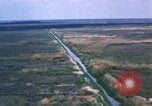
A USAF A-1H Skyraider bomber makes a low pass over a canal and huts in Vietnam during the Vietnam War.
USAF (United States Air Force) A-1H Skyraider bombers make a run over targets in Vietnam during the Vietnam War. Aerial views of an A-1H Skyraider making a low pass over a canal and huts. Smoke rises from burning huts.

USAF HH-3E Jolly Green Giant helicopters drop paratroopers over Vietnam during the Vietnam War.
U.S. Air Force HH-3E Jolly Green Giant helicopters carrying U.S. 20th Helicopter Squadron and Montagnard paratroopers over Vietnam during the Vietnam War. An HH-3E drops paratroopers.
CRITICALPAST.COM: About Us | Contact Us | FAQs - How to Order | License Agreement | My Account | My Lightboxes | Shopping Cart | Advanced Search | Featured Collections | Website Terms & Conditions | Privacy Policy ©2026 CriticalPast LLC.
License Agreement |
Terms & Conditions |
Privacy Policy
©2026 CriticalPast LLC.