


 Francais
 Deutsch
 Italiano
Refine Your Search
Vietnam Bien Hoa Air Base 1968 stock footage and images
- Showing 9025 to 9030 of 13286 results more
more Hide
Hide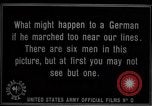
United States soldiers demonstrate camouflage; hide in small shell holes and place trench periscope in stumps in France.
Demonstration of various camouflages used by American Army soldiers during World War I. United States soldiers in small shell holes. A soldier places a Trench Periscope in a stump. Bark of a tree used as trench periscope. The soldier removes platform from the base of the tree.
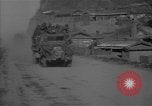
United States Marines on the move and setting up camp in Korea, during Korean war.
United States military trucks, carrying troops, supplies, sandbags, etc. move on a road alongside a village in Korea during Chosin Reservoir campaign. A jeep pulling a trailer fords a wheel high stream and gets stuck, wheels spinning on the opposite bank. Trucks loaded with troops, guns, ammo, and pulling fuel tank trailer, converge at base of a snowy hill, where the Marines set up a tent camp. They build a huge campfire. Smiling American marines pose for the camera.
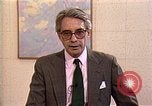
Lt. Gen. James Abrahamson, Director of Strategic Defense Initiative, talks about the Laser Missile weapon in Washington DC.
A briefing on the Strategic Defense Initiative in Washington DC. U.S. Assistant Secretary of State European and Canadian Affairs Richard Burt discusses U.S. government policy with regard to the Strategic Defense Initiative. U.S. Lieutenant General James Abrahamson, Director of Strategic Defense Initiative Organization, talks about a Laser Missile weapon of SDI (or the so-called Star Wars initiative). An animation shows the ground base missile firing at a target in he sky. The missile launches from a launch pad. An animation shows the frequency generated.
Gilded age scenes 1890s; Baseball's Orange 'Y' team and the 'Bears' play a reunion game in 1940 in Newark
Clip opens with Gilded Age scenes near the turn of the century in the United States, circa late 1890s. Busy sidewalk scene in a city with men and women in suits, dresses, and hats of the era walking and in conversation. Wealthy people moving about. Group of women ascends steps toward a building. Reunion game of baseball between old men formerly from the Orange 'Y' team and the 'Bears' in Newark, New Jersey. Elderly players pose for a photograph in front of a team banner that says 1885. Elderly baseball players play on a field as fans young and old in the stands watch the game. Young spectators cheer a play by the senior citizen players. A player hits a grounder and another player comes in from 3rd base toward what looks to be a slide at home plate, but he ends up sitting down on the plate.
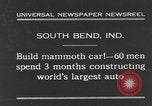
A mammoth Studebaker "Giant Car" roadster is seen in South Bend, Indiana.
In South Bend, Indiana, views of a "Giant Car" Studebaker roadster built by a group of 60 craftsmen working under Studebaker's Paul Auman. This giant scale version 1931 model 80 Studebaker Four Season Roadster was used in the film "Wild Flowers." The Giant Car is 41 feet long with a wheel base of 325 inches. It is 13 1/2 feet high, 15 feet wide, and weighed 5 1/2 tons. Men drive up beside the giant President roadster in a normal vehicle. Some use a rope ladder to climb up into the giant car and others climb up the wheel fender and then onto the hood. A boy is shown trying unsuccessfully to climb up a giant wheel of the car (each wire wheel was 6 feet 8 inches in diameter and weighed 600 pounds). The boy's small pedal car is seen beside the Giant Car tire. A police officer in a motorcycle rides up beside the giant car. He places a board-style 'Police Ticket' on the running board and then climbs up onto the running board to present the ticket to a woman who is behind the wheel of the giant roadster.
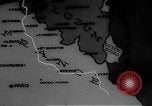
Canadian troops in action around the town of Albert, in West Flanders, Belgium during World War I
Canadian troops in West Flanders, Belgium near Ypres and Albert during World War 1. An animated map shows the region and the Somme River. Canadian troops hunkered down in grass and shrubs on a hill overlooking flat terrain. Shells exploding on horizon in background. A large contingent of Canadian troops marching downhill with left-shouldered arms. Senior officers walk out of a courtyard gate. Next, General Sir Sam Hughes, Canadian Minister of Militia and Defence, is seen shaking hands with several officers. Scene shifts, after he greets only two, and shows Canadian troops marching in platoons along a dusty road. Next, Canadian soldiers are seen moving supplies by horse-drawn wagons along a tree-lined road leading into a town. Final scenes show the war-damaged Albert Basilica. The camera pans upward, along its tower, to the Golden Virgin statue at its top, which is leaning precariously to one side, almost falling off its base. (The statue became the subject of British superstition that the war would end when the statue fell. But British artillery, itself, knocked it down while targeting the tower to prevent its use by the Germans as an observation post, during the 1918 Spring offensive)
CRITICALPAST.COM: About Us | Contact Us | FAQs - How to Order | License Agreement | My Account | My Lightboxes | Shopping Cart | Advanced Search | Featured Collections | Website Terms & Conditions | Privacy Policy ©2026 CriticalPast LLC.
License Agreement |
Terms & Conditions |
Privacy Policy
©2026 CriticalPast LLC.