


 Francais
 Deutsch
 Italiano
Refine Your Search
Vietnam Bien Hoa Air Base 1968 stock footage and images
- Showing 10951 to 10956 of 13286 results more
more Hide
Hide
United States ambassador to France, Jefferson Caffery arrives in Augsburg Germany, received by Lieutenant General Patch (WW2)
United States Ambassador to France Jefferson Caffery arrives in Augsburg, Germany during World War II. A C-47 plane of the United States Army Air Force lands on a runway strip. Jefferson Caffery descends from the plane. He is greeted by Lieutenant General Alexander M. Patch at the airfield. They sit in their cars.
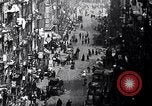
Lives of typical immigrants to the U.S., early in the 20th century
Tenements and open-air markets, part of life for many new immigrants, in Manhattan, New York City, early in the 20th century. Brief footage of elevated view of street likely in lower east side of Manhattan. Series of still images: Children pose on a fire escape platform. Merchants with pushcarts line the street. Men open a fire hydrant that spews water into the street. Men place cups in the stream. Children wade in the water. Many small children seen on the sidewalk. A boy tries to drink the last few drops from the hydrant, after it is turned off. Boys stand in an alleyway, near garbage cans. A boy at home preparing to wash in a basin. A boy holding a puppy in an unsanitary tenement apartment. View of Italian immigrant family members crowded into a Mulberry Street tenement. In contrast, a group of well-to-do young women are seen outdoors dressed in white, carrying parasols, as they learn social etiquette. A young woman, in a carriage, with a chaperone. Two well-dressed, mature women, conversing. A family, including several children, all engaged in needle work at home, for a pittance in wages. Men and women at sewing machines manufacturing clothes in a crowded "sweat shop.".
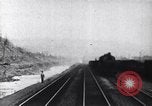
Immigrants to America working in various hard labor jobs and factories early in the 20th century.
Point of view shot out the front of a steam locomotive railroad train as it speeds along a track in western United States. Men stacking wood lumber for boat shipment beside a canal in the early 1900s. The mill and stacks of lumber seen across the canal. Miners at a coal mine ride an open car full of coal as it emerges from a mine in West Virginia, as seen from camera riding on same coal car. Glimpse, from a passing train, of a steel mill in Pittsburgh, Pennsylvania. Immigrants to the United States, from various European countries, at work in industrial production jobs. Men in factories; working at a power forge in a steel mill; Lumber operations: Men cutting down large trees with hand axes and sawing logs for timber in a forest, using large 2-man saws; Butchers moving sides of beef in a meat packing company. Women working in a metal parts factory (appears to be a sink faucet manufacturing company); women working in a textile spinning mill operation and stacking moving machine shelves with spools. A hose set up from a fire hydrant spraying water in a city street and children in bathing suits running underneath to play and cool off in hot summer weather. Montage of various still and moving images: Immigrant children in classrooms and in school yards. A woman instructing new adult immigrants in an English language instruction class. Immigrant workers engaged in skyscraper construction, high in the air without safety equipment. An iron worker perched atop a vertical steel beam with the Brooklyn Bridge in the background. A woman posing on a horizontal bar. Men and women posing in the surf at a beach. People at beach watching as a group of men create a human pyramid on the sand. A little girl with her feet in the surf. Boys in a classroom, with two of them dirty from work and another boy sleeping with his head on his desk. Mothers and fathers at home asking about what the children learned in school. A young girl leading a group of school children in reciting the pledge of allegiance (pre-1950s version of the Pledge of Allegiance is heard recited by a group of children, without the "Under God" wording that was added in 1954). Still image of a young girl employed in a fabric mill (child labor).
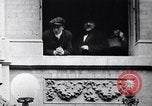
Labor dispute: Striking garment workers in Chicago suffer police opposition and conflict in 1910
Group of garment workers pose for photograph on steps of a building in Chicago. Police on horseback approach a group of people on a sidewalk. Horse-drawn wagon parked at curb. Mounted police breaking up a gathering. Two women caught in the commotion. One falls to the ground and is helped up by a uniformed policeman. Four women garment workers pose for a picture. Another view of the group seen earlier on steps of a building. Striking garment workers march and protest in streets of Chicago. Brief montage with scenes of unrest. Garment workers parade with sign lamenting the death of Charles Lazinskas .Formal portrait photograph of Charles Lazinskas, with caption beneath reading:"Was shot December 3, 1910." The Chicago Daily Tribune of January 4, 1910, with headline reading: "Man shot in strike riots, foreman of big clothing factory held." Another newspaper headline reads:"Strikers March With Mute Pleas, Garment Workers Rely on Banners and Placards to Air Grievances." Yet another reads: "Strike Embroils Social Workers, Pastor and U of C Student Interfere for Toilers and Are Arrested, Police Brutality." Picture of social worker, Jane Addams, with another woman. Early and later photographs of Joseph Shaffner, of Hart, Schaffner, & Marx company. Garment worker union leader, Sidney Hillman. Fabric cutters working at the clothing factory.
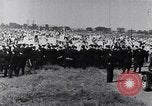
The 1937 Memorial Day massacre of strikers in Chicago Illinois, United States
Approximately a thousand striking steel workers (and members of their families) are seen assembled on an open field, intent on picketing the Republic Steel Mill in South Chicago, where they are organizing a union during a labor dispute. Many hold picket signs during the labor strike. A line of armed Chicago policemen extends across the area, blocking their way. Police officials stand near a paddy wagon. View of strikers standing toe-to-toe arguing with policemen. Dramatic next scenes show violence with gunfire erupting and the strikers running away from the police. Gunfire continues as the crowd disperses in panic. Policemen follow the fleeing crowd and continue firing their weapons as they hit and beat striking workers with night sticks. Several plumes of tear gas can be seen rising from the ground. Several injured strikers are seen on the ground. One appears to be dead. Dust and fumes obscure much of the scene. As the air clears, police can be seen continuing to pursue the retreating group of strikers. They arrest various men including an African American man. Dead and injured workers are seen on the ground. Police arrest strikers, some of whom are injured, and place them in paddy wagons. Police drag the body of one fallen striker from behind a wagon. Several strikers gather around the body. Police continue to arrest people, including a woman. Policemen watch as strikers place body of fallen striker into back seat of a car.
The Wright brothers and early models of airplanes developed and flown by them in the United States.
Depicts contribution of Wright brothers in development of airplanes. Old French bi-planes fly in parallel. Orville and Wilbur Wright brothers discuss with other man. Glider dragged of hill flies steadily. Wilbur attaches wheel beneath wing. First heavier than air plane takes off at Kitty hawk North Carolina, on December 17, 1903. Headlines of news paper about the event. Wilbur Wright prepares to fly under French Government subsidy, at La Mans in France. Orville flies with a passenger in Fort Myers, Virginia for an Army acceptance demonstration in July 1909. Men on ground watch the sustained flight of the plane. Bi plane flies close to ground in an open field. Military officials near the hanger of the plane. Wright brothers inspect catapult rails. The plane towed out and put on catapult. Two men rotate propeller to start the plane. Men pull weight to catapult the plane. Wright flyer climbs and plane takes off.
CRITICALPAST.COM: About Us | Contact Us | FAQs - How to Order | License Agreement | My Account | My Lightboxes | Shopping Cart | Advanced Search | Featured Collections | Website Terms & Conditions | Privacy Policy ©2026 CriticalPast LLC.
License Agreement |
Terms & Conditions |
Privacy Policy
©2026 CriticalPast LLC.