


 Francais
 Deutsch
 Italiano
Refine Your Search
Walcheren Island Netherlands 1944 stock footage and images
- Showing 2245 to 2250 of 9701 results more
more Hide
Hide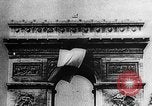
Montage of scenes illustrating the final stages of World War II in Europe
Liberation of Paris August 22, 1944. Tricolor flying from Arc de Triomphe. Crowds celebrate. Young people dance in street. Tanks firing guns. Bombs dropping on Germany. American tanks firing in Cologne, Germany. Spires of Cologne Cathedral loom above destruction and rubble in streets of Cologne. German civilian refugees on the streets. Germans in front of air raid shelters. Animated map showing Soviet advance from East.Formation of Ilyushin Il-2 aircraft. Soviet tanks in farm field. Silhouetted German soldiers surrendering. Wounded and dead German soldiers. Destroyed German military equipment. A long line of surrendered German soldiers. Allied forces driving into Germany beyond the Rhine River. Suffering German civilians and refugees including men, women, and children in desperate circumstances after the devastation of war. German refugees walking on roads, including babies in carriages or prams.
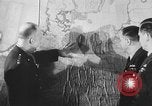
Invasion of Allied Forces in Germany and German surrender (WW2)
General Eisenhower confers with British Air Marshal Leigh-Mallory and British Air Chief Marshal, Sir Arthur Tedder, in front of a map of Europe on a wall. New York Post, June 6, 1944, headline reads "INVASION Smashing Inland." U.S. troops assault beach at Normandy on D-Day and several fall from enemy fire during World War II. German troops surrendering as Americans advance. Dead German soldier. Adolf Hitler sits in a room. B-24 bombers of the U.S. Eighth Air Force, 2nd Air Division, 2nd Bomb Wing, 446th Bomb Group, in flight on mission over Germany. Bombs falling on target. View through gun camera of fighter strafing German aircraft on the ground and strafing a railroad train filled with ammunition, that explodes. Sun newspaper headline reads: 'Allies plunging deep into Reich.' U.S. troops move through grassy field. U.S. artillery crew fires M-114, 155mm Howitzer under camouflage net. New York World Telegram newspaper headline reads: 'Allies swarm across Rhine'. U.S. troops crossing the Ludendorff Bridge, at Remagen, Germany. View of dead victims at German concentration camp. Journal American newspaper headline reads: 'Mass surrender of foe underway'. German prisoners of war double-time march running along a road with hands held high in surrender. Emotion and distress show on face of very young German boy soldier as he unbuttons his coat. A German woman sits quietly in background. A mile long line of German prisoners march in a field. A Nazi Swastika flag burning on the ground.

Opening of fountains at Peterhof (Petrodvorets) on August 25, 1946, after their restoration from destruction in World War II
Film opens showing devastated snow-covered remains of Peterhof Palace and its fountains, in Leningrad, after the Russians ended the siege of that city in January, 1944 of World War II. The next scenes show crowds gathered on 25 August, 1946, to celebrate the newly restored fountains, which are seen spraying water again. (Narrator notes that Russians now call the place Petrodvorets, meaning Peter's Palace.) An official speaks, at the ceremony, about the architecture of Petrodvorets and its cultural masterpieces still to be restored. Glimpse of statuary and array of fountains. Closeup of several young women holding flowers. Another shot of the fountains spraying along both sides of a central pond, with spectators crowded along the extreme sides near lines of trees.
German war criminals are executed by Allied occupying forces in 1945, in World War 2
View from above, of the surrounding walls and courtyard of a prison in Rheinbach, Germany. Ground view inside the prison yard, where German civilian Matthias Gierens is being escorted to the gallows by U.S. military police, and accompanied by a German Catholic priest, on June 29, 1945. They ascend the gallows and final charges and sentence are read to Gierens. Next scene shows bodies stacked up at the Bergen-Belsen concentration camp operated by Nazi Germany. Scene returns to the gallows, and a hood is placed over Gierens' head. View of Allied army officer witnesses, in formation, at parade rest. Noose is placed over Gierens' hood. View of a a bird flying overhead, trapdoor opens, Gierens drops, and noose tightens. Next is an unrelated scene of several German soldiers being executed. They are seen hanging from four gallows in a line in a public square while a large crowd, possibly Soviet citizens, looks on. (Notes: Regarding the execution of Gierens in the opening scene: German civilian Matthias Gierens was a 37 year old railroad worker. He was executed for the August 15, 1944, murder near Priest, Germany, of a downed American airman, who was later identified as U.S. Army Air Forces 2nd Lieutenant Lester E. Reuss. Gierens and three other German civilians, Peter Kohn, Peter Back, and Matthias Krein, were convicted on June 2, 1945 in Ahrweiler, Germany, of the murder. Their trial was the first Allied trial in Germany of civilians charged with a war crime.)

German spies are executed by a firing squad and Germans who killed American prisoners of war are hanged, at end of World War II
Three German soldiers, who were captured in American uniforms, spying behind the American lines, in the Fall of 1944, are executed by a firing squad. In a separate sequence, one of several German civilians is marched toward gallows at Bruchsal prison near Karlsruhe, Germany. They were condemned by a military tribunal for killing six United States Army Air Force aviators who were being held as prisoners of war after crash landing their airplane near the end of the war. A hangman makes preparations. The German criminals are hanged.
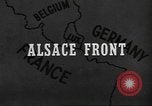
U.S. troops of the 79th Infantry Division engage German forces in the Alsace Front during World War II
Opening shows animated map of Alsace front at junction of Belgium, Germany, and France, in World War 2. Allied forces are schematically shown sweeping toward Wissembourg, Haguenau, and Strasbourg. Next, several U.S. Army M4A3(75) medium tanks are seen driving toward the camera on a rural road, during a pull back by the 7th Army in the first week of January, 1944, from advanced positions at the front. Some are filled with infantry riding atop them. The last of them is seen crossing a bridge 13 miles Northeast of Haguenau. The engineers of the 79th Division place demolition charges to destroy the bridge. Closeup of them placing and then remotely igniting the charge. A huge explosion ensues that completely destroys the bridge. Scene shifts to several U.S. soldiers of an engineer combat battalion preparing 100 pound of TNT in a captured blockhouse at Lauterbach, Alsace. Closeup of engineer carrying the explosives into the blockhouse and preparing the remote detonation device. The engineers string wire in the snow and setup their remote detonation device. One depresses a plunger to ignite the charge and blow up the blockhouse, which explodes in a huge cloud of black smoke. Next, elements of the 79th Infantry Division supported by tanks, are seen moving forward to counter German gains Southeast of Haguenau. (On January 5th the German forces had established a bridgehead across the Rhein (Rhine) river near Gansheim, Germany.) Scene shifts to Drusenheim, Germany where U.S. forces are engaging a Battalion of occupying German forces. Machine gun fire is heard constantly, as American infantry battle the hidden German defenders and tanks drive them from defensive positions near a bridge at the far end of town. Infantry move from behind tanks toward the bridge and are seen crossing it. An M4A3(75) medium tank risks crossing the narrow bridge and is immediately followed by many 79th Infantry troops. The battle continues on the other side of the bridge.
CRITICALPAST.COM: About Us | Contact Us | FAQs - How to Order | License Agreement | My Account | My Lightboxes | Shopping Cart | Advanced Search | Featured Collections | Website Terms & Conditions | Privacy Policy ©2026 CriticalPast LLC.
License Agreement |
Terms & Conditions |
Privacy Policy
©2026 CriticalPast LLC.