


 Francais
 Deutsch
 Italiano
Refine Your Search
Walcheren Island Netherlands 1944 stock footage and images
- Showing 2251 to 2256 of 9701 results more
more Hide
Hide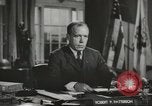
American Undersecretary of War speaks to difficulties facing Allies in confronting Germany and Japan in World War II
Undersecretary of War, Robert Porter Patterson, Sr. speaks about a report from the General staff outlining the needs for combating Germany and Japan in World War 2. He cites Operation Husky, the invasion of Sicily, as an example of what will be needed. He continues to narrate in the background as an animated map appears showing the buildup of supplies and Allied forces in North Africa; Allied air forces flying 60 thousand sorties over Sicily and, the direct amphibious assault using 3,200 vessels. Map also depicts opposing forces of 12 (“unwilling”) Italian Divisions and 3-1/2 German Divisions. View of Allied troops carrying some of their 31 thousand casualties on stretchers from field ambulances. Allied medics attending to the wounded. Some are seen lying on stretchers in a row on the ground near a wall. Interior of a field hospital where surgeons and other medical personnel treat the wounded. Animated map shifts to Europe with Germany at its center, showing , in contrast to Sicily that was only an “outpost,”, the heavily fortified perimeter of Axis controlled areas; the axis industrial might; and the disposition of 300 German Divisions (mostly on the Eastern front) defending the region. Next, the map illustrates Japan’s defended regions in the Pacific Image returns to Undersecretary Patterson i n his office, speaking of the Allied offensives planned for next year (1944), and emphasizing their challenge and difficulty. Scene shifts to General Jonathan Wainwright and his garrison at Corregidor, in the Philippines, surrendering to Japanese forces in 1941. Japanese military camera pans over the Americans being taken prisoner. Other Americans and Filipinos are seen being marched together under guard. Scene shifts to classic views of the Japanese attack on Pearl Harbor, Hawaii, on December 7, 1941. View of Japanese soldiers executing two Chinese civilians in 1937. Dangling bodies of persons hung by Nazis during Operation Barbarossa in Russia, in 1941 A Russian soldier comforts a little girl as he escorts her across a snowy landscape. Time bomb left by German forces retreating from Naples, Italy, in 1943, blows up a Post office building . Views of damage to building and bodies of victims. American Military Police assisting a victim. American soldiers carrying an injured civilian on a litter. Scene shifts to British Foreign Minister, Anthony Eden, Soviet Foreign Minister, Vyacheslav Molotov, and U.S. Secretary of State, Cordell Hull, entering a hall in the Spiridonovka Palace, during the 1943 Moscow Conference in Russia. Close-up of the American, Soviet, and British flags on a table. View of many delegates seated around the table. Close-up of Molotov, Eden, and Hull signing conference document.

Harry S. Truman and others at the dedication of the Truman Library in Independence, Missouri.
Dedication ceremony of the Truman Library in Independence, Missouri. Former President of United States Harry S. Truman at the dedication ceremony of the library. Dignitaries including Chief Justice Earl Warren, Herbert Hoover, Mrs. Bess Truman, and Eleanor Roosevelt at the ceremony. Ten thousand people gather for the Masonic rites of dedication. Republican Senate leader William Fife Knowland receives a deed on behalf of the government. Interiors of the library that houses 3 ½ million documents of Truman's seven-year term. At the Truman Museum pictures of Truman with former British Prime Minister Winston Churchill. Another picture of Truman after winning the presidential election of 1944.
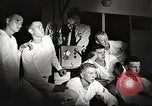
United States Navy sailors watch a movie about naval warfare in the United States; some scenes from World War 2 Pacific battles
A dramatized film about the training of U.S. Navy recruits at various naval training centers in the United States. The training and life of United States Navy recruits at U.S. Navy training center in Bainbridge, Naval Station Great Lakes in Illinois and Naval Base San Diego in California. The sailors watch a movie which depicts historic navy sailors on old masted sailing ships as they fire naval guns at another ship. The reenactment is of a 18th century or 19th century naval battle. The ship being hit by the enemy begins to sink. Sailors from the two ships in combat aboard a ship. Men jump into the sea and try their best not to give up the ship. A tall masted ship sinking. The naval gun canons aboard a ship being fired on another ship. Scene shifts to a mix of both authentic footage and several dramatized World War 2 combat footage scenes in the Pacific, circa 1943, 1944, or 1945, with U.S. Navy sailors on board ships firing at incoming Japanese aircraft. The enemy aircraft being shot down and they fall into the sea. A sailor clicks a picture of Japanese girls against a statue of Buddha. Narrator speaks about Navy recruitment. Sailors lined up on an open field during a ceremony at the U.S. Naval Academy.
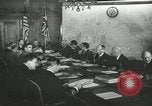
Landing craft, tanks, munitions, and gasoline supplies assembled in England for D-day invasion in World War II
Preparations in year 1943 for the June 1944 invasion of Western Europe by Allied Force during World War 2. Conference at Supreme Headquarters Allied Expeditionary Force in London. U.S. Generals George Marshall, Henry H. Arnold and British Field Marshal Bernard L. Montgomery meet at SHAEF (Supreme Headquarters Allied Expeditionary Force). Montage of war scenes: British Lancaster bombers taking off. British men and women monitors working in a British Command and Intelligence Center, tracking aircraft positions on maps. U.S. B-17 bombers in daylight missions over Germany. Allied pilots and crew members in aircraft. U.S. Army Air Force B-17 aircraft at high altitudes leaving contrails behind. Bombs bursting on German industrial targets. Allied agents being airdropped over France. Allied one-man submarines or solo submarines, torpedo boats and Commandos sampling French beaches and soil conditions in the Normandy region for ability to support 30-ton tanks for the invasion of France. British airman loading reconnaissance camera into a British Spitfire reconnaissance aircraft for photographing the planned invasion region. Woman operating microscope analyzing film. Aerial reconnaissance film images being laid out and attached together to create a large overhead viewing map. Arms and equipment being air dropped to indigenous resistance forces in Nazi-occupied Europe. Mulberry floating harbor segments being designed and built to create invasion ports. Allied landing craft training in Devon, England. Allied aircraft strafing a German ship. Meteorological equipment assessing weather along the invasion coast. Wire netting to pave the beaches. Underwater pipelines to carry gasoline or petrol to France. Allied armored vehicles bearing the White Star. Troops being inoculated or vaccinated. Newly built ship going down the ways at an Allied ship yard that builds Navy warships. View of British intelligence officers with headsets at radio equipment, and personnel monitoring German radio broadcasts. Soviet Embassy in Tehran, Iran, where the Big Three are seen meeting at Tehran Conference to finalize invasion plans. Stalin, Roosevelt, and Churchill sitting on the porch of the Embassy building, in 1943. General Eisenhower and Allied Military leaders planning the D-Day invasion. General Omar Bradley, sitting with a British admiral. General Bernard Law Montgomery Aerial view of formation of U.S. Army Air Force B-17 aircraft, flying through Flak bursts. Pilots in B-17 cockpit .Bombs striking German targets. Polish, Scenes including gun camera footage of Czech, and British in Spitfire aircraft striking German railroads and marshaling yards. B-26 bombers and gunner attacking German Luftwaffe Me-109 aircraft.
U.S. troops retreat and lay barbed wire and land mines during the Battle of the Bulge in the European Theater.
The Battle of the Bulge in Ardennes Mountains region in the European Theater during World War II. U.S. troops retreat and lay barbed wire and land mines during the Battle of the Bulge in December 1944. U.S. Army Air Force bomber planes drop bombs. German prisoners of war march under guard.
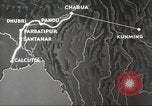
U.S. Army Air Force transport aircraft carry supplies over the Himalayan Mountains to Kunming during World War II.
A film based on getting U.S. supplies to Kunming, China from Chabua, India during World War II. An animated map links Chabua with Kunming. A USAAF (United States Army Air Forces) C-87 Liberator Express in flight over the Hump. An aerial view of the Himalayan Mountains. A USAAF C-54 Skymaster in flight. An animated representation of the content of materials carried by an aircraft over the Hump. USAAF transport planes land at Kunming in China. An animated map depicts the transportation condition over the Burma Road in January 1941 and by air over the Hump in January 1944. Dispersal of cargo and U.S. troops to various fighting fronts from Kunming. A transport aircraft takes off from Kunming. Chinese troops march. U.S. Army General Joseph Stilwell with U.S. Lieutenant General Claire Chennault in Kunming. A formation of transport planes.
CRITICALPAST.COM: About Us | Contact Us | FAQs - How to Order | License Agreement | My Account | My Lightboxes | Shopping Cart | Advanced Search | Featured Collections | Website Terms & Conditions | Privacy Policy ©2026 CriticalPast LLC.
License Agreement |
Terms & Conditions |
Privacy Policy
©2026 CriticalPast LLC.