


 Francais
 Deutsch
 Italiano
Refine Your Search
Walcheren Island Netherlands 1944 stock footage and images
- Showing 541 to 546 of 9701 results more
more Hide
Hide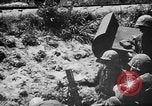
American forces capture a Japanese airbase on the Mariana Islands.
The joint force assault by the American Army, Navy, Marines and Air Force against the Japanese on the island of Saipan, Guam and Tinian in the Marianas Islands. U.S. mortar crew fires at the Japanese. Tanks and infantrymen advance ahead. American troops fire mortar guns, artillery guns and machine guns. Troops advance toward a Japanese airbase. The airbase is captured. Many of the Japanese planes are captured. U.S. forces advance north towards another Japanese airbase. Tanks and mortar guns are fired at enemy positions. View of destroyed Japanese tanks and dead Japanese soldiers. U.S. Naval fleet shelling Japanese installations on the island. A Japanese ammunition dump explodes. Massive cloud of the explosion rises in the air. (World War II period).
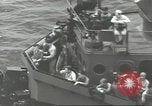
U.S. Naval bombardment of Mariana Islands during World War II
Bombardment of Tinian, Saipan and Guam in the Mariana Islands by the U.S. Navy during World War II. Sailors on the destroyer ship USS Braine, DD-630, as viewed from the battleship USS New Mexico, BB-40, following transfer of several wounded from the destroyer to the battleship, during World War 2. A U.S. Northampton Class heavy cruiser bombarding Japanese positions in Mariana Islands. Smoke rising from shell strikes. Officer aboard the USS New Mexico observing action through binoculars. A sailor scanning horizon with binoculars. Triple gun turrets of the New Mexico trained to port. She being firing guns singly. Signal flags being raised above the New Mexico. Officers scanning horizon with binoculars. A couple of crew members taking a snooze break on deck. Various views of smoke rising in distance, from naval shelling. Two U.S. Navy observation float planes fly overhead. A formation of nine U.S. carrier-based aircraft fly toward the island. More views of explosions ashore. Two light cruisers firing close to shore.

U.S. 4th Marines and 7th Infantry Division land on the Marshall Islands and Japanese ships are strafed in the Pacific Ocean.
A film titled: 'Attack on the Marshalls' depicts landing of U.S. troops on the Marshall Islands during World War II. A Japanese flag flying atop a flag pole. Animated map shows areas occupied by the Japanese. U.S. troops invade the areas. Marshall Islands, New Guinea and other places on the map. The 4th Marines and the 7th Infantry Division land on the Marshall Islands. U.S. airplanes taking off from an air base. They fly in formation overhead. A Japanese ship convoy underway in the Pacific Ocean. They are strafed from the air. Smoke arises as the ships explode. Aerial view of the Pacific Ocean. U.S. airplanes aboard an aircraft carrier underway. Japanese airplanes being shot down by United States aircraft and crashing into water, as seen in wing camera or gun camera footage .

General Eisenhower as a World War II officer and as the U.S. President.
Scenes from life and career of Dwight D Eisenhower, 34th President of United States. U.S. Air Force plane lands and the President disembarks the plane in India, in 1959. He is greeted by the Indian President Dr Rajendra Prasad and other dignitaries. Emblem of 'Panama'. Sign of 'welcome Ike Crusader'. Large crowd welcomes Eisenhower. Motorcade goes through the city's street. Milestones in General Eisenhower's life and the international esteem with which he is held. Lt Col Eisenhower concerned about U.S. isolationism in 1940 as World War 2 is underway. Explosions in Europe due to bombing by German aircraft. Eisenhower and other officers in the General Staff study a map. Eisenhower plans the strategy as the commander of Operation Torch (he is shown talking to General George C. Marshall and Winston Churchill). President Eisenhower visits 4 continents and meets several leaders. Large crowds welcome him. General Eisenhower prepares for D-Day Invasion of France during World War 2. June 5, 1944: The Allied forces including troops, artillery, equipment, ammunition, aircraft and ships prepared. June 6, 1944: The Allies invade Normandy. Troops wade through the water during D-Day Normandy beach landings, while under enemy fire. German soldiers surrender. May 7, 1945: Nazi General Alfred Jodl signs the unconditional surrender of his government. General Eisenhower returns to the U.S. He receives a hero's welcome in New York during a parade. He visits his hometown in Kansas. Pictures of his family, childhood and college days. Eisenhower on his visits to various countries as President.
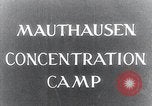
Scenes soon after liberation of Nazi concentration camp in Mauthausen, Austria.
View of the Mauthausen concentration camp in Mauthausen, Austria. Cremation ovens used to execute the prisoners. A German guard held at gun point by the American troops. Liberated American speaks, surrounded by a group of prisoners. He is U.S. Navy Lieutenant Jack H. Taylor of Hollywood, California. Filmed by Lt. Col. George C. Stevens, he says that in October 1944 he was the first allied officer to drop into Austria. He says he was captured December 1, 1944 by the Gestapo, and severely beaten. He details his imprisonment time in Austria and then at Mauthausen. He shows insignia and dog tags of two American soldiers who were executed in a gas chamber of the camp by the Germans. He details the multiple methods used by the Germans to kill prisoners, including shooting, gas chamber, beating, exposure in the snow for 48 hours with cold water thrown on them, starvation, dogs, and pushing off a hundred foot cliff. He thanks the American 11th Armored Division for rescuing them. (World War II period).
World War 2 battle scenes; wrecked buildings and masses of displaced persons in Europe after World War II.
'Problems of Peace in Europe' produced in 1948, depicts reconstruction problems in aftermath of World War II and includes footage from during the war and soon after the war. Scene of desperate and hungry civilian people (possibly in Germany but could be elsewhere in Europe) scrambling over each other and trying to find food on the ground among garbage or wreckage, circa 1945 or 1946. European peoples massing to reestablish political order and seek relief in post-war Europe. Montage of images of people from all walks of life. Reminders of war showing aircrews in bombers and bombs falling. Batteries of rockets being fired. A formation of U.S. B-17s and a B-26 aircraft with D-day stripes, in flight. Allied bombing of cities with devastating effect (likely 1944-1945). Aerial view of the Statue of Liberty in New York Harbor. Aerial view of a major U.S. industrial complex, with many smoke stacks and industrial pollution. Mass of workers leaving at end of shift at a U.S. manufacturing plant or factory. Views of two different streamlined locomotives pulling passenger trains at high speed, approaching camera position. Freight trains speeding on railroads. Farmers harvesting and baling hay by machine and cultivating fields with tractor. Multiple wide views of the K-25 building of the Oak Ridge Gaseous Diffusion Plant, in Oak Ridge Tennessee, the world's largest building in 1944 when it was built, and an instrumental part of the Manhattan Project effort to develop the atomic bomb in World War 2. Huge sprawling industrial sites in America. Map of Europe. Street scene in Germany with destroyed buildings and rubble cleaned from street, but still piled up in places. Desperate, hungry, and poverty stricken German citizens rummaging through garbage piles for anything to eat or anything of value. Two very young German boys standing together on a street, with one boy smoking a cigarette. Children scrambling over trash and rubbish heaps.
CRITICALPAST.COM: About Us | Contact Us | FAQs - How to Order | License Agreement | My Account | My Lightboxes | Shopping Cart | Advanced Search | Featured Collections | Website Terms & Conditions | Privacy Policy ©2026 CriticalPast LLC.
License Agreement |
Terms & Conditions |
Privacy Policy
©2026 CriticalPast LLC.