


 Francais
 Deutsch
 Italiano
Refine Your Search
Walcheren Island Netherlands 1944 stock footage and images
- Showing 5641 to 5646 of 9702 results more
more Hide
Hide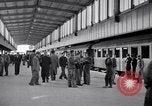
350 Polish refugees bid goodbye to their friends and relatives and leave Tehran for Palestine at the Tehran railroad station.
350 Polish refugees leave Tehran for Palestine at the Tehran railroad station. Train at the platform. People bustle on the platform. People bid farewell to their departing friends and relatives from train windows. Notice boards written in Persian language at the railroad platform. A soldier talks to women sitting in one of the wagons from train windows. (World War II period).
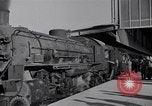
A train carrying 350 Polish refugees from Tehran to Palestine starts from the Tehran railroad station as people bid goodbye.
350 Polish refugees leave Tehran for Palestine at the Tehran railroad station. Train engine at the platform. A crewman stands on its gate. Refugees wave hands and bid goodbye to their friends and relatives. Pull cars of the train move ahead. Cargo cars at the end of train. Four Army cameramen pose before the camera after the train passes on.

Prisoners, charged barbed wire fencing and ashes of atrocity victims at Majdanek, Poland Concentration Camp in World War II
The liberated Nazi concentration camp in Majdanek, Poland (also known as Maidanek) during World War 2. Surviving prisoners inside the barb wired fences of the concentration camp, near time of liberation by Soviet Russian Allied forces. Tattooed prisoner number on chest of a victim prisoner. Evidence of Nazi atrocities: Main chimney of crematorium. Ashes of human corpses that were burned at the camp. A group of seated German SS soldier prison guards, now POW, after capture by Soviet forces. Soviet Russian officials examine the clues from the concentration camp. Close up views of electrical sources and parts powering the barbed wire enclosures. Warning signboard on the fences. Guard towers and electrically charged barbed wire fencing. German guard pro-Nazi graffiti carved on a wooden fence post. Aerial view of large number of barracks in the camp at Lublin Poland, also known as KL Lublin. Clip is part of Nuremberg Trials prosecution exhibits 228, 229.
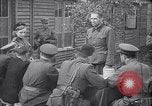
Russian officers interrogate camp guards, dig mass graves and inspect gas chambers of Majdanek concentration camp near Lublin, Poland.
The Nazi concentration camp in Majdanek, Poland (also known as Maidanek) soon after its liberation in World War II. Russian officer interrogates German guards and officials of the camp. Men dig up mass graves for evidence of atrocities and pull out dead bodies. Women weep as bodies uncovered. Decomposed and deformed bodies and pile of skull uncovered. Soviet Russian officers stand and view a mass grave. Barbed wire fencing and wooden sticks used for beating inmates. Zyklon B (or Cyclone B) chemical can that was used for gas in the gas chamber. Soviet officials tour the gas chambers. Guards and officials of camp interrogated with the help of a Russian woman interpreter. Various prisoners tell the story of atrocities at the Lublin Concentration Camp, KL Lublin. Clip is part of Nuremberg Trials prosecution exhibits 228, 229.
Views of Auschwitz concentration camp and liberating Soviet soldiers near the end of World War 2
Auschwitz Concentration camp of the Nazi Germans in Auschwitz, Poland during World War II. Women and children prisoners of the camp walk along the barbed wire fencing. Male prisoners and survivors of the camp. Snow covered barracks and buildings. A map of the gas chamber and other parts of the camp. Women and children prisoners at the camp. Electrically charged barbed wire fencing. Torture equipment at the camp. Old and sick women inmates look out from windows and talk to each other inside women's barracks. Clip is part of Nuremberg Trials prosecution exhibits 228, 229.
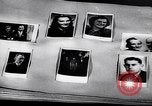
Corpses of prisoners and surviving inmates of the Auschwitz Concentration operated by Nazis in Poland during World War II.
Auschwitz Concentration camp of the Nazi Germans in Auschwitz, Poland during World War II. Photographs of victims of concentration camps belong to almost all countries of Europe. Inmates stand along barbed wire fencing of the camp. Tortured, starved and dying inmates. Corpses lie scattered everywhere on the ground near a house of the concentration camp. An old woman and a child survivor of the camp. Lump of human bones and inmates walk by them. Medics take inmates for medical check up and treatment. Dead bodies taken on a stretcher out of the barrack by inmates. Crowd of survivor inmates released from the camp. Clip is part of Nuremberg Trials prosecution exhibits 228, 229.
CRITICALPAST.COM: About Us | Contact Us | FAQs - How to Order | License Agreement | My Account | My Lightboxes | Shopping Cart | Advanced Search | Featured Collections | Website Terms & Conditions | Privacy Policy ©2026 CriticalPast LLC.
License Agreement |
Terms & Conditions |
Privacy Policy
©2026 CriticalPast LLC.