


 Francais
 Deutsch
 Italiano
Refine Your Search
Waltham Massachusetts 1932 stock footage and images
- Showing 31 to 36 of 893 results more
more Hide
Hide
Former New York Governor, Al Smith, endorses Franklin Roosevelt for the 1932 Presidential elections in the United States.
View of crowd of 200,000 supporters during Franklin Roosevelt’s presidential campaign in Newark, New Jersey, during the Great Depression. Crowds clapping as former New York Governor, Al Smith, endorses Franklin Roosevelt. “The best way to bring back prosperity, the election of Roosevelt, Garner and the entire Democratic ticket!” Smith concludes his endorsement to the roaring cheer of the crowd.
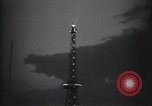
Nightlife views of the City of Berlin, Germany before World War II destruction
Berlin, Germany at night. Views of International Congress Centre tower, night view of streets. Large poster at theatre advertising the film Die Herrin Von Atlantis (The Mistress of Atlantis) with Brigitte Helm (released in Berlin in September 1932). Many lit nighttime and neon signs and buildings including Cafe Am Zoo, Automat, Michels, Capitol theatre showing a film starring Elisabeth Berger and Rudolf Forster and directed by Paul Czinner (Possibly Dreaming Lips or Melo -- both released in 1932). Platz Hermann Tietz. Wintergarten theatre and show chorus line or chorus girl line women dancing inside. Fireworks show over water. German band playing brass instruments with some band members sitting on top of the shoulders of others. Beer taps filling beer steins. People drinking liquor, smoking and dancing in groups at various locations. Female bartender and show girl wearing hat "Haus Waterland" mixes drink while dancing side to side. Dancing girls in a line at the Haus Vaterland nightclub, with band Sid Kay's Fellows playing in the background (led by Sigmund Petruschka and Kurt Kaiser). A man and a chef share a sausage on a platter. Brief moments of on-location background sounds during some scenes.
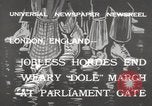
Unemployed people march on the roads to London, England.
Unemployed men and women from Scotland, Wales, Midlands and the South march to London during the Great Depression. Signs seen include, 'Scotland vs. London,' 'National Hunger March,' 'Revolutionary United Mineworkers of Scotland,' and 'We are Against Starvation.' Slate at head of film reads, 'Jobless Hordes End Weary Dole March at Parliament Gate.' Sign in background within village reads, 'The Castle Restaurant.' Research suggests this is the The Castle Restaurant on Norwich Road, Caister-on-Sea, Great Yarmouth Norfolk, NR30 5JN This section of film ends with views of Parliament Building and Clock Tower in London. (Background to the next section of film: In Ireland a so-called Outdoor Relief Strike, supported by the Falls and the Shankhill united, Catholics and Protestants, was launched by the unemployed of Belfast. On Oct 3, 1932, 60 thousand attended a torchlight meeting at the Customs House in Belfast Ireland, to protest relief levels. Sporadic looting and rioting ensued in the following days and more mass demonstrations were planned for Oct 11th.) Film picks up on Wednesday October 5, 1932 as the Royal Ulster Constabulary (RUC) attempt to maintain order. A series of street scenes is shown in which the RUC has begun patrolling. Officers are seen patrolling in Lancia armored car No. 105, with a machine gunner on top. Another Lancia armored car (No. 33) patrols near a park at the corner of Stage Street, Belfast. Boys are seen running across cobblestone streets where they have piled up stones for use in rioting. An RUC Crossly tender truck, carrying several police officers, drives along a Belfast street. View of an empty street where piles of stones and slates obstruct the roadway. Pedestrians appear to be going about their daily affairs as usual. (The primary mischief makers seem to be youths.) Final scene is that of a funeral. (In the course of the week's troubles, two of the rioters were shot dead by the RUC.) A horse-drawn hearse carries at least one. But behind it is a group of pallbearers also carrying a coffin. The street behind is filled with masses of mourners.
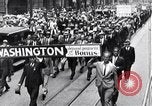
The 1930s Great Depression and the administrations of Presidents Herbert Hoover and Franklin Roosevelt, in the United States
Hard times in the Great Depression led to formation of The Bonus Army. American veterans of World War 1 march on streets of Washington DC, carrying a large poster demanding immediate cash redemption their "bonus" service certificates awarded by Congress in 1924 (but not lawfully payable until 1945). Army Chief of Staff, General Douglas MacArthur, ordered by President Hoover, to clear the Bonus Army encampments, is seen standing in a street surrounded by several U.S. Army troops. People watch from sidewalks as a contingent of U.S. Army cavalry rides down the street. U.S. Army M-1917 tanks roll down Pennsylvania Avenue in July 1932. Bonus marchers and others watch from Lafayette Park in background. Scene shifts to the 1932 Democratic Party Convention in Chicago Stadium, Chicago, where delegates cheer after nominating Franklin D. Roosevelt as their Presidential candidate. Roosevelt seen waving from the podium. Migrant farm workers seen at temporary, dilapidated dwellings in close quarters, and sitting at a campfire, some with sad and desperate faces. Migrant farm workers' cars on the road, piled high with family belongings during westward migration. Migrants riding atop an open railroad freight car. Two men share a copy of the "Epic News" newspaper (published by supporters of Upton Sinclair and the End Poverty Movement in Los Angeles and central California). Narrator describes programs of the Works Progress Administration (WPA) and the Civilian Conservation Corps (CCC). Construction workers ignite demolition charges during construction of Boulder Dam (aka Hoover Dam and officially so-named in 1947). Glimpse of President Roosevelt at the site in an open car, for its dedication on September 30, 1935. Construction workers engaged in building the dam. Another shot of President Roosevelt in his open car. Towers being erected to carry electric power from the dam's hydroelectric generators. President Franklin D. Roosevelt smiling broadly at the formal dedication ceremony, September 30, 1935. Controlled discharges of water through the dam. Views of the Boulder Dam hydroelectric generating station. Oil well rigs or oil derricks at work during construction at night. People at work in fabric mills or textile mills, and in a print shop
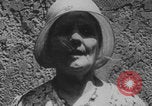
Quaker Evangelist, Miss George Nye, speaks for the Prohibitionist Party against legalization of alcohol
A Quaker Evangelist, Miss George Nye, from Madison, Wisconsin speaks out for the Prohibitionist Party against American society’s permissiveness towards alcohol in a fiery tone. “The Prohibition Party has always fed the goat on pure green grass and cold water. And now my slogan is, ‘Fire, fire, fire, I smell smoke. Get on the water wagon, hitch the hoes to the goat!’” she ends her theatrical statement. She is probably speaking outside the 1932 Prohibition Party Convention, Indianapolis, July 6, 1932

Contributions to rocket research by German Professor Eugen Sänger in the 1930s
German Professor Eugen Sänger conceived of a rocket-propelled airplane in 1934. View of his sketches and notes.View of a workshop, close to his home, where Sänger developed his ideas. It is a nondescript building with wooden exterior and "Deutsche Raketenflug-Werft, Vien1934" (German Rocketflight shipyard, Vienna,1934) scrawled on its door. Professor Sänger and an assistant are seen in doorway of the workshop. Interior views of machinery. Blueprint cross-section of Sängers first Rocket motor (the S.R.1) from 1932. Drawing of test facility arrangement from 1932. Drawing of the S.R.2 rocket motor from 1933, with high pressure liquid oxygen cooling. Drawing of testing apparatus and arrangement from 1933, including Bosch fuel injection pump.