


 Francais
 Deutsch
 Italiano
Refine Your Search
Yokohama Japan 1945 stock footage and images
- Showing 1903 to 1908 of 7988 results more
more Hide
Hide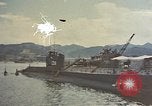
Activity aboard captured Japanese submarines at Japanese Naval Base, Yokosuka, Japan, at end of World War II.
Japanese Imperial Navy submarine I-369 docked at Yokosuka Japanese Naval Base, at end of World War 2. Another submarine nearby has white tents on its deck. American Navy sailor walking along deck of a docked Japanese submarine. Several Japanese I-400 class submarines tied side by side. Armed sailor walks along deck of another Japanese submarine that displays painted images of tigers on its conning tower along side ID numbers that include Japanese characters and "101". Two U.S. Navy sailors aboard the submarine. One examines its deck gun. Japanese soldiers unloading, what appear to be, military duffel bags, from a barge at the dock, as a Japanese officer and several U.S. sailors watch.
Japanese industry supplies UN forces in Korean War. Japanese Factories and Mills. Repairing damaged Military equipment
Sign reads 'Bid Room, P & C Div' and 'P R Pagliocca'. Japanese industrialist business men in suits seen receiving information about United Nations military needs so they can bid for contracts to supply them. View of Japanese industrial factories at work during rebulding of Japan a few years after the end of World War 2. Steel mill with Bessemer converter furnace tilting and firing, ingots ready for forging, hot steel ribbons being placed in wire mills. United Nations Military equipment being repaired in Japan during the Korean war.
Japanese woman feeds the sacred deer in Itsukushima Shrine
Boats docked on the coast of Miyajima Island in Japan. The torii of Itsukushima Shrine. The peaks of Mount Misen in the background. A Japanese woman runs to feed sacred deer in a Itsukushima Shrine (1-1 Miyajimacho, Hatsukaichi, Hiroshima 739-0588, Japan) grounds. Japanese woman wearing a kimono feed sacred deer with the iconic torii in the background. Sacred deer crowd around the Japanese woman.
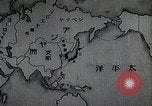
Assimilation of Western culture and fashions seen in Japanese cities
Film opens showing map of Asia and black clouds coming from all around the world to enclose Japan. A street scene with commercial displays of lights and modern architecture. Hollywood movie advertisements, including one for the 1931 Hollywood movie "Confessions of a Co-Ed," starring Phillips Holmes, Sylvia Sidney, and Norman Foster. Japanese newspapers reporting on communist activities. View of a woman's skirt and shoes as she walks along a sidewalk in Western clothing fashions. Similar view of a man. Japanese woman in Western fashions holding a compact and powdering her face. Closeup of the woman's face, with lipstick applied. She winks at the camera. A Japanese man and woman dressed in Western fashions, walking together. They sit together at a cafe table sipping sodas through straws. Behind them on the wsll is posted an advertisement for the 1930 movie, "Girl of the Golden west" starring Ann Harding. Japanese people in western fashions hurrying along a city street past others in more traditional Japanese garb. A Japanese dressed in the latest Western golfing attire, teeing off on a golf course. Two boy caddies stand next to him. Laborers in a glen using pickaxes to contour the ground (possibly for a golf course). View of a large school building with many uniformed school girls performing calisthenics in the schoolyard. Final scene reverts to the opening map and shows the dark clouds being dispelled from Japan.
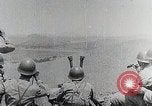
Role of metals in Japanese war against China during 2nd Sino-Japanese Conflict
Scenes of Second Sino-Japanese War, circa 1938. Japanese soldiers observing battlefield from a ridge. Japanese artillerymen firing field pieces. Flight of two Mitsubishi Ki-15-1 light bombers in formation, later called "Babs" by the Allies and known as a C5M in Japanese Navy usage. Aerial view of Japanese bombs falling on Chinese cities. Chinese citizens, including an injured woman, seeking shelter from bombing. Aerial view of Chinese ship being strafed by Japanese aircraft. The ship explodes. Downed Japanese warplanes burning. Scenes of destruction from bombing of oil facilities. Iron ore being moved in Japanese rail cars. Steel plants around Yawata, Japan. Numerous containers of molten steel inside a steel plant. Hot Steel ingots being moved. Animated map shows locations of iron ore deposits in Japan. Scrap steel being imported that, narrator states, helped boost Japanese wartime production to 12 million ingot tons in the Sino-Japanese war. More views of open rail cars moving alloying elements to a steel mill. Open mining using explosives. Mining operations for copper and bauxite (aluminum ore). Japanese miners shoveling ore by hand into open rail cars. Open rail cars moving in both directions on parallel tracks. (Note: Although some narration refers to 1941 Japanese production, the images are from earlier period.)
Japanese silk and textile industry
The silk and textile industry in Japan. Japanese farmers engage in sericulture to supplement their income. A Japanese farmer smiles as she cultivates mulberry leaves for silkworms. Farmers gather mulberry leaves. A Japanese girl gather silk cocoons. Woman boils silk cocoons left by the silkworms. Smokestacks of factories in Japan. Silk cocoons are thrown into a pile. A machine processing raw silk. Japanese women working in silk factory. They place silk cocoons in steaming vat. Machines process raw silk into fabric.
CRITICALPAST.COM: About Us | Contact Us | FAQs - How to Order | License Agreement | My Account | My Lightboxes | Shopping Cart | Advanced Search | Featured Collections | Website Terms & Conditions | Privacy Policy ©2026 CriticalPast LLC.
License Agreement |
Terms & Conditions |
Privacy Policy
©2026 CriticalPast LLC.