


 Francais
 Deutsch
 Italiano
Refine Your Search
Yokohama Japan 1945 stock footage and images
- Showing 1909 to 1914 of 7988 results more
more Hide
Hide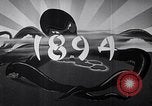
The Rise of Japanese militarism in the 20th Century
Film opens showing reenactment of Japanese attack ostensibly against Formosa, in 1894. Japanese troops and artillery are shown. The event is depicted in a critical political cartoon. Next, Japanese Admiral Heihachiro Togo is seen in 1904, standing with other naval officers. Then, Japanese warships are shown, firing barrages of naval gunfire at the Russian fleet in Port Arthur, Manchuria. Huge black clouds arise from burning ships. Scenes of Japanese people celebrating their naval victory. Date shifts to 1910. Cartoon depicts Japanese annexation of Korea. Cartoon illustrates Japanese actions in World War I when, siding with the Allies, Japan acquired the German-held Shandong (Shantung) Peninsula of China, as well as German-held Marianas, Carolines, and Marshalls islands in the Pacific. Japanese representatives are seen participating in Post World War 1 international activities. They signed the so-called Five-Power,Four-Power, and Nine-Power treaties, and participated in the League of Nations. Glimpse of two Japanese officers, followed by cartoon depiction of the Mariana, Caroline, and Marshall Islands, that Japan insisted on keeping. Cartoon shows them being fortified. A Japanese military marching band parades down a city street while being cheered by spectators on the sidewalks. Next, Japanese military General, Baron Tanaka Giichi, is seen in uniform with other officers. Cartoon illustrates the so-called Tanaka Memorial document that Baron Tanaka allegedly presented to the Emperor, in 1927, outlining a strategy to conquer the world. Cartoon then illustrates plan of conquest by acquiring Chinese manpower; Manchurian iron and coal; Siberian timber, coal, wheat, and metals; Tin,oil and rubber from Malaysia and the East Indies. The United States is shown as the last conquest. Views of ordinary farm and factory activities in the U.S. Cars parked in the Ford Motor Company factory lot. Japanese officials and legislators meeting in the Diet (Parliament). Japanese theater patrons and a Japanese woman singing with an American-style band, are shown as examples of activities the Japanese Government sought to discourage. A Japanese female ensemble in traditional dress, playing traditional instruments, is shown as more desirable. Western dancing and western hollywood movies are shown and narrator states they were forbidden by the Japanese government. Japanese movie scene depicts ancient martial arts. A musical production on stage displays German Nazi swastika flag , Japanese rising sun, and symbol of Kingdom of Italy, celebrating the axis alliance. Japanese men are shown playing the ancient game of Chu Shogi, instead of playing Western card games. People are shown in a library, where Western books are replaced by more militaristic tomes, such as: "If we fight" by Admiral Shinsaku Hirata, March 15, 1930 (shown on film slate). Slate goes on to quote about attack on Hawaii as the first battle in war of the Pacific. Film cites another approved Japanese publication: "Arguments Against American Policies" by Kawashima Seichiro, Christmas Day, 1924. It discusses distruction of the American fleet and subsequent landing on the U.S. West Coast.
Rural population's contribution to Japanese war efforts in farm and home industries during World War II
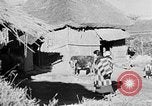
Rural population of Japan engaged in war production and support of Japan during World War 2. Japanese rural area shows farm families outside native huts. Women cook food, pump water and wash vegetables in creek. Mud and wood huts with straw roofs. Farmers in field. Harvesting in farm. Lumbers piled up outside a building. Civilian men work with lumber. Women prepare handicrafts outside house. Home industries. Interiors show workers at work including men, women, and children working in war effort. Japanese family eats food and elderly Japanese woman smokes a pipe. Japanese people walk through rubble and debris after Great Kanto earthquake of 1923. Shows areas of rubble and workers digging through earthquake rubble, along with United States citizens involved in effort on the ground and through material relief support from America.
A U.S. Government background study film about the culture and behavior of Japanese society
Opening slate recounts that the First American Consul to Japan was received on December 7th 1857, and Japanese forces attacked Pearl Harbor on December 7th, 1941 during World War 2. After the slate, Japanese are seen depicted in prints by famous 18th and 19th century artists: Katsushika Hokusai; Utagawa Kunimasu; and Ando Hiroshige. Next are various views of Japanese Type 97 Chi-Ha tanks. An industrial site with numerous smoke stacks spewing clouds of effluents. Momentary glimpse of a Japanese Torii Gate. Crucible of molten steel being emptied. Machine shop powered by driving belts. Closeups of various machine tools in operation. Closeups of Japanese industrial workers. A line of Type 95, 75 mm Japanese field guns produced in Japanese factories. Japanese women engaged in home industries making parts for factories. A Japanese artisans working in pottery, porcelain and metal. Various views of densely populated Japanese city with trolley cars; automobiles; and pedestrians (most in Western style clothing, but some women in kimonos). City buildings of modern design. Men leaving their shoes at the doorway as they enter a house. A woman helps a man don a lounging gown upon arriving home from work. Japanese children in the courtyard of their urban school, performing exercises and calisthenics. Three children walking home from school. A family in traditional Japanese attire, having dinner at home. A steam locomotive pulls a train through rural area of Japan. View from above, of farmers working in terraced area. Closeup of farmer guiding a plow being pulled by oxen. Women sowing seed in a rice paddy. Farmers planting seedlings, and hoeing, threshing, and harvesting crops by hand. Harvested crop being placed on outdoor rack to dry. Exterior of farmhouse with thatched roof. View of family inside, preparing dinner and later sitting around a covered charcoal brazier, to keep warm. The woman of the house turns on a single electric light and the man turns on a radio having an external speaker horn. Two Japanese sumo wrestlers in a ring at an arena. Views of Sumo wrestler going through preliminary movements, followed by two wrestlers battling in the ring. Japanese Jujitsu master demonstrates skill by throwing assistants in a demonstration. Two Japanese men demonstrate kendo dueling before an audience of students in a training facility. (They do not wear protective attire.) A horse race taking place at a large track with many spectators in the viewing stands. A Japanese golfer hitting a ball out of a sand trap. Glimpse of tennis players. Japanese baseball teams march into a stadium and play the game before a crowd of spectators. Japanese office displaying poster for the Marx Brothers movie "Duck Soup." Several Japanese at a home party party with saxophonist playing 1928 American song, "Sweet Sue, Just You." The group joins in singing the song. Patrons in Western style attire dancing in a night club to music of a modern orchestra. Customer smoking cigarette and sampling an American cocktail and a small cup of saki as jazz is being played in the background. A woman dressed as a Geisha plays a shamisen.
Japanese Prime Minister, Kichizaburo Nomura, expresses confidence in future relationship with the U.S.
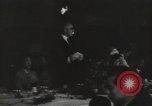
Kichizaburo Nomura, last ambassador to U.S. of America, is seen in Japan, before World War II. A Japanese official speaks at a table. After the end of the second World War, Nomura expresses his firm belief that there are no problems between United States and Japan that cannot be resolved.
Benny Goodman In Japan 1957
The Song Is Called Honeysuckle Rose. Featuring Benny Goodman On Clarinet. Rex Peer On Trombone. Mel Davis On Trumpet. Budd Johnson On Saxophone. Also Featuring Japanese Musicians On Drums (George Kawaguchi), Clarinet(Eiji Kitamura [right] & Shoji Suzuki [left]), Bass(Go Ueda), Guitar(Shungo Sawada), and Piano(Hachidai Nakamura).
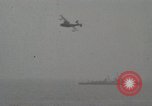
Captured Japanese submarines being sunk by United States Navy near Sasebo,Japan.
United States Navy Martin PBM Mariner flies over Japanese submarine during Operation Road's End. Destroyer USS Everett F. Larson (DD-830)seen nearby. Two Admirals and a Captain observing from bridge of the USS Chicago (CA-136). Japanese submarine explodes. View of captured Japanese submarines sinking. U.S. Destroyer, USS Everett F. Larson in the background.
CRITICALPAST.COM: About Us | Contact Us | FAQs - How to Order | License Agreement | My Account | My Lightboxes | Shopping Cart | Advanced Search | Featured Collections | Website Terms & Conditions | Privacy Policy ©2026 CriticalPast LLC.
License Agreement |
Terms & Conditions |
Privacy Policy
©2026 CriticalPast LLC.