


 Francais
 Deutsch
 Italiano
Refine Your Search
Yokohama Japan 1945 stock footage and images
- Showing 2011 to 2016 of 7988 results more
more Hide
Hide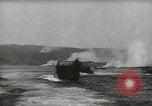
Montage of World War II combat scenes.
Montage of combat all over the world, during World War 2. Amphibious assaults, American soldiers advance and fire artillery on the battlefield. Soldiers fire rifles near gun emplacements on a Japanese island. U.S. medics or corpsmen give medical aid to a wounded soldier. German soldiers holding up white handkerchief and surrendering in a town in Europe as American soldiers receive the German prisoners of war. American soldiers leading an unclothed Japanese prisoner of war at gunpoint on a Pacific Island. A newspaper headline reads ' Japan surrenders'. Numerous jubilant Victory over Japan or VJ Day celebrations in the United States. Crowds gathered in celebration, sailor and soldier in uniform celebrating with civilians. Ticker tape rains down from buildings in New York City and other cities. A large crowd of civilians gathered on the streets to celebrate the end of World War 2.
U.S. Lieutenant General Daniel Sultan explains Japanese aggression in China and need for troops in India and Burma during WW2
World War II film about the China, Burma, India (CBI) Theater of Operations. A soldier is seen filling out a form seeking information about him and inviting him to write in questions about anything he hadn't learned through normal information channels. Scene shifts to Information and Education Department of the Burma-India Command, where it is being processed by a soldier. Lieutenant General Dan I. Sultan, commander of Burma-India Theater, is seen next, seated at a desk, with wall map of the region behind him. He is appearing in an information film intended to inform troops under his command. He notes that more than half the troops who filled out the information form, asked why American troops were stationed in India and Burma. He refers to the recent recall of General Stillwell and the splitting of CBI into two theaters (China and India/Burma). He states that the purpose is a path toward Japan. An animated map shows China (that narrator notes has been fighting Japan since 1937). Animation shows Japan walling off China from the outside world, by seizing her ports, and then concentrating its grip on the Eastern part of the country. Without access by sea, the allies had only one option to assist China in the fight against Japan. That was to open the Burma Road. Film shifts to scenes of Japanese bombing of Shanghai and Chinese civilians abandoning the city in 1937 during Second Sino-Japanese War. Wounded and injured Chinese fighting fires while tending casualties in an open area. Glimpse of Chinese soldiers near one of their few large artillery pieces. A gun crew manning one of her few antiaircraft guns. Chinese jam road in trek to the unoccupied provinces of the country. Chinese carrying casualties on stretchers, making do without ambulances. Chinese coping in the face of all kinds of shortages. In contrast, well supplied Japanese troops are shown in formation. Japanese troops, military vehicles and equipment are seen. Japanese firing machine guns and heavy artillery against Chinese positions. Japanese armor and long lines of troops engaged against the Chinese, who continue to resist in spite of shortages and hardship. Chinese soldiers without shoes, marching in a column.
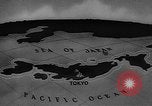
The salvage crew team works on ships after the attack on Pearl Harbor in Hawaii.
Aftermath of attack on Pearl Harbor, Hawaii, during World War 2. An animated map shows Japan in the Pacific Ocean. Nagasaki, Kobe and Otaru in Japan. U.S. propaganda scenes with caricature voice of a fictional "Mr. Tojo" of Japan declaring various U.S. Navy ships destroyed after the Pearl Harbor attack. Scenes of various capsized and damaged ships in Pearl Harbor following the Japanese attack. United States naval personnel and civilian personnel work on salvage and repair. Engineers and personnel recruited. Navy divers get into scuba diving suits and helmets and go under water to collect salvage and make repairs. Destroyed USS Nevada, USS West Virginia, USS California. Salvage crew work aboard these ships. Refloated and refitted U.S. Navy ships departing Pearl Harbor in the war effort. View of the Aloha Clock Tower. Sailors stand with Lurline ship in background. View of people enjoying Waikiki Beach in 1940 or 1941 before the attack. Later scene of the same beach with two young boys playing in the sand, but barbed wire between the beach and the ocean, following America's entry into World War 2. Empty streets of Honolulu at dusk as blackout time hours begin. Narrator speaks out against Japan and states that all they that take the sword shall perish the sword, and text "This is not the End" appears at the end of the film, following by text, "This is but the Beginning!"
Scenes from World War 1, and world events in the period between World War I and World War II.
Rail guns firing in World War 1. U.S. troops charging out of trenches. Allied gunners firing "French 75s" Allied twin-tailed biplane bombers. French Renault F17 tanks. Crowds in cities celebrate Armistice Day and end of World War I. Treaty of Versailles. Destruction of warships. Scenes of Paris. A pagoda in Japan. Temples in Siam, China, and Manchuria. Two Kayan women in Myanmar or Thailand perform a dance. Both Kayan women wear long brass coil neck rings. In the U.S., a boy hits a baseball and runs toward first base. Scenes of Japan invading Manchuria. Newspaper with headline: Henry Stimson denouncing Japan. U.S. Army troops dispel World War I veteran bonus marchers. Men lined up in bread line for unemployed during Great Depression. Brief shot of Gangsters in gun battle in an American city. Scenes of dust bowl in American with farmers and families heading West in caravans. Family standing by tent. Torchlight parade in Germany. Adolf Hitler standing with German President Hindenburg circa 1933. Adolf Hitler, Heinrich Himmler, and Victor Lutze, at 1934 Nazi Rally in Nuremberg. Italian Caproni bombers over Ethiopia. Ethiopian tribesmen and Haile Selassie. U.S.Neutrality Act. American youths with a 1930 Ford coupe. Scenes from Civil war in Spain. Spanish Rebel forces in ground combat with Nationalist forces. German and Italian aircraft participate in bombing Spanish Nationalist targets in Spanish Civil War. Spanish civilians flee bombing, tend to wounded and dead victims following bombings. Italian Savoia-Marchetti S.M.79 Sparviero bombers. Crowds running for shelter. Women and children victims of bombing, some crying and in shock. Spanish General Francisco Franco arrives by train in southern France to meet with Hitler. View of Gallup Poll forms, and findings, with Americans against entering European war and preferring neutrality. Japanese planes and warships attack China. Naval Chinese civilians run for cover; bodies of Chinese in trucks. Japanese freighters, Buenos Aires and Tatsuno Maru, in U.S. ports being loaded with scrap iron and metals. Hitler, Goering and other officers in 1938. Adolf Hitler, Neville Chamberlain, Edouard Daladier, Benito Mussolini, Count Ciano sign Munich Agreement. Hitler riding standing up in an open car during a rally in Germany. Elevated view of Los Angeles, then view of traffic on streets of Los Angeles California and newspapers being sold to pedestrians. View of faces of American citizens in a movie theater watching Confessions of a Nazi Spy. German-American Bund activities including outdoor rallies in the U.S. (Camp Siegfried in Yaphank, Long Island, New York, in 1937), and an indoor rally in New York City at Madison Square Garden in 1939. Emperor Hirohito reviewing World War 2 troops of Japan. Japanese steel production and arms production in Japanese factories. The Hokoku Maru Japanese ship being launched with fanfare from Tama Shipyards on July 5, 1939. Meeting of United States Military Affairs Committee of the U.S. House of Representatives in late 1939 to consider national defense matters. In meeting of Naval Affairs Committee, representative asks for increase of 25 percent in authorized naval tonnage.
Training film about The Battle of Coral Sea between Japanese and United States Navy and Air forces in the Pacific Ocean (WW2)
A 1950 United States Naval Training Film about the 1942 Battle of Coral Sea in World War II. Film titled 'The Battle of The Coral Sea'. Diagram shows the location of Coral Sea on the globe. Phase I of the battle from 1st to 4th May described. II Phase from 4th to 7th May explained. III Phase 7th to 11th May, of the battle that saw double action from both sides discussed. Animation shows the area captured by Japan after the battle. Japanese cut communication between United States and Australia. Japanese battleship at sea. Japanese troops in field. Doolittle raid on japan, U.S. plan described through animation. Bombing of Tokyo. Japanese Commander in Chief Admiral Yamamoto on ship. Location of Commandant 4th Fleet. Japanese Commander gives information about U.S. planes. He talks about plans and strategies of U.S. for war. Allied forces on Japanese land. United States submarines in Japan. Japanese plan of defense explained. Two invasion forces of Japan, Moresby and Tulagi described through animation. Allies counter attack Japanese targets. Allied TF 17 and TF 11 in Japanese province. Allied attack on Tulagi, Japanese counter attack.

Korean hardships under Japanese occupation and official Japanese annexation of Korea in 1910
Korean propaganda film depicting Japanese involvement in Korea, from end of Russo-Japanese war through post annexation in 1910. Landscape scenes of Korea. A 4-stacker Japanese troop ship, in a Korean harbor, flying the rising sun flag. Japanese troops disembarking, and marching off the pier. Japanese atrocities committed against the Korean people. Still pictures of Japanese officers. Slate highlights August 10, 1910, the date that Japan officially annexed Korea. Images show Korean flag being replaced by that of Japan. Panning views over rooftops of residential neighborhood and buildings in Nam San Dong, Seoul. Scene shifts to poorer rural area village with straw-roofed huts. Men till rice fields and irrigate fields by manpower alone. Views of various farm crops in the fields. Women are seen harvesting crops. In village, peasants thresh grains by hand. Officials arrive to weigh and take rice from village.Narrator states that the Japanese were everywhere and treated the Korean people very badly.Burlap bags of grain piled on cart. Korean workers load farm products for shipment to Japan. Various cargoes of Korean products being moved by rail to ports for shipment to Japan. Korean women and some children at work in fabric mills. Korean men at work in smelting plant. Many Korean men laboring on rock piles, and carrying heavy logs. One man collapses. Another collapses while working in surface mining. Supervisor chases others who try to assist him. (Note:This film, which contains some very old historic footage, is attributed to the War Department Military Intelligence Division, and was probably produced circa 1940. It is listed as 1910 because Japanese annexation and related events are included herein.)
CRITICALPAST.COM: About Us | Contact Us | FAQs - How to Order | License Agreement | My Account | My Lightboxes | Shopping Cart | Advanced Search | Featured Collections | Website Terms & Conditions | Privacy Policy ©2026 CriticalPast LLC.
License Agreement |
Terms & Conditions |
Privacy Policy
©2026 CriticalPast LLC.