


 Francais
 Deutsch
 Italiano
Refine Your Search
Yokohama Japan 1945 stock footage and images
- Showing 2017 to 2022 of 7988 results more
more Hide
Hide
View of traffic on a highway in Okinawa,Japan
View of traffic on a highway in Okinawa. Cars and transport trucks on street. Street signs '50','Stop','Drive Safely The Life You Save May Be Your Own'.
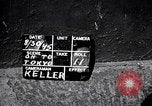
United States11th Airborne division, B-29 aircraft landing near Tokyo bay.
A United States 11th Airborne division, B-29 Superfortress, a four engine heavy bomber propeller aircraft, flies overhead, over Tokyo bay. Various landing craft in bay heading toward shore. The Allied occupation of Japan begins. United States Navy and the U.S. Army 11th Airborne Division land in the country. (World War II period).

Japanese Station announcer Iva Toguri D'Aquino talks about how she came to work for the Japanese government, from Radio Tokyo.
Re-enacted broadcast of the 'Zero Hour' by 'Orphan Ann' from Radio Tokyo. Radio announcer Iva Toguri D'Aquino (Iva Ikuko Toguri before marriage) speaking in English tells about her life since the day she left Los Angeles where she was born and came to Japan to visit a sick aunt. She talks about how she came to work for the Japanese government. Iva Ikuko Toguri would later be wrongly convicted as the voice behind 'Tokyo Rose' a legendary radio personality that was never found.

Iva Toguri D'Aquino (Iva Ikuko Toguri) reads propaganda from Radio Tokyo and talks about her personal life.
Iva Ikuko Toguri (D' Aquino after marriage) re-enacts segments of a broadcast of the 'Zero Hour' as her character 'Orphan Ann' from Radio Tokyo. Iva Toguri D'Aquino reads the script, openly declaring that she will be assaulting the 'morale' of her listeners. She then introduces some music she describes as 'Jive'...a song called, 'I Don't Want to Work.' Japanese man plays a phonograph vinyl record in the background. Iva Toguri D'Aquino also talks about her life in America and Japan. She would later wrongly be accused of being 'Tokyo Rose'
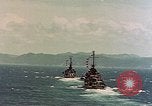
Japanese installations on beach and shoreline around Tokyo Bay, Tokyo.
Tokyo Bay beach installations, Tokyo. Two U.S. destroyers enter Tokyo Harbor. Mountains in background. Shoreline of Japan. Japanese installations on the beach. Shoreline and beach installations on Tokyo Bay mountains.
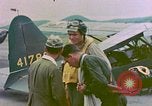
Japanese military and civilians with U.S. Navy fliers at airfield in Nagasaki after World War II
Activities at Omura Air Field in Nagasaki, Japan after the end of World War 2. Two U.S. Navy fliers converse amicably with a Japanese airmant, as they stand in front of a Stinson L-5 Sentinel airplane, in which the Japanese airman expresses interest. Camera pans to a tent set up nearby, under which several American military and Japanese civilian and military men ae seen. Damaged roof on a building in the background. Camera pans past skeletons of bombed out hangars and other buildings. Airport operations building appears intact. Small prefab quonset-style hangar nearby. Japanese soldier stands near car parked on ramp. Several U.S. Navy airplanes parked in background.
CRITICALPAST.COM: About Us | Contact Us | FAQs - How to Order | License Agreement | My Account | My Lightboxes | Shopping Cart | Advanced Search | Featured Collections | Website Terms & Conditions | Privacy Policy ©2026 CriticalPast LLC.
License Agreement |
Terms & Conditions |
Privacy Policy
©2026 CriticalPast LLC.