


 Francais
 Deutsch
 Italiano
Refine Your Search
Belsen stock footage and images
- Showing 13 to 18 of 25 results more
more Hide
Hide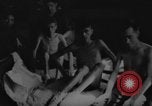
Captured German Army SS (Schutzstaffel) guards are forced to bury dead prisoners at the Bergen-Belsen Camp
Conditions at the Bergen-Belsen Concentration Camp in Germany immediately after World War 2. Liberated prisoners at the camp. Corpses lying on a field show signs of brutality. Prison number tattooed on the hand of a dead prisoner. Captured German Army SS (Schutzstaffel) guards are forced by Allied troops to bury dead prisoners. German women guard and SS guards bury the dead bodies in mass graves. Allied troops on a truck. A bulldozer pushes piles of dead bodies into mass graves.

British Commander and German woman doctor describe the conditions at Bergen-Belsen Concentration Camp in Germany (WW2)
Nazi concentration camps in Germany. Bergen-Belsen Concentration Camp in Germany. The British Commander of Royal Artillery describes the conditions at the concentration camp after Allied liberation near the end of World War II. The Commander says that food is being given to survivors and dead bodies are burnt. German woman doctor states that there were no beds for women prisoners; men and women died daily. Inmates started cannibalizing dead prisoners. Medical experiments were done on prisoners.
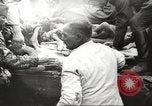
Dead, mutilated and emaciated bodies being buried by German Guards at Bergen-Belsen Concentration Camp (WW2)
Bergen-Belsen Concentration Camp liberation during World War II. Nazi German SS Guards (German Guards) place dead bodies in trucks. A vehicle drives past the dead bodies. The bodies are thrown into mass graves. German women guards bury the dead. Heaps of bodies being lifted by bulldozers and put in mass graves. The affidavit by United States Navy Lieutenant E. R. Kellogg.
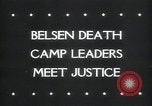
Nazi war criminals of Bergen-Belsen concentration camp are tried at British Military Tribunal in Luneburg, Germany (WW2)
Nazi war criminals attend British Military Tribunal in Luneburg, Germany. Nazi war criminal and Commandant of Bergen-Belsen concentration camp Josef Kramer is marched to a British Military Tribunal at Lunenburg. Kramer's chief assistant Fraulein Irma Grese arrives with other women. The 35 accused men and women wear identifying numbers in court sessions. Number two is German doctor Fritz Klein who is responsible for countless deaths. Corpses piled up at Bergen-Belson camp after its liberation in World War II.

British Members of Parliament visit German concentration camps after Allied victory in Germany (WW2)
British Members of Parliament (MP) visit sites of German atrocities including Buchenwald, Bergen-Belsen after the end of World War II. The Members of Parliament at a concentration camp witness piles of dead bodies of German prisoners, a whipping block, the crematory ovens. The MPs also visit the Belsen camp of political prisoners. Starving and dead prisoners at the camp. Ground near the camp covered with dead bodies. A mass grave with piles of dead bodies. Dead bodies of prisoners burnt, shot, fired, and trapped in barbwires. Scenes of Chief Warden and commander Josef Kramer, Gestapo guards, and women guards of the Belsen camp arrested. Security guards of the camp arrested. Escaped prisoners of a Stalig near Leipzig guide the MPs towards more jails and dead bodies killed when trying to escape the burning building. Dead bodies of Germans in Leipzig who committed suicide by cyanide poisoning before being captured, including Deputy Mayor and Municipal Treasurer Dr. jur. Ernst Kurt Lisso, at his desk, his wife Renate Stephanie, in chair, and their daughter Regina Lisso, all in the Leipzig New Town Hall (Neues Rathaus Neues Rathaus Martin-Luther-Ring 4, 04109 Leipzig, Germany). Body of Volksarmee General, who also died by suicide.

United States President Dwight D Eisenhower visits Ohrdruf Concentration Camp in Germany at end of World War II, in Europe.
Nazi concentration camps seen after being liberated at end of World War II in Europe. Supreme Allied Commander, General Dwight D. Eisenhower, visits the Ohrdruf concentration camp. Surrounded by crowds of U.S. soldiers, he views the remains of dead victims. A man demonstrates how a device is used to punish inmates. Scene shifts to the Buchenwald camp, where political prisoners were kept,. and then to the Bergen-Belsen concentration camp. Survivors are seen in pitiful condition from starvation, torture, deprivation and sickness. Burned skeletons of human bodies in the ovens. German female concentration camp guards (SS guards known as Aufseherinnen) walking in a line and then seen in formation. SS (Schutzstaffel) concentration camp guards, both men and women, and their leader, Josef Kramer, Commandant of the Belsen camp, seen forming up, and then marching off and being taken into custody.