


 Francais
 Deutsch
 Italiano
Refine Your Search
Japanese-martial-arts stock footage and images
- Showing 55 to 60 of 4336 results more
more Hide
Hide
Montage of U.S. scenes covering various parts of the nation
Opening scene shows a wheat field in the United States. White hot molten metal collected in ladles as a furnace is tapped. Sandstone buttes the Navajo Nation's Monument Valley Park. Half Dome in Yosemite National Park. Michigan Avenue in Chicago, Illinois, as seen from a moving vehicle looking North from the Art Institute, with many skyscrapers of glass and steel. A white church in a suburban setting. The Japanese cherry trees in bloom along the Tidal Basin in Washington DC. A major river and an old fashioned stern wheeler River Boat cruising on it. A street scene in New Orleans, Louisiana. A roadway in Florida. A fishing village scene in New England. A formation of oil well pumps operating out West. Cowboys on horseback herding cattle in a wide open prairie view. View of the Statue of Liberty with dramatic sunset behind it. Two U.S. Marines conversing as they look at the Manhattan skyline in New York City. Aerial view of the skyscrapers on Manhattan Island. View of Times Square in Manhattan, with the Astor Hotel visible (It was razed in 1967). Police officer directing traffic at an intersection. Two Marines walking past the United Nations Building in Manhattan, New York City. View of the General Assembly Building and construction site of the The Dag Hammarskjöld Library Building being added in front of it. Camera pans upward showing Independence Hall in Philadelphia, Pennsylvania. Camera pans the U.S. Capitol building, followed by the Lincoln Memorial, the Jefferson Memorial, and the Washington Monument (viewed from steps of the Lincoln Memorial across the reflecting pool, in Washington, DC. A Marine color guard marches across the lawn in front of the United States Marine Corps War Memorial (Iwo Jima Memorial) in Arlington Ridge Park Virginia, as the Marine Band marches and plays. Closeup of the Memorial with American flag flying above it.
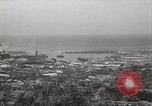
Schools, hotels, business corporations and a harbor in Honolulu, Hawaii before the attack on Pearl Harbor.
The modern city of Honolulu in Hawaii, United States before the attack on Pearl Harbor during World War II. An aerial view of the city of Honolulu. Automobile traffic on a road. Exteriors of a municipal building, a library, the University of Hawaii and schools. Exteriors of the Honolulu Academy of Arts. A car parked outside houses. The houses of bishops. A view of hotels. Boats and ships from various countries in a harbor. Buildings of various business corporations. Cars parked outside the buildings. A dramatization: two men talk about sugarcane and pineapple cultivation. They talk about the Japanese as labors to cultivate sugarcane and pineapple.
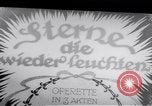
Post War unrest in Germany following World War I. Martial law is declared. Artillery and soldiers in Berlin, Germany.
Clip opens with scene from a play in Berlin entitled: The Star Shines Again. German officer stands on a stage and gives speech. Following street scenes and newspaper headlines illustrate the increasingly desperate conditions developing in postwar Germany following World War 1, culminating in declaration of martial law by the Ministry of Defense. Scenes of civil unrest and use of martial force to control the population during the German Revolution of 1918-1919. German soldiers and artillery in the streets work to control unrest of German citizens. Massive crowd of German citizens running and dispersing in panic on streets of Berlin. Newspaper headlines describe the unrest.
German occupation, martial law, and Danish resistance in Denmark during World War II
Film about Denmark after the Nazi German occupying force declared martial law and state of war with Denmark, in 1943-44 during World War 2. It was made by Danes and smuggled out of Denmark during that period. Opens with view of a church building and flocks of birds. Views of German army troops marching into Copenhagen, Denmark on April 9, 1940. SS troops dressed in black, marching. German soldiers carrying rifles with fixed bayonets, goosestepping. A fire burning at site sabotaged by Danish resistance elements in 1943. Derailed trains carrying goods to Germany. Fire at a German factory. Danish workers with bicycles staging a strike in protest German measures in response to resistance actions. Danes gathered in outdoor observance memorializing those killed by the Germans. A shop owned by German sympathizers (Quislings) destroyed by other Danes. People gathered on street on 29 August 1943, when the occupying German forces attacked the remaining Danish garrison and declared martial law. Announcement posted in Danish on a wall. View of Danish Naval vessels ordered scuttled by the Danish Admiralty, including the coastal defense ship,Peder-Skram, seen in front of a large building, the submarine, Havfruen (not seen) and others seen sunk at docks in Copenhagen harbor. Bullet hole through a glass window. A week later, on Sunday, 5 September, 1943, a German Panzer light tank is seen moving on a street, as pedestrians go about their business in Copenhagen. German soldiers patrolling on a motorcycle with sidecar. A man holding his hands up as he is hustled through a crowd under arrest by a German in black uniform (possibly Gestapo or SS). Motorcycle driving through pedestrians on the sidewalk. Spectators line a fence by an open field near a building labeled "Badstue Badminton." One, a woman, speaks through the fence to a Danish soldier interned there. View of the quarters of the Royal Guard at Rosenborg, occupied by German soldiers and with Nazi flag flying above it. Civilian relatives of interned men wait outside army headquarters for news about them. A courtyard, during a mass funeral, is filled with memorial flower wreaths covering the coffins of Danish soldiers and civilians killed by the Germans. Camera focuses on a wreath from King Christian of Denmark, among the many others. Two German soldiers march up a path at the Royal Residence Amalienborg, where King Christian is arrested. Views from moving camera as Danish flags are seen flying all over the city of Copenhagen, on 26 September, 1943, to celebrate the King's 73rd Birthday. The major exception is the Nazi Gestapo headquarters in the "Shellhus" (the prewar Shell Oil offices) shown in isolation. Views of people moving their belongings on hand carts after their homes were taken over by Germans. The slogan in English, "Do it well and do it now,"is seen left by Danish resistance fighters where they sabotaged a German military installation.
Imposition of Martial law in Jerusalem, Palestine
A newsreel titled 'Martial law in Palestine' shows imposition of Martial law in Jerusalem, Palestine by British mandate authorities. Military tanks roll out on the streets and access to public buildings restricted by barbed wires. Police and soldiers check and search the people on the streets. Curfew imposed in the city.
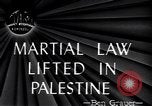
Lifting of Martial law in Tel Aviv
A newsreel titled 'Martial law lifted in Palestine' shows, armed crewmen inspect a wrecked train after a bomb blast and guards patrol the area in Jerusalem, Palestine. Jewish agency executives including American representatives gather at a hospital to meet with President David Ben-Gurion and discuss the creation of a Jewish state. American representatives include Ms. Rose Halprin and Dr. Abba Silver. Martial law being lifted as people move out on streets and British soldiers remove barbed wire that had been dividing Jerusalem. Crowd of men, women, and children greet and mingle after the wire is removed.