


 Francais
 Deutsch
 Italiano
Refine Your Search
Japanese-martial-arts stock footage and images
- Showing 799 to 804 of 4336 results more
more Hide
Hide
United States and Japanese diplomats, naval officers and sailors mark centennial of Commodore Perry Expedition
American and Japanese diplomats, Naval officers, sailors, and local officials mark the centennial of Commodore Perry's expedition at Shiroyama Park in Shimoda, Japan. The Japanese flag is slowly raised by an American sailor. Then the American flag is slowly raised by a sailor of the Japanese Naval Self-Defense Force. A small Japanese boy unveils a new memorial for Commodore Perry and Consul Harris. Admiral Robert Briscoe, commander of U.S. naval forces in the Far East, lays wreaths at the new monuments. Japanese officials also place wreaths, and a Japanese official gives a speech. view of the bay from the memorial. Japanese school girls in traditional costume pose with a model of a "black ship" from Commodore Perry's Squadron.
Japanese Navy minesweepers in formation underway at sea
Japanese crew works on minesweepers in the Pacific Theater. Two Japanese ships in a harbor. Pier in the foreground. Ships underway at sea. Japanese crew prepares to load weapons. They fire the navy weapon. Japanese Navy mine sweepers in formation. Japanese Naval officers work on charts aboard the ship. An officer looks through field glasses. A Japanese Naval Signal Corpsman gives signals. Mines in water. A shell explodes in water. Hills in the background. Officers look off the bridge of the ship with field glasses. Japanese in a mine sweeper attach wire to mine. (World War II period).
On May 3, 1947, Emperor Hirohito informs the Japanese people that the Constitution of the State of Japan is now in effect.
Japanese Emperor Hirohito (Emperor Shōwa) addresses the Japanese people on the grounds of the Tokyo Imperial Palace. Many Japanese flags fly from tall poles. A bandmaster conducts a seated military band. A chorus of young women, each wearing a chrysanthemum pin, singing. The bandmaster, standing on a chair, conducts both band and chorus. A formation of National Police Reserve salutes. Spectators, gathering before the main stage and podium, raise their arms and shout Banzai in unison, three times. A contingent of Japanese police, in helmets and riot gear, double time in formation. A National Police Reserve color guard holds the Japanese National Flag and a flag bearing image of a white dove. A limousine arrives and greeters bow. Emperor Hirohito steps from the car followed by Empress Nagako (Empress Kōjun). They climb up stairs to a stage. Emperor Hirohito and Empress Nagako on stage. A man reads over a microphone. People watching. Japanese Prime Minister Shigeru Yoshida delivers his speech with a paper. Emperor Hirohito reads his Proclamation. A huge crowd is seen listening to the Emperor's announcement. Emperor Hirohito and Empress Nagako lead the crowd shouting Banzai three times for Japanese eternal prosperity in the future. The program Master of ceremonies bows down to Emperor Hirohito before leaving the stage. Emperor Hirohito tips his hat three times.
Japanese submarine being welcomed at a German port, by German Naval High Command
Japanese submarine being welcomed in a German harbor, 30 September 1942 during World War II. German Naval vessels escort the Japanese submarine into the harbor. Officers and sailors stand on the deck of the Japanese submarine.German Admirals board the submarine and greet a Japanese admiral. A German womanpresents flowers to the Japanese Admiral. The Japanese Admiral converses with head of German U-Boat Command, Admiral Karl Doenitz, who is later seen aboard the submarine greeting its officers. On shore, the Japanese Admiral and staff are greeted by German Grand Admiral Erich Raeder, Commander in Chief of the German Navy.

Relocation of Japanese Americans in United States during World War II.
Shows Milton S Eisenhower speaking about the threat posed by Nisei or Japanese American people in United States during World War II. Japanese residents along the west coast have direct access to American oil fields and harbors. Views of harbors with boats and ships. This heightens the need to migrate the Nisei to interiors of America. Commander General of Western Command at his office plans the migration (internment) of Nisei people. Signs and notice banners with headlines "Civilian Exclusion Order number 6" and "Instructions to all persons of Japanese Ancestry." The signs inform the people of the compulsory mass migration. Nisei people fill up documents and submit it to war relocation authority. People undergo medical examination. They sell their property through 'Evacuee property department'. Japanese load their belongings onto trucks and buses. Deserted shops and homes of Japanese Americans. Rows of temporary houses at Santa Anita race track in Arcadia, California. People of Japanese ancestry eat in a large dining hall and attend church service. Men prepare houses for the Nisei. Japanese Americans boarding railroad trains at train stations, and boarding buses to be moved to relocation centers (internment centers).
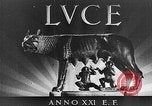
Japanese troops advance inside China during World War II.
Italian film depicting Japanese forces advancing through jungles and mountains in China, during World War II (1943) in the Second Sino-Japanese war. Japanese troops march along the sides of a dirt road. They pass a large group of indigenous Chinese, who wave their arms in Obeisance. As they enter mountainous territory, the Japanese troops employ pack animals to assist them. Views of Japanese soldiers scrambling cautiously up a hillside and then of firing machine guns, mortars, and small artillery field pieces against Chinese positions (unseen). Japanese troops moving single file in rugged mountain terrain. Japanese soldiers cautiously moving against Chinese positions in a mountain. Exploding shells raise smoke on the mountainside.
CRITICALPAST.COM: About Us | Contact Us | FAQs - How to Order | License Agreement | My Account | My Lightboxes | Shopping Cart | Advanced Search | Featured Collections | Website Terms & Conditions | Privacy Policy ©2026 CriticalPast LLC.
License Agreement |
Terms & Conditions |
Privacy Policy
©2026 CriticalPast LLC.