


 Francais
 Deutsch
 Italiano
Refine Your Search
Japanese-martial-arts stock footage and images
- Showing 949 to 954 of 4336 results more
more Hide
Hide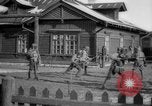
Japanese Intervention in Siberia on side of Entente powers in World War I
Japanese troops in Vladivostok, during Russian Civil War and World War 1. Opening scene shows Japanese soldiers in a bayonet sparring exercise using wooden rifles and Samurai style protective gear. They engage each other in pairs. Next scene shows Japanese soldiers in front of railroad cars serving as their housing. Some of them are cooking food. View along the rail platform where many Japanese soldiers are walking about. A Japanese soldier is seen inside on of the boxcars, smoking a cigar. Several others are seen inside their boxcar home, where they have a stove to heat it. A soldier stands guard atop war material stacked in low open rail cars. Views of vast rail yards filled with train loads of supplies of all kinds. Smoke issuing from steam locomotives in the distance. Another view of boxcars used as "barracks" for troops. Camera pans over the rail yards.
OSS Morale Operations led by American in Burma for psychological warfare to demoralize the Japanese troops.
OSS (Office of Strategic Services) film on Project Gold Dust gives details of the psychological warfare techniques used by OSS Morale Operations (MO) Unit and Kachin guerrillas in Burma during World War II to demoralize Japanese troops obstructing linkage to Burma and the Ledo Road. Kachin guerrillas including North Burmese killer tribesmen prepare for an operation. They are recruited, trained and led by an American officer. MO Detachment 101 troops. Burmese load shells, guns and artillery. 1st Field team of MO OSS personnel joins Detachment 101. An aircraft lands. The guerrillas board the aircraft and are transported all over Burma. Development of MO. A message from an American officer commanding a company of Kachin comes for Major Boldt. The message is dispatched to the Major and a distribution officer delivers it to the chief. A Production and Intelligence officer works. They discuss strategy about MO material best suited to reach the Japanese. The MO intelligence officer contacts Detachment 101 research and analysis branch. They discuss the accuracy and details of the operation. They go to interrogate a Japanese 18th Division soldier held prisoner. MO and the distribution officer discuss the strategy. Radio Major Haan consults Kachin. A detailed report is prepared and given to a pilot for dispatch. The message is given to Major Boldt. The MO staff at work. A lieutenant interrogates Japanese prisoners and gains their cooperation. The MO discusses Project Gold Dust. A forged surrender order to be given to Japanese. Production of the leaflets of forged order. Press prints the leaflets in the mobile production van. The leaflets are cut, dispatched and packaged. Burmese plant the forged order in a town. A lieutenant reads a report on the spread rumor. He talks to an Anglo Burmese woman. The rumor is spread in the town. Burma Jungle 101 patrol distributes the leaflets. A carrier pigeon for Major Boldt is sent. An aircraft arrives to pick up the prisoners who have surrendered.
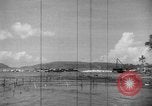
Japanese occupy Corregidor during World War II
Japanese forces occupying Corregidor fortress following a siege that effectively cut off water,food and ammunition from its U.S. and Filipino defenders. during in World War 2. Camera pans across the waterfront of Corregidor Island as Japanese forces occupy it.Japanese boats at their beachhead. American soldiers standing at attention around bunkers as Japanese officers ascend side of hill toward them. Americans being marched down the hill under guard. Japanese officers look at destroyed buildings and inspect the rest of the Corregidor fortifications, including its 12 inch guns at Batteries Hern and Smith. Small and medium U.S. arms and ammunition in a pile. Views of rail cars at tunnel entrance and views inside the tunnels of the Fort. Desks of U.S. officers inside the Fort. One is identified by name plate reading "Major F.F. Kriwanek." Several U.S. officers seen sitting in another office. View from defensive position in the fort.
Japanese attack on United States aircraft carrier Hornet in the Pacific Theater during World War II.
'I was there' depicts Japanese attack on USS Hornet. A car pulls up to the Naval hospital in California, United States. Men relax by the pool side as electrician's meet on United States aircraft carrier Hornet, Tom Heikendor, narrates how the carrier was attacked by the Japanese planes in the Pacific Theater off Santa Cruz. Japanese fighter planes attack the Hornet and explosions occur. Anti aircraft guns knocks down a Japanese plane. Another set of Japanese planes attack the carrier. Smoke rises as explosions occur. Smoke rises from the carrier. Wounded men aboard the carrier transferred onto a destroyer by breeches buoys. A stretcher transferred onto the destroyer.
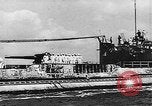
The Japanese submarine I-30, on a mission to German-occupied Lorient,France, during World War II
Scenes from a Japanese Yanagi (Willow) submarine mission that carried war-essential minerals and materiel to German-occupied Lorient, France, in World War 2. The submarine (I-30) code-named Cherry Blossom (Sakura in Japanese and Kirschblüte in German) is the first to travel on a visit from the Pacific to Europe during World War 2. Opening scene shows I-30 underway on the surface, with its crew in dress uniforms on deck and officers in the conning tower. Several German Kriegsmarine (Navy) officers, including Admiral Karl Dönitz, Commander of the German U-boat fleet, and another Admiral, are seen rendering classic military (not nazi) salutes. Closeup of some Japanese officers and men standing on the deck of their submarine as it glides past the pier. Local seamen, all giving the Nazi salute, crowd the deck of a nearby ship. Glimpse of Doenitz and the other Admiral walking a gangplank to board the I-30, where they greet officer delegation of the submarine, as the Japanese Naval Attaché to Germany, Captain Yokoi Tadao, and the I-30's Captain,Commander Endo Shinobu, stand nearby. Doenitz, and the two Japanese officers are seen conversing, on deck amidst gathering of German naval officers. Scene shifts to the land, where German Grand Admiral,Erich Raeder (4-striped admiral insignia on sleeve) speaks with Commander Endo Shinobu, as Captain Yokoi Tadao, stands nearby. Next, Officers and sailors are seen saluting from the conning tower of the I-30. A closeup of Commander Endo Shinobu saluting. The I-30 slowly moves away from the pier.
Scenes of British Borneo under Japanese occupation during World War II
Opening scene shows map of Borneo, with several locations marked. A group of Japanese soldiers stands on a boat moving away from a wharf, during World War 2. Across from them a group of others, dressed in white shorts, shirts, and white hats, along with several Japanese soldiers, stand on the wharf. They wave farewell to the Japanese soldiers, some by saluting, others by raising and tipping their hats. The next scenes are taken from the moving boat and show a river and surrounding forests. View into the boat, where soldiers are seated. Very long canoes carrying many local persons wearing large conical straw hats pass nearby at high speed. A canoe, with roofed structures, navigates past a rock jetty in fast moving river waters. Japanese soldiers in pith helmets disembark from docked canoes and make their way uphill toward a camp. Sign identifying the camp. View from above, of barracks buildings at the camp. Camera pans across a wide region of landscape. Natives standing on platform, built around a huge tree, are chopping the tree down, under supervision of Japanese soldiers nearby. Closeup of the men chopping the tree. Views of the tree falling. Local farmers working in an irrigated rice paddy. Camera pans across a number of paddies. Buildings near the rice paddies.