


 Francais
 Deutsch
 Italiano
Refine Your Search
Japanese-martial-arts stock footage and images
- Showing 1957 to 1962 of 4328 results more
more Hide
Hide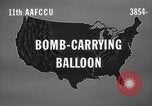
Japanese bomb balloons bound for the United States are shot down; examination of parachute and bomb apparatus
Evaluation of Japanese bomb-carrying balloons sent across the Pacific to the United States by Japan during World War 2. Gun camera footage of American fighter planes from Aleutian Island bases firing at Japanese balloons en route to the Pacific coast of the United States. A balloon bomb which reached the shores of the United States. but did not explode is examined by United States Army soldiers. They unfold the rice paper parachute portion of the balloon and examine its construction. Close-up views of the balloon control mechanism are shown, including a circular frame that would hold anti-personnel and incendiary bombs. Details of the wet cell battery and ballast weights are shown, including barometric aneroid switches which would operate to release ballast from simple hooks, as needed, to control balloon altitude. Narrator indicates it is believed the main purpose of the bombs was to start brush and forest fires.

General Vandegrift describes the Guadalcanal campaign and shows the landing, war scenes and Japanese prisoners in Guadalcanal (WW2)
Guadalcanal campaign in Guadalcanal, Solomon Islands during World War II. U.S. Marine Corps General Alexander Archer Vandegrift describes the Guadalcanal campaign. Ships at sea. Planes in flight. Landing craft heads towards shore. Allied troops disembark landing crafts. Men carry cartons and load onto truck. U.S. flag is hoisted and soldiers salute. Japanese prisoners march and sit on ground. A soldier climbs up a palm tree. Soldiers are decorated with badges. Wounded soldiers are at 'Hospital Station'. Dead Japanese soldiers lying on ground. Smoke trail rises. Air Force personnel beside aircraft. A plane lands. Sign on aircraft: 'Spook', ' Leis Lady' and 'Boomerang'. Aircraft in flight. Fleet underway at sea. A formation of planes in flight.
Captured Japanese prisoners and their belongings and they are interrogated in Burma.
OSS (Office of Strategic Services) activities in Burma during World War II. Natives ride elephants. They carry weapons with them. Captured Japanese prisoners and their belongings. Interrogation of captured Japanese prisoners. OSS personnel talks to a native.
Admiral Chester Nimitz and his party visit American soldiers after Kwajalein Island is wrested from the Japanese in World War II.
U.S. Navy Admiral Chester William Nimitz visits fKwajalein Island, Marshall Islands, in World War 2. . Admiral Nimitz and his party casually visit various places on the island, Remnants of Japanese barracks and fortifications are seen. Tents and palm trees in the background. The party in jeeps. They inspect debris and remnants of Japanese flags.
Announcement is made on loudspeakers for convention of Japanese and ruins in Guam.
U.S. soldiers in Guam during the Battle of Guam. U.S. soldiers walk in line. They are sitting on ground. A native walk with a stick. An announcement is made on loudspeakers for convention. Japanese civilians climb hilly terrain up. Captured Japanese under American soldiers. A soldier bandages to wounded. Ruins and debris. Views of damaged buildings and shelter. (World War II period).
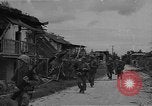
Radioman George Ray Tweed speaks about suffering inflicted by Japanese on Chamorros natives in Guam.
Chamorros in Guam during the Battle of Guam. U.S. soldiers pass along streets of Guam. M-tanks are transported, ships in the background. Interior of office: George Ray Tweed, Chief radiomen on Guam who, with the help of locals hid out for the duration of the Japanese occupation, talks about violence that Japanese inflicted on Chamorro natives. He shows hideouts, from where soldiers fought. He talks to an officer. Chamorro natives pray for dead. Dead bodies with cut heads. Dead soldiers lying on ground showing brutality. Chamorro natives get food, medical care and infant care. (World War II period).
CRITICALPAST.COM: About Us | Contact Us | FAQs - How to Order | License Agreement | My Account | My Lightboxes | Shopping Cart | Advanced Search | Featured Collections | Website Terms & Conditions | Privacy Policy ©2026 CriticalPast LLC.
License Agreement |
Terms & Conditions |
Privacy Policy
©2026 CriticalPast LLC.