


 Francais
 Deutsch
 Italiano
Refine Your Search
Japanese-martial-arts stock footage and images
- Showing 1969 to 1974 of 4328 results more
more Hide
Hide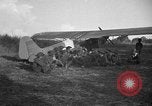
Indian Punjab soldiers freed from Japanese prison camp are interviewed by Australian soldiers in Senai, New Guinea, during World War II
Indian Punjabi soldiers freed from Japanese prison camp, are seated in shade under wing of a U.S. Army Air Corps L-4 Grasshopper airplane, at an air field in Senai, Papua New Guinea, during World War 2. They are being interviewed by an Australian Sergeant and an officer. The Punjab former prisoners have been provided uniforms including ranger hats. (They have short hair and no beards, so they may include Sikhs, Dogras, Pathans, and Punjabi Muslims, but haven't yet obtained material for their traditional turbans.) The Sergeant makes notes and sketches on a pad as the escaped POWs provide information about their experiences and information of possible value regarding Japanese forces. Scene shifts to the Punjab soldiers sitting in a grass-roofed hut, with the native Chief of Senai. Several of them sit in in front of the hut, smoking long-stemmed native pipes. The Senai Chief poses with a Punjab Sergeant. Two Stinson L-5 airplanes take off from the Senai field. A group of liberated prisoners prepares and eats a meal.
Film describing the 100th Infantry Battalion, 442nd Regimental Combat Team, comprising Americans of Japanese ancestry, in World War II.
Film opens showing relatives of fallen American soldiers of Japanese ancestry who made the ultimate sacrifice in the European theater of operations, during World War 2. The dead soldiers were members of the United states 100th Infantry Battalion, 442nd Regimental Combat Team. The relatives are assembled in an auditorium at a military installation in Hawaii, where the 100th Infantry is conducting a ceremony honoring their fallen heroes.Camera pans over some of the relatives. Decorations for valor are presented posthumously to some of the surviving relatives. A widow receives the Silver Star. A father receives the Distinguished Service Cross. A mother receives her son's award. Film shifts to scenes showing artillery batteries of the 100th Infantry in action at numerous battles in the Italian Campaign, including Naples, Cassino, Rapido River, Pisa, Anizo and others during World War 2. A column of 100th Infantry accompanied by armor, are seen entering Livorno, Italy. Members in a jeep are seen passing through area of complete destruction. Others pick their way through rubble, as civilians bass the opposite way,carrying salvaged belongings, Troops of the 100th move cautiously and deploy near barricades to shield from snipers. They escort captured German prisoners. Battle casualties are seen being carried into field hospitals. A medical team performing emergency surgery inside a tent. Wounded and convalescing patients being tended by a woman Army nurse. Others recovering outside tents at the field hospital. A group of 100th infantry troops taking a break. One of their medics is interviewed. Gunners seen with Browning M1917 machine gun. Troops preparing a meal in the field. A soldier presenting paper airplanes to Italian children who fly them. M4 Sherman tank parked on Italian street. Battalion members attending a Roman Catholic mass in the field. Army interviewer asks a Japanese-American Lieutenant why he fights in the U.S. Army. He responds saying "I'm fighting over here for the better things of life, and to preserve the American way of living."
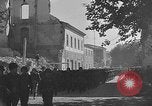
General Mark Clark decorates United states 100th Infantry Battalion, 442nd Regimental Combat Team, comprising Americans of Japanese ancestry, during World War II.
United states 100th Infantry Battalion, 442nd Regimental Combat Team, comprising Americans of Japanese ancestry, marches in formation to be decorated by Lieutenant General Mark Clark, Commander of the 5th Army, at Vada, Italy during the Italian Campaign of World War 2. They march onto a large open field where their color guard dips the regimental colors to which General Clark affixes the unit citation. He and his officer aide then salute and move on decorate an individual soldier of the 100th battalion. General Clark pins the Distinguished Service Cross on the soldier, speaks briefly with him, and shakes hands. They exchange salutes. Closeup of the soldier wearing the Distinguished Service Cross pinned above his combat infantryman's badge. General Clark then speaks to all the soldiers, addressing them as "Americans of Japanese descent,"and praising their performance and patriotism. Views of individual soldiers. Closeups of General Clark as he states that, "The 34th Division is proud of you; the 5th Army is proud of you; America is proud of you."
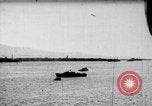
The Japanese attack on Pearl Harbor, December 7, 1941
Attack on Pearl Harbor, Hawaii by the Japanese Navy on December 7, 1941, as filmed from the deck of U.S. Navy Hospital Ship, USS Solace (AH-5). Ships docked at Pearl Harbor. Several small launches speed across the calm harbor. Suddenly a bomb bursts in the water, behind one of the launches. Several U.S. SBD Dauntless and F4F aircraft, from the USS Enterprise, fly over the deck of the Hospital Ship, with their landing gear down (to land at Ford Island). U.S. Navy ship USS Nevada (BB-36) leaves the harbor at high speed, throwing up a bow wave. Japanese aircraft bomb U.S. Navy ship USS Arizona (BB-39) docked. The ship explodes and sinks. A large smoke column rises from the explosion. (This image has been reversed. From the perspective of the USS Solace, the Arizona should be pointing to the right, not to the left.) Anti aircraft firing from U.S. Navy ships fills air with black Flak puffs. Various ships burn. (World War II period).
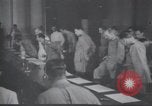
Japanese Lieutenant General Numata and British Lieutenant General Sir Frederick Browning signs the surrender treaty in Rangoon.
Signing of the surrender treaty by Japanese General at Burma Government House in Rangoon towards the end of World War II. The British delegation take their places at the conference table in the Government House. British Lieutenant General Sir Frederick Browning, Lord Mountbatten's Chief of Staff, explains surrender terms. The British officers present documents to Japanese Lieutenant General T Numata. General Numata signs the documents, after which General Browning signs.
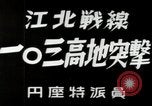
Japanese forces firing machine guns and artillery in Hankou, China
Japanese troops fight in Hankou, China during World War II. Japanese troops fire machine guns and artillery guns from a hill. Smoke rises from explosions on hilly terrain. Smoke billows up from explosions.
CRITICALPAST.COM: About Us | Contact Us | FAQs - How to Order | License Agreement | My Account | My Lightboxes | Shopping Cart | Advanced Search | Featured Collections | Website Terms & Conditions | Privacy Policy ©2026 CriticalPast LLC.
License Agreement |
Terms & Conditions |
Privacy Policy
©2026 CriticalPast LLC.