


 Francais
 Deutsch
 Italiano
Refine Your Search
Japanese-martial-arts stock footage and images
- Showing 2473 to 2478 of 4328 results more
more Hide
Hide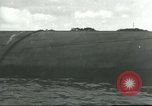
Views of the wrecked USS Utah and USS Arizona seen soon after the Japanese attack on Pearl Harbor in Hawaii
Wrecked parts of ships destroyed after the Japanese attack on Pearl Harbor during World War II. Capsized USS Utah (AG-16) seen off the western side of Ford Island, as filmed from a smaller boat passing along the length of its upturned hull. Wrecked parts of USS Arizona with turrets awash and twisted superstructure, as seen from smaller boats moving beside it. Closeup views of damage to the USS Arizona (BB-39). Mountains, buildings and trees in the background. Navy sailors on smaller boats passing near the damaged ships, including a group of sailors on a ship tender of the USS Arizona, with writing "Ariz" for "Arizona" written on the side.
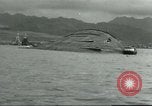
Men standing on the keel of overturned USS Oklahoma after the Japanese attack on Pearl Harbor in Hawaii, U.S.
Wrecked parts of U.S. ships destroyed after the Japanese attack on Pearl Harbor during World War II. Mountains, houses and trees in the background. Over turned USS Oklahoma. Men standing on the keel. Wrecked USS Arizona. Men on boat passing near the ships.
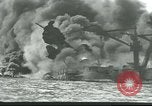
Heavy smoke arising from the burning USS Arizona and other ships at Pearl Harbor, Hawaii after the Japanese attack.
Wrecked parts of U.S. ships destroyed after the Japanese attack on Pearl Harbor during World War II. USS Arizona and other ships burning after the attack. Smoke arising up from the burning ships. USS Phoenix exits the harbor. Heavy smoke arising from the burning ships.
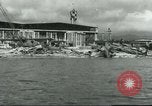
Wrecked USS Shaw and airplanes at a damaged hangar at Pearl Harbor after the Japanese attack.
Wrecked parts of U.S. ships destroyed after the Japanese attack on Pearl Harbor during World War II. USS Shaw sunk and damaged in a dry dock. Wrecked airplanes in a damaged hangar. Smoke rises from burning planes and hangar.
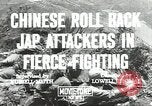
Chinese troops fight the Japanese in China during World War II.
Activities of Chinese troops in China during World War II. Chinese combat troops march on a street. An officer watches through binoculars. Soldiers work with picks and shovels while constructing a road. A man places dynamite in a hole. He turns a detonator. An explosion on the road. Chinese soldiers advance. They fire rifles and Bren guns. A Chinese woman nurses and bandages the hand of a casualty on a litter. Chinese soldiers fire rifles at the Japanese from a trench.
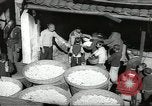
Chinese refugees receive rice and patients are examined by a doctor in Kiukiang, China, during second Sino-Japanese war.
Chinese refugees quarters in Kiukiang, China during second Sino-Japanese war. Chinese refugees receive rice. People outside the Life Methodist Episcopal Hospital. Dr. Edward C. Perkins examines a patient at a clinic. The nurse, Miss Proeg, examines a refugee Chinese girl.
CRITICALPAST.COM: About Us | Contact Us | FAQs - How to Order | License Agreement | My Account | My Lightboxes | Shopping Cart | Advanced Search | Featured Collections | Website Terms & Conditions | Privacy Policy ©2026 CriticalPast LLC.
License Agreement |
Terms & Conditions |
Privacy Policy
©2026 CriticalPast LLC.