


 Francais
 Deutsch
 Italiano

Refine Your Search
Japanese-martial-arts stock footage and images
- Showing 2599 to 2604 of 4337 results more
 Hide
Color Sound

Prisoners and others listen to a prisoner's orchestra as it plays in an open courtyard in Valencia, Spain
A prisoner leads an orchestra of prisoners as it plays in an open courtyard in Valencia, Spain. Prisoners and others listen to the music as they stand in the background. Writing above a doorway in the courtyard is obscured, but possibly reads something like: "academia de música y artes." (World War II period).
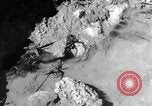
Scenes of Khuzestan Province and Isfahan, Iran, circa 1916
Views of Khūzestān Province and Esfahan (Isfahan) Persia, circa 1916. (The southern part of Khuzestan was also known as "Arabistan.") Rugged hills and dunes in desert region. A single dirt road through part of the area connecting some clusters of dwellings. Water splashing from the rear driving wheel of a Stern wheeler river boat underway on the Karun River. Black smoke billowing from the boat's stack. It appears to be towing a barge. Several long wooden passenger boats tied up at riverside, near building. Palm trees in the background. Closeup of art on the dome of the ancient Safavid-era Shah Mosque in Esfahan (aka Isfahan). Front of the mosque, with minarets. Iranian man herding some livestock and Merchants bringing goods to market on donkeys, passing through ancient arch way. Some men and a girl walking through the town. Two men smoke hookahs. A sandal maker at work. A local bazaar, lined with merchants selling their wares. People walking through the bazaar, including one who appears to be a British Colonial Officer in the South Persian Rifles.

Camel caravan travels near ancient Persian ruins of Pasarguadae, near Masjid-i-Suleiman, Iran.
A caravan of camels moves near ruins of ancient Persian City of Pasarguadae, near Masjid-i-Suleiman. View of ancient columns, steps, bas relief art sculptures, winged sculpture, and horse head sculpture.

First Director of Peace Corps, Sargent Shriver interviewed in Washington DC, United States.
A Television series 'Your man in Washington'. Reporters Len O' Connor and Art Barriault interview the First Director of Peace Corps, Robert Sargent Shriver. During the interview Shriver explains how the idea for Peace Corps was put forward by President Kennedy during his election campaign. He says that Peace Corps consists of 1000 people and it serves in 13 countries across the globe. He also expresses hope that Congress will sanction a bigger chunk of money for the expansion of the Peace Corps.

Robert Sargent Shriver interviewed about the Peace Corps activities in Washington DC, United States.
Reporters Len 0' Connor and Art Barriault interview the First Director of Peace Corps, Robert Sargent Shriver. On being asked whether the Peace Corps run into opposition with the government he clarifies that Peace Corps go to countries where the government invites them. Shriver reveals that the demand for Peace Corp volunteers has been on an increase. He also talks about the Peace Corps in Brazil, Dominican Republic, Chile, Venezuela and other American Republics. He states how the Peace Corps volunteers in Columbia lived in a simple manner but they still managed to keep their morale high.

Robert Sargent Shriver interviewed about the allowances and terms of service of Peace Corps Volunteers in Washington DC.
Reporters Len O' Connor and Art Barriault interview the First Director of Peace Corps, Robert Sargent Shriver. Len O' Connor asks questions abut the mode of payment allowances or salary to the Peace Corps volunteers. He also asks about the term of service of the volunteers. Shriver answers that the term of service is two years but since it's a voluntary service therefore the volunteers can leave it before the expiry of two years term. He explains how the Peace Corps Volunteers in different countries take help of local persons in their activities to make the entire operation a local operation to get maximum participation of the local people.
CRITICALPAST.COM: About Us | Contact Us | FAQs - How to Order | License Agreement | My Account | My Lightboxes | Shopping Cart | Advanced Search | Featured Collections | Website Terms & Conditions | Privacy Policy ©2026 CriticalPast LLC.
License Agreement |
Terms & Conditions |
Privacy Policy
©2026 CriticalPast LLC.