Kasagi-class protected cruiser Chitose of the Imperial Japanese Navy floats into the harbor of Union Iron Works in San Francisco, United States during its launching. The bow of the ship is seen nearly head on with its bow first. Spectators in rowboats watch the launch. Rowboats move and increase in numbers as the Chitose sails past them.
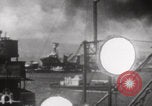
View across Pearl Harbor. Black smoke rising from U.S. Navy ships in battelship row in the distance. Black smoke across the harbor. Cranes and an American flag flying in the foreground. Closeup of sailor with a distressed look on his face who steps right in front of the camera. Smaller ships move across the harbor towards the smoke. Views from a large ship moving out of the harbor. The USS Oklahoma(BB-37) is seen capsized beside the USS Maryland (BB-46). Another large battleship is seen listing to one side. USS Maryland sends a signal light message from it's bridge. Wreckage is shown of aircraft, hangars, and runways at Ford Island Naval Air Station following Japanese air attack. A damaged cruiser, still afloat but smoking from two points, one on the main deck and another from it's smokestack.
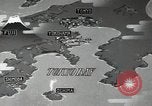
Film begins showing a map off Japan highlighting notable places including Mount Fuji, Tokyo Bay, cities of Tokyo, Yokohama, Shimoda, and Oshima. View from a ship in Tokyo Bay, heading toward tall island in the distance. Scene shifts to a dozen women in traditional kimona dress singing and dancing on a bluff overlooking the water. A colorful horse circles about in the background as the women dance. Next, two women dressed in traditional kimona, carry large trays on their heads. Glimpse of three farmers with a horse. Views of heavy waves and clouds at waterfront. Strong wind blowing snow off a mountain peak. A speeding steam locomotive pulling a train along the shore of Tokyo Bay. Mount Fuji in the near background.
Segment of orientation film for American troops occupying Japan after World War 2. First scene shows Japanese troops marching shouldering rifles with fixed bayonets. Viewed from more distance they are seen marching past the Japanese Imperial Palace on a hill in the background. Slate is superimposed over the scene reading: "Created to Rule the Whole Earth." Japanese soldiers rising from trenches to charge their enemy. Shells bursting all around them. Views of some huge explosions. Dead Chinese woman and child lying in rubble. Japanese soldier holding Rising Sun flag, charging past building. More dead women and children. Japanese troops advancing against wooden houses. Dead soldier lying on ground, with pistol held in his upraised hand. Japanese troops advancing past burning rural dwellings. Dead Chinese civilians in wreckage. Japanese troops holding Japanese flags celebrate a battlefield victory. Views of wounded Allied soldiers being transported on litters by American soldiers, interwoven with views of Japanese troops celebrating. Japanese civilians celebrating en masse. View of a human brain superimposed over scenes of celebrating Japanese soldiers and people. A slate superimposed at this point reading: "This is Japan's Last War." Views of Japanese workers busy in war production plants and factories, with Japanese war production workers building armament, war planes, and tanks; Japanese military officers walking in full dress uniforms ; Japanese warships; and Mitsubishi Ki-21 bombers in formation ("Type 97 Heavy Bombers") . All these views of war machinery are symbolically ended by intervening views of explosions. View of crashed Japanese warplane. Several American soldiers are seen among many Japanese people. Several American soldiers check identification of a Japanese man. U.S. soldiers standing guard in a roadway, as many Japanese stand in background. American soldier searching an unarmed Japanese soldier. Two American soldiers use a phrase book as they ask directions from a Japanese woman and her daughter. Japanese youth clapping hands and holding a homemade American flag. U.S. military officers accepting Chrysanthemum flowers from girls in traditional Japanese attire. A U.S. soldier reads a comic book to a Japanese boy. Other American GIs talk with a Japanese soldier. American troops in a chow line at a dining hall. U.S. soldiers with Japanese children at the Great Buddha of Kamakura at the Kotoku-in Temple in Kamakura, Kanagawa Prefecture, Japan. American soldier riding a bucking bronco in a Western Rodeo put on by U.S. forces. U.S. soldier and Japanese police sentries standing side by side.
Film begins with peaceful scenes of Japan, including Mount Fuji; women in traditional Kimonos strolling among cherry blossoms; exquisite gardens; Geisha girls in traditional dress holding fans; and picturesque peasant farmers binding sheaves of grain. Evidence of Japan adopting Western styles and ways, shown by modern buildings, motor vehicles, and many Japanese in Western clothes going about their daily business on busy city streets. A Japanese stadium filled with spectators at a baseball game. One difference from an American baseball game is that the players are seen marching onto the field accompanied by a military band and later all sharing in raising the Japanese flag to start the event. View of line of players in jerseys as flag is raised (jersey team name Tomasyo?) Views of the baseball game underway. Baseball player with "Y" logo on front steps up to plate to bat. Scene changes to demonstrations of Japanese Navy as senior Naval Officers review Japanese sailors aboard a warship. A formation of Japanese warships underway. Closeup of a Japanese destroyer. A flotilla of Japanese warships being overflown by several formations of Naval aircraft. A flight of Kawanishi H6K Naval flying boats flying in loose formation. A parade of Japanese light and medium tanks including Type 95 Ha-Go tanks (some with offset turrets). View from rear of the parade. Many tanks crossing a field. Emperor Hirohito, riding a white horse, reviewing Type 97 Chi-Ha medium tanks and their crews standing at attention. Tanks raising dust as they move in formations on a road and in a field. Japanese infantry soldiers high step march in review past the Emperor on his white horse. Massed Japanese infantry on parade. View, again, of the high-stepping Japanese infantry marching past the Emperor as a segue to Italian infantry goosestepping on parade. Several views of such parades. Mussolini giving an impassioned speech to Italians from balcony on the Palazzo Venezia in Rome on November 4, 1938. A huge flat field filled with Italian SPAD XIII army biplanes parked in symmetric rows. Emperor Haile Selassie of Ethiopia speaking from a shelter, rallies his tribesmen to resist invasion by Italian forces. They are seen in tribal dress, armed with spears and ancient rifles, as they answer the Emperor's call. View of Italian L3 light tanks advancing across desert terrain. Italian cavalry charging. Italian infantry moving forward. Italian Caproni Ca.111bis light bomber in flight. Bombs dropping through the air. Barrages by batteries of Italian artillery. Shells striking a hilltop fortress. An open air stadium with one section containing many Japanese attendees waving Japanese flags. A Japanese statesman reading a speech in Japanese. View of the stadium filled with Italians. "Saluti" written on the edge of the section occupied by Japanese attendees. An Italian spokesman in black uniform welcomes the Japanese contingent. A Japanese translator stands beside him. Closeup of cheering Japanese who have heard the greeting translated. Scene shifts to Japanese infantry hi-stepping past Emperor Hirohito and immediately to Italian troops goosestepping and then to German troops goosestepping as they (according to narrator) march into Austria on March 13th 1938. View of German troops marching into Austrian town to cheers from civilians on sidewalks waving Nazi swastika flags and rendering Nazi salutes. Numerous utility vehicles carry German soldiers through the town. More German soldiers arriving in tanks and on motorcycles. Some arrive on horse-drawn caissons towing field artillery pieces.
Brief opening scenes show ships being engulfed in flames and smoke from Japanese attack on Pearl Harbor, December 7, 1941 in World War 2. Focus is primarily on the USS Arizona. Scene shifts to Japanese troops assembling on a pier and boarding troop transport ships bound for Manchuria and China, following the Mukden Incident of September, 1931. Japanese troops are then seen marching into Manchuria on September 18, 1931. A formation of Japanese soldiers presents arms. In another formation, they shoulder swords. Closeup of a Japanese soldier in a steel helmet with chin strap in place. A steam locomotive pulls a train into the Chin Hsien station on the South Manchurian Railway. A Japanese train on that line had been dynamited, triggering a Japanese push into Mukden. View from behind a train leaving Chin Hsien on the South Manchurian Railway. Japanese battalions place bundles of straw across a stream to facilitate troop crossing. A column of Japanese troops is seen crossing the water on the makeshift straw crossing. Japanese troops advancing along with supplies carried by pack animals. Troops traverse a sandy berm past an abandoned two-wheel cart. A formation of 12 Japanese G3M bombers flies overhead in a "V" formation en route to bomb Mukden. View of Chinese population running for shelter from the bombing. Chinese walk past some civilian casualties lying in a street. The League of Nations headquarters in Palais Wilson, Geneva, Switzerland. A memorial to Woodrow Wilson at the Palais Wilson reads: "A La Memoire De Woodrow Wilson President des Etats-Vnis,Fondatevr DL La Societe Des Nations, La Ville de Geneve." A car driving away from the entrance of the League Headquarters. Closeup of doorway with sign identifying it as the entrance for delegates and members of the Press. League delegates are seen inside its meeting hall. Japanese warships are seen next, attacking 15 miles from Shanghai with naval gunfire.Three Mitsubishi 2MR4 (Type 10)Reconnaissance biplanes are seen in flight above the barrel of a large naval gun. Japanese troops marching into Shanghai, as people on the roadside wave Japanese flags. Next, they are seen marching out of Shanghai at the insistence of the League of Nations. After signing a truce with China, on May 4, 1932, Japanese troops are seen entering Mongolia, in September, 1932, which they reconstituted as the Puppet State of Manchuko. A Japanese soldier standing atop a building waving a Japanese flag. Japanese statesmen resigning and leaving the League of Nations in protest after it labeled Japan an aggressor. Japanese forces fire a long barrel Type 89 cannon (150mm) as they push into China proper. Group of Japanese artillerymen use range finders, Periscopic viewers and binoculars to guide the gunners. Shell explodes raising large amount of earth. More views of artillery firing and infantry advancing. Infantry crossing a bridge and raising siege ladders to scale a fortress. Engines running on Japanese Ki 30 Type 97 airplanes, as pilots get final briefing and orders. They salute, board their aircraft, and are seen in formation aloft, dropping bombs. View from the air of bombs striking below. View from a bomber of its bombs dropping from the aircraft (bombs away view) and exploding on the ground. A column of Chinese soldiers moves along a section of the Great Wall of China heading into the interior of China. Civilians moving all manner of equipment and machinery into the interior.