


 Francais
 Deutsch
 Italiano
Refine Your Search
Japanese-martial-arts stock footage and images
- Showing 2737 to 2742 of 4328 results more
more Hide
Hide
The Guadalcanal campaign in World War II
Major General Alexander Vandegrift, USMC, who, as Commanding General of the 1st Marine Division, also commanded other U.S. military units involved in the invasion of Guadalcanal in World War 2. He discusses those joint U.S. military operations. The U.S. Destroyer, USS Blue (DD-387) seen bombarding Guadalcanal.A B-17 bomber overhead. U.S. Marines decend rope net into landing craft of the attack transport, USS George Clymer (APA-27), later seen with the USS Harry Lee (APA-10) and numerous landing craft around them. A landing craft from the Harry Lee arriving and Marines jumping out. Many U.S. troops wading ashore from landing craft. Troops carrying supplies ashore. Officers salute as American flag is raised on rugged flag pole. Numerous Japanese prisoners of war marching and in outdoor confinement. Japanese prisoners being processed. Japanese soldier using shoe clamps to quickly climb a tall palm tree. Admiral William Frederick Halsey, Jr.decorating a flyer with the Distinguished Flying Cross. View of the medal.Halsey decorating marines, including Major General Alexander Vandegrift, USMC, seen wearing the Navy Cross. Sign on palm tree reading: "Hospital Station C-1-Med." Wounded inside hospital tent. Troops gathered for religious service. U.S. troops dug in and moving along jungle path. Fallen Japanese soldiers on shore of Guadalcanal.Smoke rising from Japanese bombing of Henderson Field and construction continuing with heavy equipment. A B-17 bomber landing on the field. Names on B-17s at the field, including: "Spook," "Leis-Lady,"and "Boomerang." A Douglas SBD Dauntless aircraft taking off from Henderson field. Film concludes with parade of warships and overflight of warplanes (including a biplane).
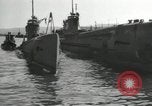
Operation Road's End, preparing to destroy Japan's submarine fleet. Crews decorate their submarines with cherry blossoms
Operation Road's End. Inspection of Japanese submarines,moored in Sasebo Bay, Japan, that are scheduled for destruction, after World War 2. View from a boat passing several of these submarines. One has a group of U.S. Naval officers and others on its deck. View of Japanese submarines I-366 and Number 107. Japanese sailors are decorating the submarines with branches of cherry blossoms. A Japanese officer looking down from boat I-402, as the camera passes below. Closeup of him posing on his boat for the camera.. Captain Atogi Nakamura, Lt. Tashio Tanaka and crew members posing aboard Japanese submarine I-58 (that sank the USS Indianapolis on July 30, 1945 with torpedos fired by Lt. Tanaka).
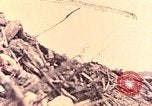
Marines of the U.S. First Division capture high ground and coastal guns on Peleliu Island, Palau, in World War II
U.S. 1st Division marines, in mopping up operations, climb out of a valley onto a ridge containing Japanese fortifications and guns, that overlook the airfield at Peleliu Island, during World War 2. Upon the ridge, a marine poses next to a Japanese 200mm coastal defense gun. Closeup of the controls for the gun. A marine examines another Japanese coastal defense gun.Views of other damaged Japanese artillery and a machine gun. Bodies of several dead Japanese soldiers seen near the artillery pieces.
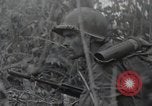
81st Army Division Marines advance at Bloody Nose Ridge on Peleliu Island, Palau.
81st Army Division troops fire at Japanese enemy at Peleliu Island, Palau. Wounded Marines assisted and put on stretcher. Tanks advance on Bloody Nose Ridge. Marine throws hand grenade towards Japanese cave entrance. Japanese soldiers emerge from caves. Nude Japanese soldiers surrender. Dead Japanese soldiers on ground. U.S. aircraft taking off from the airstrip won in the battle. Various rapid scenes of U.S. forces fighting in the Pacific, firing mortars, and storming a beach. (World War II period).
Scenes of Harbin, China, in 1932
Homemade sign strung on a post in front of a house flying a Japanese flag. Japanese characters, beginning with characters for "Japan," written on a portal. Two women walk out of a compound. One carries a string instrument (possibly a sanxian). A gateway Topped by flag of Manchukuo. A cosmopolitan group of people enjoying themselves in a park with benches, trees and gardens. Closeup of several children sitting on a park bench. A shop showing Japanese and Manchurian paper flags. Soldiers drilling on parade field. Japanese officers and officials lined up in front of a walled compound. Two Japanese flags fly at the entrance. Scene shifts to inside the compound, where several soldiers receive awards, as others stand in formation, and several bystanders observe. Persons of various ethnic groups walk through a gateway, together. Camera pans across them as they stand holding booklets related to their collective education activity.

Battle for Palembang oil refineries in Indonesia, during World War II
Battle of Palembang, Indonesia, in World War 2. Japanese Kawasaki Ki-56 transport aircraft flying overhead in formation, begin dropping paratroopers. The sky is filled with their chutes. Next scene shows many struggling to make their way through knee-deep swampy jungles, where they landed. Most of their arms and ammunition were lost in the swamps. They finally emerge to attack lightly defended facilities of the Dutch Bataafse Petroleum Maatschappij (BPM) and Nederlandsche Koloniale Petroleum Maatschappij (NKPM),a refinery for the American Standard Oil Company. Japanese soldiers are seen after a day's battle with the defending contingent of Royal Netherlands East Indies Army home guard. A rear guard group of them and Dutch technicians, are made prisoners. Shell fired by departing Dutch forces strike oil storage tanks. Smoke rises in several places and one very heavy black smoke plume rises near the camera. Soon the area is a blazing inferno. The Japanese troops succeed in confining fires to the oil tanks, extinguish them, and save the cracking towers and other essential oil refinery structures. The Japanese flag is seen atop one. (Note: Two technicians seen in white, at TC: 02:05, are BPM workers. The one on the left is Christiaan Stapels. He died at a Japanese prisoner of war camp in June 1945.)
CRITICALPAST.COM: About Us | Contact Us | FAQs - How to Order | License Agreement | My Account | My Lightboxes | Shopping Cart | Advanced Search | Featured Collections | Website Terms & Conditions | Privacy Policy ©2026 CriticalPast LLC.
License Agreement |
Terms & Conditions |
Privacy Policy
©2026 CriticalPast LLC.