


 Francais
 Deutsch
 Italiano
Refine Your Search
Japanese-martial-arts stock footage and images
- Showing 25 to 30 of 4336 results more
more Hide
Hide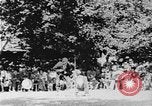
U.S. Military Mission views soldiers performing gymnastics and a play staged by natives in Yenan, Shensi province, China.
U.S. Military Mission visits Communist headquarters and meets its leaders in Yenan, Shensi province, China during World War II. Natives perform a dance show as Chinese soldiers and officers of the American mission watch them. Chinese soldiers perform training and gymnastics. Soldiers display martial arts and combat training given to them. U.S. officers talk while watching the performance. Chinese women and artists stage a play.
The Japanese Imperial Navy fleet in review, attended by Emperor Hirohito
Emperor Hirohito visits the Yokosuka Naval Base. Soft background music of orchestra playing "Kimi ga Yo," the Japanese national anthem, is heard during this segment of the film showing Emperor Hirohito in formal attire, including top hat, as he walks following the Japanese rising sun flag, in the company of Japanese naval officers, past an honor guard of Japanese sailors. (Civilians stand against building in background.) At one point, the officers and the Emperor turn, bow, and salute, and the the Emperor removes his top hat . He then carries it as they proceed. The group walks down a gangplank to a dock. The harbor is filled with steamships and various vessels. Momentary glimpse of the Kongō class fast battleship Hiei anchored in the harbor. The Emperor and party board a motor launch flying the rising sun naval ensign. They stand as it pulls away into Tokyo harbor. Brief partial glimpse of the aircraft carrier Hōshō showing the three funnels on her starboard side. The motor launch seen headed toward the battleship. Closeup of Japanese naval ensign waving from a ship. Aerial view from an airship of Japanese warships in water below and then views from water level of various World War 2 era Japanese Navy warships. Formation of Kongō class Battle cruisers that were rebuilt as fast battleships. They are cruising with all hands on deck, as if in a naval review. The are followed by an aircraft carrier, in the background. One of the battleships firing her 14-inch guns. Three Hatsuharu-class destroyers in formation. A Fubuki-class destroyer passing at high speed. A Nagara-class light cruiser moving the opposite direction in the background. Warships firing their heavy guns. Others generating heavy black smoke screens as they cruise at full power. A Yokosuka K4Y float plane flying over the navy ships. Formation of Navy Yokosuka B4Y (or Aichi D1A) bi-wing dive bomber aircraft in flight. Camera pans over many naval vessels in the water. Segment ends with the Japanese naval ensign in the breeze, again. Following the segment with Emperor Hirohito, and the national anthem, the remainder of the film is accompanied by male chorus singing martial songs and brass band music.
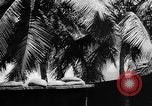
Protective measures taken by Americans in Hawaii, after the Japanese attack on Pearl Harbor.
Aftermath of Pearl Harbor attack. People in Oahu, Hawaii, prepare to deal with more air attacks by Japanese. Armed U.S. soldier in sandbagged position, in Hawaii. The territorial governor of Hawaii, Joseph Poindexter, signing a declaration of Martial Law. Four thousand members of Oahu's Civil Defense Committee, dressed in dark bottoms and white tops, wearing steel helmets with "W" on them, standing at attention in formation on grounds of a stadium. Windows in all downtown shops taped to prevent flying glass. Sand bags surrounding a power substation. Huge quantities of barbed wire in a storage yard and strung along the beaches, along highways, around schools, and public buildings of Oahu. A man pushing a lawn mower between sandbagged defense positions in a residential neighborhood. Construction machinery digging defensive trenches. Bomb shelters being constructed of precast concrete. Air raid sirens installed and school children leaving their building and sheltering in deep trenches during a test. Very small children taking shelter in zig-zag trenches and donning gas masks. Huge assemblies of children, and of grownups, all donning gas masks. Little children being dressed in capsule-like "bunny mask" protective gear.One of them crying inside the covering. Crowds of women and children lined up on a veranda waiting to receive these "bunny masks." Military personnel, civilians, and school children, all carrying personal gas masks with them at all times. Innumerable old rubber tires saved in an open yard. Japanese-Americans donating blood to the American Red Cross and lined up to buy war bonds. Soldiers arresting a Japanese resident known to be an enemy agent. Boarded up shops of Japanese-Americans, who had been interned. Japanese-Americans removing all Japanese language signs from their areas. Language school buildings with closed signs. An empty and boarded-up Shinto temple. One Japanese-American replacing his cafe sign with one reading: "Keep 'Em Flying Cafe." U.S. Army troops posted on roadways. The Aloha Tower in camouflage paint. A Lurline steamship leaving port, and being replaced by warships. Prewar view of people enjoying Waikakee beach, and current view of two boys playing in sand near barbed wire barriers. City streets deserted at twilight, as blackout procedures take effect at dusk. Views of darkened homes and palm trees silhouetted against sky at dusk. The "ghost" of a sailor killed in World War II, stands in front of Arlington cemetery, Washington, DC, and converses with the ghost of a soldier killed in World War I. They discuss idealistic notions about ending wars for good. Displays of flags is seen, including: Australia; Belgium; Brazil; Canada; China; Costa Rica; Cuba; Czechoslovakia; Dominican Republic; England; Ethopia; Greece; Guatemala; Haiti; Honduras; India; Yugoslavia; Luxembourg; Mexico; The Netherlands; New Zealand; Nicaragua; Norway; Panama; The Philippines; Poland; Russia; El Salvador; South Africa; and the U.S.A. "V" created in the sky by a skywriting airplane.
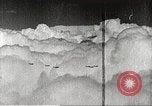
Montage of Japanese military aircraft used during 2nd Sino-Japanese War
Opening scene shows formation of Japanese Mitsubishi Ki-21 bombers in flight over altocumulus clouds. Change of scene shows several Kawasaki Ki-10 Biplane fighter directly overhead. Next, a Japanese Kawasaki Ki-10 engages a Chinese Fiat CR.32, in a dogfight, and shoots it down. The Fiat spirals down. Change of scene shows bombs or shells bursting on the ground followed by a Kawasaki Ki-10 climbing in cloudy sky. A Japanese single-engine high-wing liaison airplane in flight, displaying "28" on both wings. Another high-wing monoplane (this one with radial engine and wheels partly tucked into fuselage) flies past some trees. (Views of munitions exploding on the ground appear occasionally throughout the film between shots of aircraft.) A Kawasaki Ki-10 dropping bombs. Formation of Mitsubishi Ki-2 trimotor bombers in flight. Views of Chinese city with smoke rising from Japanese bombing. A formation of Japanese high wing monoplanes with radial engines and fixed landing gear, in flight, viewed from what might be gondola of an airship. A Formation of Navy Yokosuka B4Y (or Aichi D1A) biwing dive bombers in flight, viewed first, from the side, and then head-on from the tail of another airplane. Men's chorus sings martial songs in background during entire film.
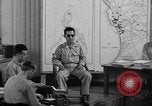
Sergeant Richard Sakakida answers about the North Cemetery Massacre and the Court Martial Cases in Manila, Philippines.
Sergeant Richard Sakakida testifying during Yamashita trial in Manila, Philippines after World War II. Hawaiian-born Japanese-American (Nisei) sergeant Richard Sakakida seated in a chair before prosecutors and officers in a court room. Maps on a wall. Sergeant Richard Sakakida answers about the North Cemetery Massacre and the Court Martial Cases # 77, 88 and 89. Prosecutor questions him. Sergeant also tells of the 2000 cases of people being executed, including seven Americans. He witnessed the execution of the Americans.
Spanish, Japanese, and French restaurants.Sculptures at the Museum of African Art in Washington DC, United States.
Cosmopolitan aspects of life in Washington DC, United States. A Spanish restaurant, where a woman plays castenets and another plays a guitar. A family seated at a table and having wine. A man standing beside the table talks to them and turns to welcome, speaking in Spanish. A woman, speaking Japanese, welcomes to a Japanese restaurant. A woman standing beside a table set for two persons. She speaks first in French, and then in English, asking whether the table is to be set for two or four. Views of different sculptures at the Museum for African Art.