


 Francais
 Deutsch
 Italiano
Refine Your Search
Japanese-martial-arts stock footage and images
- Showing 31 to 36 of 4336 results more
more Hide
Hide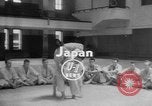
American airmen of the Strategic Air Command learn the ancient art of judo from Japanese instructors in Japan.
American airmen of the Strategic Air Command learn judo in Japan to be in top physical condition. The airmen learn self defense methods of judo. They learn the basics of the ancient art of judo from Japanese instructors. They practice judo in a hall.
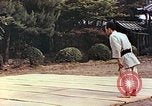
Japanese men practice the art of self defense, Judo, every day in schools in Japan.
Men practice Judo, the art of self defense, in Japan. Men demonstrate the methods used in a Judo exercise. Several views of the same.

Ghanaian student studies theater arts at the University of North Carolina
A Ghanaian student walking to her university in the United States. Sign reads “Chapel Hill site of the University of North Carolina which first opened its doors in January 1795”. The University of North Carolina Chapel Hill campus grounds (Bell Tower, Chapel Hill, NC 27514, United States). The Ghanaian student joins with a group of white female American students on their way to class. A book (Theatres and Auditoriums) on table. A professor conducts his lecture. Cigarette smoke in classroom as student watches lecture. The African student opens and writes on her notebook. A Japanese student listens to the professor. The professor points to a diagram on the board using a ruler. American students walking on campus. Ghanaian student walks to the university scene and costume shop. Sign reads “The Playmakers Scene Shop and Costume Shop”. The Ghanaian student looks at costume sketches with other costume design students. A professor assists the students during their practicum. The professor and a student insert pins on a mannequin. Ghanaian student talks to a girl wearing glasses. The professor helps the Ghanaian student with sewing costumes. Sign reads “Department of Dramatic Art”. A woman enters the door of the department. Theater Arts students in costume rehearse for a play. Students working with sounds during a television production course. Ghanaian student with headphones during her practicum. An actor dancing on stage. Ghanaian student directs a live presentation of a school play while her professor acts as a cameraman using large video camera on tripod. “On The Air” sign turns on. Theater Arts students acting in a Shakespearian play. Ghanaian student acts with a female professor in a modern play in front of other students.
U.S. orientation film for Allied occupation forces, to provide background for understanding Japanese and their society
Background information for United States occupation forces in Japan after end of World War II. At start, the film shows sky filled with U.S. Navy airplanes flying in formations. They include Vought F4U Corsair aircraft, among others, and are seen overhead above the Battleship USS Missouri (BBB-63). Closeup of the USS Missouri with her crew in formation on deck wearing dress whites. Next, General Douglas MacArthur is seen and heard speaking from a podium on the Missouri's deck. He invites the representatives of the Emperor of Japan, and the Japanese Government, and the Japanese Imperial headquarters, to sign the instrument of surrender. The date is September 2, 1945, just after the end of World War 2. Closeups of the Japanese delegation, which includes envoys Foreign Minister Mamora Shigemitsu and General Yoshijiro Umezu, and of MacArthur. Japanese Foreign Minister Mamora Shigemitsu sits at a table. Closeups of him signing the surrender document. Change of scene to Japan, where camera pans over many thousands of Japanese people assembled to learn of their fate. Closeups of Japanese soldiers and family members, as Narrator asks how should the U.S. occupying force treat them. View of soldiers in plain non-military uniforms. Views of Japanese responding en masse to a leader, during World War 2. Views of child victims of the war. Closeup of Japanese soldier firing a short barrel light machine gun. Views of Japanese pedestrians including families, most in western dress. Japanese workers in an office. Film shows artists view of one worker's brain, and then many brains, as Narrator refers to need for reorienting Japanese thinking. View of learned wise Japanese leader at a podium. View of a Japanese soldier posed with his sword above the head of a war prisoner. Japanese mother feeding her baby. Closeups of Japanese babies. Closeups of Japanese school age children, in a group, and some doing things in school, and some at a playground. Group of uniformed Japanese students studying the art of Japanese calligraphy. Students doing artwork, studying nature outdoors, and paying attention to a teacher using a black board to explain how to calculate volumes of different shaped vessels. Students in classes of Geography and of geology. Japanese chemists, architects, and lawyers at work. Telephone switchboard operators at work. Electrified train moving on a track.
Chinese and Japanese soldiers fighting during the Marco Polo Bridge Incident.
Japanese propaganda during the Sino-Japanese War. The Marco Polo Bridge Incident battle between the Chinese Nationalist (Kuomintang) and the Imperial Japanese Army. “1937” flashes on the screen with explosion in the background. Graphics over newspaper reads, “Trouble started at Lukoukiao near Peking. When Chines troops fired on Japanese soldiers” A map depicting Beijing and neighboring cities and regions. “Lukowkiao (Marco Polo Bridge) is shown on the map. Sign reads “Lu Know Kiao”. Marco Polo Bridge (Fengtai District, China) near Beijing. The Lugou Xiaoyue monument (Wanping Bridge, Fengtai District, Beijing, China) with Chinese writings. A truck drives across Marco Polo Bridge. Aerial view of Marco Polo Bridge. Soldiers marching on a wooden bridge. Chinese women running on the street in Shanghai. Refugees loaded on a truck. A woman carrying a baby. Nationalist planes in flight, bombing Shanghai to drive out Japanese soldiers. “Chinese Warplanes rain bombs in Shanghai” reads one newspaper headline. “590 Killed..War At Shanghai’s Front Door” reads another headline. The Palace Hotel (Swatch Art Peace Hotel 23 East Nanjing Road (Bund 19), Shanghai 200002, China) in Shanghai. Debris and destroyed buildings from damage by Chinese Nationalist plane bombings. Large group of refugees leaving Shanghai. Chinese Nationalist plane in sky. Buildings on fire. “Nanyang Bros. Tob. Co. Ltd Godown No.3” building on fire. Japanese soldiers running in two straight lines. Japanese troops sit on moving truck. Japanese troops with fire hoses to put out flames. Another plane in the sky. A column of Japanese soldiers fire rifles in the air with Japanese flag behind them. Soldiers shooting anti-aircraft gun into the air.
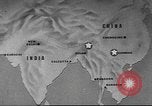
P-40 fighters piloted by Flying Tigers (1st American Volunteer Group) attack Japanese planes in China during World War II.
Flying Tigers (1st American Volunteer Group) operations in China during World War 2. An animation shows location of U.S. 10th and 14th Air Forces in India and China. Japanese troops march. Japanese aircraft taxi and take off. Japanese troops wave as planes take off. Japanese planes in flight. Planes strafe trucks on a highway. U.S. Army pilots assigned to the Flying Tigers (1st American Volunteer Group) beside P-40 Warhawk fighter aircraft. U.S. Army Air Corps Lieutenant General Claire Lee Chennault looks at a map laid on a jeep. Japanese planes in flight over clouds. Flying Tigers come out from behind a tree and run to P-40s. P-40s taxi on an airfield. Formation of P-40s in flight. Interior of a plane shows Japanese gunners cleaning guns while on the mission. Formations of P-40s. Japanese planes being shot down. Japanese planes spin down, hit the ground and explode. A wrecked Japanese plane. U.S. Lieutenant Art T. Smith in the cockpit of a P-40. An animation shows the location of an old Burma road from Rangoon, IndoChina. An American convoy at sea. Cargo is unloaded at a harbor in India and transferred to river barges. Small Chinese barges on the Rour. A small Chinese train loaded with supplies. The cargo being transferred from an American standard gauge train to a small gauge train. Chinese civilians load equipment on trucks.