


 Francais
 Deutsch
 Italiano
Refine Your Search
Japanese-martial-arts stock footage and images
- Showing 3193 to 3198 of 4328 results more
more Hide
Hide
The Battle of Iwo Jima in World War II
Scenes filmed by Navy and Marine combat photographers, of the Battle for Iwo Jima, in February and March, 1944, during World War 2. View from a boat offshore, of Mount Suribachi, on the Island of Iwo Jima. Warships of the U.S. 5th Fleet attack with naval gunfire, as landing craft manuever near shore. U.S. Marines aboard Landing Vehicles Tracked (LVTs) head for the beach, with the heavy cruiser, USS Baltimore (CA-68) in the background. U.S. Carrier-based Grumman TBF Avenger aircraft drops bombs on Mount Suribachi. Landing craft arriving at a fairly level area of beach. U.S. marines moving cautiously on the beachhead. The USS Baltimore and a Fletcher class destroyer offshore in background. Marines hunkered down with smoke rising near them, and then moving forward again, through the black sands. Closeup of a marine with flame thrower. Several U.S. Chance Vought F4U Corsair aircraft fly overhead, dropping bombs on the mountain. Marines continue to move forward, under constant fire from Japanese small arms. A heavy landing craft Infantry, LCI(H) moves toward shore in background. A DUKW ("Duck") coming ashore. Marines using a crane to offload a 105mm howitzer from a landing craft. As they raise the gun, the landing craft moves away and marines Hook the howitzer to a DUKW to help move it. Next, marines are seen setting up two 105s on the beachhead and firing them. Marines with more artillery pieces stacked on the beachhead. A gunboat, LCI (G), firing from close to the shore behind them. Marines digging in sand that the narrator calls the floor of an active volcano. Smoking sulphur gases are seen rising behind them. The USS Baltimore firing her guns from close to shore. Machine gun tracer rounds crossing the beachhead, as Naval gunfire resumes from offshore. Marines crawling and then occasionally sprinting forward across the sand dunes. (One carries a stretcher.) Four marines carrying one wounded back to the beachhead, on a stretcher. Two marines carry another between them. Marines scrambling over brush and rough ground. View from hillside of marines climbing up from below, as shell bursts only a few yards away. Scene shifts to later in the battle for Iwo Jima. A catapillar tractor is parked near bodies of Japanese soldiers strewn across the landscape. (Narrator notes that more than 14 thousand such dead had been counted by March 6, 1944.) Finally, the iconic moving images of U.S. marines raising the American flag over Mount Suribachi.
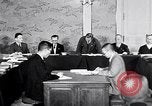
National Assembly and disestablishment of Shintoism in Japan after the end of World War 2
Newly elected members of National Assembly of Japan in a meeting. Members of the House of Representatives wear a button on their collars. Ancient assembly Diet in session. Japanese in a procession to mark the new civil rights celebrations. A judicial trial at a court room is seen. Disestablishment of Shinto religion and people of different religions pray at their places of worship. Japanese children being taught in classroom under a new democratic educational system. Free press in the country, newspapers being printed and sold.
Officials work to improve public health in Japan and food being distributed through a public distribution system
The chief of communicable disease along with other officers works on a plan to control the spread of typhoid in Japan. DDT disinfectant being sprayed in a house and a patient being carried to hospital. Doctor explains the importance of public health to people on street. Japanese stand in queue to be sprayed with DDT powder. People line up to get rationed food under public distribution system. Japanese women shop for clothes. Reconstruction work in progress at factories and a church.
Women's Army Corps visit National Museum in Tokyo in Japan
Women's Army Corps officers drive in a hand driven rickshaw being pulled by Japanese men in Tokyo in Japan. Four WAC officers walk up the steps in Ueno Park. Two officers are seen with a Japanese girl wearing a Kimono. They look at pottery in the window of a store and visit the National Museum.
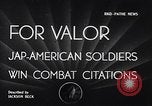
General Mark Clark presents citations to 100th Infantry Battalion in Italy during World War 2
A film titled 'For Valor- American Japanese soldiers win combat citations' shows General Mark Clark presenting citations to United States 100th Infantry Battalion soldiers of Japanese descent also known as Nisei, with citations for their services in Italy during World War II. General Clark attaches citation to battle colors in Italy.
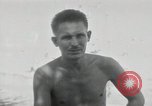
An American soldier recounts his experience as a prisoner of war in Manila, Philippines (WW2)
An American soldier named Gene Kneebone from Grass Valley City, California being interviewed in Manila, Philippines. Kneebone recounts his experience as prisoner by Japanese forces in World War II during the interview. He states how he was beaten up at military police headquarters after two of his friends escaped from the Japanese prison camp.
CRITICALPAST.COM: About Us | Contact Us | FAQs - How to Order | License Agreement | My Account | My Lightboxes | Shopping Cart | Advanced Search | Featured Collections | Website Terms & Conditions | Privacy Policy ©2026 CriticalPast LLC.
License Agreement |
Terms & Conditions |
Privacy Policy
©2026 CriticalPast LLC.