


 Francais
 Deutsch
 Italiano
Refine Your Search
Japanese-martial-arts stock footage and images
- Showing 3457 to 3462 of 4328 results more
more Hide
Hide
Workers work at Akita oil field in Yabase, Japan.
View of Akita Oil fields in Yabase, Japan. Japanese workmen replace leather pack on well pump. They turn the valve wheel.
Construction of the Alaska Highway that connects the lower 48 United States to Alaska via Canada.
Construction of the the Alaska Highway aka Alaska-Canadian Highway aka ALCAN Highway, in 1942. Montage showing momentary views of American highways seen from underneath, highlighting their structural supports and the like. A man traveling in snow by means of a dogsled. Vehicles bumping along on rough road in a wilderness, passing a piece of heavy road-building machinery in operation. A sign posted on June 15, 1942, soliciting workers for construction of the ALCAN highway. The sign reads "This is No Picnic." Steam locomotive pulling railroad train into station at Whitehorse, Yukon territory, Canada. Men in parkas sorting through boxes of supplies at the rail depot. A caterpillar tractor clearing trees along the planned roadway path. Canvas covered trucks driving across snow-covered landscape. Narrator mentions start of World War 2, as related scenes are shown, including: A formation of military aircraft in flight; Bomb exploding in Japanese attack on Pearl Harbor; and wreckage of the USS Arizona after the attack. Scene shifts to workmen in parkas carrying tools, as they walk past tents in snowy site. Surveyors struggling through snow and underbrush to perform their work. A truck driving across a temporary bridge. A bulldozer clearing underbrush. A convoy of trucks driving along a snowy road. Men attempting to free a vehicle trapped in a snow bank. Vehicles moving along parts of the highway covered by water from melting ice. A Jeep driving past a tent displaying a sign pointing to Tokyo. Gathering of construction workers in completion ceremony at Soldier's Summit on 21 November, 1942.
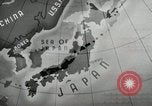
Benito Mussolini and his troops invade Ethiopia; war and unrest leading up to World War 2.
Actions of Italy leading up to World War II. Animated map shows Japan and the Sea of Japan on world globe. Benito Mussolini gives a speech. Italian troops invade Ethiopia. Ethiopian Emperor Haile Selassie addressing the League of Nations. Ethiopian native leaders and tribal soldiers gather with Emperor Selassie and pledge allegiance to him and Ethiopia at a rally against the Italian invasion. Ethiopian fighters with spears and bare feet battling well-armed Italian soldiers in vain. Newspaper heading reads 'Mussolini invades Ethiopia'. Italian aircraft drops bombs on Ethiopia. President Franklin Roosevelt in his speech denounces the Italians invading Ethiopia, noting that civilians including women and children "were being ruthlessly murdered with bombs from the air." Animations depicting the rapid speed at which the earth can be traveled by air compared to formerly by ship. Thatch roofs huts being burned by Italian soldiers in Ethiopia. Similar scenes of civilian dwellings being burned by Japanese forces in Manchuria circa 1931. Mussolini, Hitler, and Goering meeting and discussing plans over a map. The three leaders are seen smiling and laughing. Camera view from low near Hitler's feet showing Adolf Hitler raising his hand in a Nazi salute. Brief scenes of fire burning through buildings in a war torn city; German forces digging ditches or foundations; Civilians waiting in line for food relief; children putting on gas masks and raising rifles while in prone position during a training exercise; dead bodies of war victims in China.
U.S. troops landing at Tarawa during World War II.
U.S. Marine Corps forces landing at Tarawa during World War II. United Sates Navy Carrier fighters F6F Hellcats headed for landing in the Tarawa Islet a Japanese base. Scenes of Landing Vehicle Tracked (LVT) ferrying U.S. Marines to the beach. View from inside LVT of Marines preparing for beach landing. Views from moving LVT of many other landing craft on their way to beach during Battle of Tarawa.
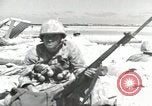
War scenes during Battle of Tarawa, World War II.
War scenes during Battle of Tarawa. U.S. Marines Corp with hand grenades and bayonets. Camouflaged soldiers hiding in the fox hole and conversing over phone. Smoke arises due to fire. Scenes of U.S. soldiers with snipers and Japanese defending the attack. U.S. troops advancing amidst rubble and firing flame throwers and grenades while dead bodies lie near them. Soldiers firing from behind logs of wood.
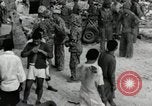
Korean workers during Battle of Tarawa, World War II.
Korean workers standing amongst U.S. Marines. Japanese twin mount gun is seen. Marines crawls and advances on dugout.
CRITICALPAST.COM: About Us | Contact Us | FAQs - How to Order | License Agreement | My Account | My Lightboxes | Shopping Cart | Advanced Search | Featured Collections | Website Terms & Conditions | Privacy Policy ©2026 CriticalPast LLC.
License Agreement |
Terms & Conditions |
Privacy Policy
©2026 CriticalPast LLC.