


 Francais
 Deutsch
 Italiano
Refine Your Search
+"Africa" +1943 stock footage and images
- Showing 145 to 150 of 175 results more
more Hide
Hide
Production of petroleum at oil refineries and its transportation in United States, before and during World War II
Documentary titled, ' Oil Is Blood ' on production and transportation of petroleum and its by products in United States. Crude oil in a pit. Man takes samples from the pit. View of derricks at an oil drilling site. Derricks at sea. Exteriors of a building near the derricks. Service station attendants, pumping gas and cleaning the windshield, on a 1942 Lincoln Continental convertible, at a "Tydol Flying A" gas station. Scenes of busy highways and plenty of fuel give way to empty roads, closed gas stations, and restricted hours for obtaining fuel, as it is rationed during World War 2. Views of persons obtaining ration stamps and books. Various gasoline ration books including the "A" books (allowing the smallest amounts) and "B", "C", and other books allowing larger rations to more essential users. Oil rig "roughnecks" inserting new sections of pipe and proceeding to drill. Closeup of a "gusher" before it is capped. Men filling railroad tank cars with petroleum products. A long train of tank cars pulled by a steam locomotive. Animated map illustrates the ocean shipping lanes that formally served as means to transport fuel and oil, before the German U-Boat threat made them too dangerous for general use. Drums of fuel and oil being loaded aboard a ship to supply the Allies during the war. A convoy of ships heading to the war zone of North Africa.
Planning sessions of Franklin Roosevelt and Winston Churchill, and allied action on multiple fronts in World War 2
President Franklin D. Roosevelt and English Prime Minister Winston Churchill meet in Casablanca, Morocco. German troops and German POWs being driven out of North Africa by the Allies. President Franklin Roosevelt and Prime Minister Winston Churchill seated in chairs on the lawn of the White House at a planning session. Various war scenes from many theaters of battle action in World War II: Allied vessels and planes in the Pacific. Higgins boat (LCVP) in water and American troops invading Sicily and coming ashore on its beaches. Soviet infantry and artillery advance on the eastern front, firing at German enemy positions.
Montage of World War 2 scenes from all theaters of Allied operations and scenes of the U.S.A.
Peaceful scenes of pre-war England, showing a church with sheep grazing on its lawn, and a college building with ivy growing on the walls. In contrast, explosion and results of German bombing is shown, with buildings collapsing and ruined from the German blitz over England. A long line of Chinese soldiers marching along the Great Wall of china. Shadows of three Japanese bombers flying over Chinese landscape. On May 4, 1942, Madame Chiang Kai-Shek decorates American fliers who made the first attack on Tokyo in World War 2. Wearing a Chinese decoration around his neck, Lieutenant Colonel Jimmy Doolittle, who led that raid by U.S. B-25 bombers from the Aircraft Carrier USS Hornet, poses with Madame Chiang and others of his group. Scenes of Moscow, Soviet Russia, including a T-70 light tank moving rapidly along a city street. A Soviet Petlyakov Pe-2 dive bomber taking off in a snow storm. U.S. troops on a halftrack in North Africa. British artillerymen firing a 25 pounder in the desert. Glimpses of smoke rising from enemy strikes at cities in England, Russia, and China. Scenes of destruction from bombing. Brief street scenes of unharmed and intact towns and cities in the United States, including brief New York City scene of pedestrians and traffic in Times Square. Defense workers in America going to work at Ranger Aircraft Engines factory (later part of Fairchild Aircraft and Engine Corporation), and a star flag showing war service by worker families. Farmers in Western U.S. harvesting grain. Railroad trains and river barges carrying harvest from U.S. farms. Herds of cattle and sheep being raised for the war effort in Western U.S. Aerial view of orchards and farms in America. A mining bucket filled with iron ore. Barge carrying the ore. A steel mill in operation. Scrap iron being recycled. View from production floor of U.S. bomber aircraft being built in a defense plant. Countless freight cars in a railroad marshaling yard at a port, where a tug boat and a freighter are seen in the water. War materiel piled up at the port. A convoy of supply ships underway.
U.S. troops and their improvised movie theaters in combat zones during World War II
A U.S. Army Air Forces C-47 airplane carrying movies among its cargo bound from New Caledonia to troops stationed at Bougainville, Solomon Islands, during World War 2. Views inside the airplane cabin, where troops sit alongside the cargo. Glimpse from cockpit of aircraft on final approach to land on the airfield. Troops unloading canisters of movie films from the C-47. (Handing the movie reels out of the C-47 is Russ Laming of the 13th Troop Carrier Squadron, a.k.a the Thirsty 13th.) Army truck carrying mail bags and movie films driving away from the airfield. U.S. soldiers walk to their makeshift movie tent from foxholes and fortified positions. Sign on the tent reads: "Bougainville Roxy, Tonights feature." Movie projector seen inside the tent, as soldiers enter. Views of movie theaters made out of logs and other available materials at various locations in the Pacific theater of operations. They range from simple and rugged to more elaborate, at rear locations, away from the front lines. U.S. servicemen racing to get the best seats in a theater, as the doors open for a movie. Servicemen walking into an open air theater. They are called to attention as the unit commander arrives and takes his seat. View of wounded soldiers recuperating in a hospital,where a movie camera is being set up in the ward. They are tended by a French nurse wearing a "flying nun" hat (possibly North Africa). Servicemen and women being seated in an outdoor theater, and other places, waiting to watch movies. Allied troops join Americans to watch U.S. movies. A theater sign announcing the week's movie program at a Royal New Zealand Air Force post in the jungles. Courier carrying film canister from a jeep into a jungle theater. Soldier mounting the film on projector. U.S. troops watching a movie outdoors, during rain storm.
U.S. service personnel watch movies in various parts of the world during World War II
Audiences of U.S. servicemen and women watching Hollywood movies in a regular base theaters and outdoors in jungle combat settings, during World War 2. Views of the faces of audience members and their reactions as they watch movies on screen. Soldiers leaving a large elaborate movie theater after seeing a movie. Lieutenant General Brehon Burke Somervell, U.S. Army Chief of Logistics, expressing the Army's appreciation to the motion picture industry as he accepts the 10 thousandth Hollywood movie for exhibition to troops overseas. General Somervell mentions visiting troops in Australia, India, China, and Africa and comments on the way movies boost their morale.
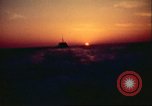
U.S. General Eisenhower, British Admiral Cunningham, and Vice-Admiral Sir Bertram Ramsay, visit Casablanca in World War II
Operation Torch (invasion of North Africa) during World War 2. View from stern of a British warship underway with setting sun behind. Several British sailors help a shipmate untangle himself from lines on the deck of ship. British, Free French, and American sailors line up for inspection on shore. A British launch, flying a white ensign, approaches and docks at Casablanca. The Allied Commanders of Operation Torch disembark. General Dwight D. Eisenhower (wearing 4 stars) is followed by British Admiral Sir Andrew Cunningham, Allied Naval Commander of the Expeditionary Force (carrying a cane on his arm), and his deputy, Vice-Admiral Sir Bertram Ramsay, who planned the ground effort. Eisenhower pauses to greet American Naval officers (and he stumbles on pier planking). Eisenhower, Cunningham, and Ramsay, then enter a staff car and drive away.