


 Francais
 Deutsch
 Italiano
Refine Your Search
+"China" +1942 stock footage and images
- Showing 7 to 12 of 54 results more
more Hide
Hide
As the United States enters World War II, U.S. military forces are seen, deployed in various places throughout the world.
American troops are seen in arctic gear moving on skis through blustery snowy weather in Iceland, during World War 2. They were sent in 1941 to relieve British troops occupying Iceland since 1940, during World War II. A guard post at the American camp, with Quonset Hut in background. Closeup of U.S. sentry in arctic gear holding rifle with bayonet affixed. View from above, of numerous tents partially covered with snow in the American camp. Change of scene shows U.S. troops disembarking from transport ships at the British Isles. They march with their combat gear onto a square where Army trucks wait to transport them inland. Another scene shows the American troops, viewed from behind, parading in London. Other scenes show them marching in various areas of London. Saint Paul’s cathedral is seen in the background of one scene. A large number of American M3 Stuart Light tanks move on a railroad train in Britain. Scene shifts to the Middle East, where railroad cars and various military supplies for Russia are be offloaded from American ships. A Russian officer is seen signing receipts for war materiel, from a U.S. Army Technical Sergeant. A row of American Army trucks are lined up behind them. The Russian and American exchange salutes, and shake hands. Next, a troop ship carrying American troops is seen arriving at a port in India, where they disembark with their gear. An American Army Sergeant in a pith helmet pays attention to a little Indian girl. Scene shifts to China, in 1942, where Brigadier General Claire Lee Chennault, Commander of the China Air Task Force, of the Tenth Air Force, that replaced the American Volunteer Group (Flying Tigers), is seen with Brigadier General Caleb V. Haynes, Commander of the India Air Task Force. A colonel joins their discussions. A Consolidated B-24 Liberator bomber is parked behind them. View of Curtiss P-40 Warhawk fighter planes, with Flying Tiger markings, parked on a flight line. A B-24 bomber landing on a runway, between hills, deep in China. Closeup of Nationalist China Generalissimo Chiang Kai-Shek, saluting. Huge numbers of Chinese troops assembling in a formation. Next, an expeditionary force of American troops is seen arriving on a troop ship in Australia. They line the ship’s deck and wave. General Douglas MacArthur arriving in Australia to assume the office of Supreme Commander, South West Pacific Area (SWPA). .Glimpses of U.S. Navy activities in Australia: setting up defenses of islands; unpacking a Kingfisher float plane and making it ready for use on a desert island. The final segments of the film show American forces in August ,1942 sailing to Adak in the Aleutian Islands, to strengthen American defenses there. Troops seen descending by rope ladder from the American transport ship USS J Franklin Bell (PA-34), into her landing craft for deployment on Adak Island. Scenes of landing craft reaching the beach and offloading troops, vehicles, and supplies. View of beach filled with supplies. One landing craft is clearly marked with ""P34" showing that it belongs to the USS J Franklin Bell ( later reclassified as APA-16).
U.S. B-25s bomb Japanese headquarters in Hong Kong (WW2)
First of three American air attacks on Japanese positions in Hong Kong on 25 Oct 1942, during World War II. U.S. Army Air Forces North American B-25 Mitchell aircraft lined up at an airfield in China. General Claire L. Chennault, of Flying Tigers fame, discusses the missions with Colonel Caleb V. Haynes China Air Task Force (CATF) Bomber Section Commander and Colonel Robert T. Scott (CATF's 23rd Fighter Group Commander) 11th Bomb Squadron B-25 takes off from Ehr Tong Airfield at Kweilin (Guilin), China along with P-40 fighter escort. Formation of escorting Curtiss P-40 Warhawk fighters. B-25 bombers in flight over mountain ranges. Bombs being dropped over the Hong Kong headquarters of the Japanese. Bombs impact and smoke rises.
Army trucks travel on Burma Road; Japanese bombers drop bombs; US General Joseph Stilwell discusses with Chinese; Flying Tigers take off.
Trucks driving on Burma Road to China. A caravan of camels travels to China through rough, snowy mountain terrain. British and American army trucks driving up mountainous terrain of the Burma Road during World War 2. Animated map showing two important military supply routes used by the Allied forces- the Burma route and the Iran land bridge (also known as the Persian Corridor). An animated depiction of an Imperial Japanese soldier superimposed over map of Asia, dominating the region. United States General Douglas MacArthur and Admiral Chester W. Nimitz discuss strategy together. Japanese soldiers march with Japanese flag during 1942 invasion of China. An Imperial Japanese Army Mitsubishi G3M1 Model 11 Land-based Attack Aircraft bomber in flight. POV through bomb bay door as Mitsubishi G3M1 drops bombs. Explosion from bomb as seen from ground. British Field Marshal General Harold Alexander holds a map. United States General Joseph Stilwell, while smoking a cigarette, discuss with Chinese colleagues. Animated map depicting Burma Road takeover by the Japanese. A United States airman, belonging to the First American Volunteer Group (also known as the Flying Tigers), hops on a Curtiss P-40 fighter. A group of “Flying Tigers” Curtiss P-40 fighters take off from airfield.
The United States mobilizes and joins Allies in World War II. A montage of numerous World War 2 period images.
Film opens with views of goosestepping German, Italian, and Japanese soldiers during parade reviews in their respective countries. Emperor Hirohito, on a white horse. American battleships burning in the Japanese attack on Pearl Harbor. U.S. General Douglas MacArthur decorating a soldier in Manila, Philippines. Air raid sirens sounding in Manila and residents hurrying to take cover. Heavy black smoke rising from a bombed site and emergency vehicles responding and rushing to several bombed and burning locations. A burning rickshaw amidst other bombing rubble and bodies of victims. U.S. Army General MacArthur greeted by Australian officials at his headquarters in Brisbane, Australia. Sign reads: Headquarters UNITED STATES ARMY FORCES in Australia. American flag flying on tall flagpole. View from ship underway in supply convoy. A battleship seen on horizon and a destroyer passing the camera ship. U.S. President, Franklin D. Roosevelt signing the "Lend Lease Act" of 1941. A U.S. industrial plant with four tall stacks emitting smoke. A steam locomotive belching steam. A locomotive pulling an open car and some tank cars. New 1941 Plymouth automobiles coming off a production line. A new M3 Medium Tank in a U.S. factory. View of Liberty Ships, including the "Zebulon Pike" and the "Henry Knox" under construction at the California Shipbuilding Corporation yard, Terminal Island, California. U.S. Navy Destroyers constructed at Federal Shipbuilding & Dry Dock Company, Kearny, New Jersey. One is being launched, next to DD-446 (the USS Radford). A formation of U.S. Navy aircraft including Curtiss SBC Helldiver scout bombers and Douglas TBD Devastator torpedo bombers. A tight formation of U.S. Army Douglas B-18 Bolo medium bombers in flight. A formation of U.S. Army Curtiss P-36 Hawk aircraft in flight. Closeup of a U.S. Army Lockheed P-38 Lightning aircraft in flight. Several huge gun barrels for guns under construction at a U.S. war plant. Large artillery shells lined up in a manufacturing plant. U.S. Army M3 Medium tanks under construction at a factory. Steam and smoke rising from a U.S. industrial plant. Aerial view of open pit iron mine. Sparks shooting up inside a steel plant. A virtual "forest" of oil well derricks in the Western U.S. drilling for oil. Coal being transported by railway. View from stern of a warship in a convoy. An Atlanta-class light cruiser leading three destroyers at sea. Transport ships in convoys to places like Australia, Britain, and the Middle East. Troops on a pier near a large transport ship. A stack of wartime supplies on a pier next to a ship destined for Russia. Glimpse of wake from a U.S. warship having triple guns astern. Silhouette of a U.S. Navy Enterprise-class Aircraft carrier, with an aircraft taking off from her deck. The aircraft carrier, USS Saratoga. U.S. Army soldiers marching on parade, followed by numerous jeeps with machine guns mounted in their rears. Young men being drafted into the U.S. military. A draft lottery being conducted. New recruits doing calisthenics. Trucks pulling artillery pieces. B-18 Bolo bombers flying over U.S. tanks. Closeup of M3 tank. Cavalry fording a stream. Soldiers on motorcycles. Troops crossing a pontoon bridge. A loaded troop ship. A troop transport at Newfoundland. Sentry in Trinidad. Troops encamped in Bermuda. Troop transport ship docked in Greenland. Troops disembarking in Iceland. Formations of Curtis P-36 Hawk aircraft. Douglas DC-2 aircraft factory. P-36s with engines running. M3 tank suspended on factory crane. Exterior of Palácio Tiradentes in Rio de Janeiro, Brazil on January 15, 1942. U.S. Under Secretary of State Sumner Welles ascending the steps during Rio Conference of 1942. Officials of Pan American nations meeting there to declare their support for the Allies against the Axis nations. Sumner Welles speaking and declaring, "At this time the issue is clearly drawn. There can be no peace until hitlerism and its monstrous parasites are utterly obliterated." Scenes changes to montage of views of Allied troops including Dutch, Belgian, Yugoslav, Greek, Czech, Filipino, Polish, Norwegian, Free French, Australian, New Zealand, South African and Canadian soldiers. British warships. British Hawker Tempest aircraft. British commandos. Russian troops on parade. Chinese troops on the Great Wall of China.
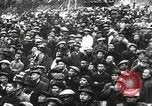
U.S. Army Air Forces employ air power in the India-Burma theater during World War II. Chinese troops are equipped and trained by U.S. soldiers.
Camera pans across scenes showing masses of Chinese. Narrator cites their large population as a war asset. Lt Gen. Daniel Sultan Commander of US Forces, India–Burma Theater (USFIBT) describes the Allied mission as simply "placing guns in the hands of men in order that they can kill our common enemy." He describes Japan's 1942 strategy of completely isolating China from outside help. Animated map shows Japanese forces attacking China from bases in Thailand and advancing north, driving British forces into India, and leaving Burma in Japanese hands.Glimpse of Japanese troops occupying Burma. Views of American troops evacuated to India. View of Chinese soldiers boarding U.S. Air Transport Command C-46 transport planes for flights from Kunming to Dinjan and Chabua, India. Closeup of some troops inside the cabin of a plane. Chinese soldiers await transport as a C-47 aircraft takes off in the background. Aerial view of two C-47 planes in formation. View from the air of high cloud covered mountains. Storm clouds over the mountains. Downward view from an aircraft flying over the Himalayan Mountains (called flying the "hump" by U.S. pilots). View of Chinese soldiers inside a transport plane. View out the window of a transport plane landing in India. A C-46 airplane taking off. A large formation of Chinese troops seen after more were brought from China to India, later in the war. American soldiers training troops of the Chinese 38th and 22nd Divisions. General Sultan speaks of the need to build up the U.S.Air Transport Command. Two C-47 airplanes on the ground. One named "The Joker." View of sky filled with B-24 Liberator bombers. Sky filled with C-47 transport planes. Chinese soldiers training in Kunming, climbing out of trench in live fire exercise with machine guns firing over their heads and explosive charges detonating near them. Air frame of a P-47 aircraft being loaded and several of Bell P-39 Airacobra aircraft being loaded aboard ship bound to strengthen the U.S. Army 10th and 14th Air Forces in Burma, in 1944. Covered P-47 aircraft without engines being towed by jeeps along a street in Burma. A large airfield with many U.S. fighter planes parked on its ramps. Engines being installed on P-39 aircraft. A flight line filled with P-40 aircraft displaying Chinese roundels. Some fly over a flight line of U.S. Army Air Forces P-39 aircraft. Glimpse of a fighter plane escorting a transport aircraft. A formation of B-24 Liberator bombers dropping bombs and exploding on Japanese ground targets. Workers are seen unloading large amounts of cargo from a B-24 bomber. Workers rolling a large bomb from the plane onto the tailgate of a truck.
Montage of World War 2 scenes from all theaters of Allied operations and scenes of the U.S.A.
Peaceful scenes of pre-war England, showing a church with sheep grazing on its lawn, and a college building with ivy growing on the walls. In contrast, explosion and results of German bombing is shown, with buildings collapsing and ruined from the German blitz over England. A long line of Chinese soldiers marching along the Great Wall of china. Shadows of three Japanese bombers flying over Chinese landscape. On May 4, 1942, Madame Chiang Kai-Shek decorates American fliers who made the first attack on Tokyo in World War 2. Wearing a Chinese decoration around his neck, Lieutenant Colonel Jimmy Doolittle, who led that raid by U.S. B-25 bombers from the Aircraft Carrier USS Hornet, poses with Madame Chiang and others of his group. Scenes of Moscow, Soviet Russia, including a T-70 light tank moving rapidly along a city street. A Soviet Petlyakov Pe-2 dive bomber taking off in a snow storm. U.S. troops on a halftrack in North Africa. British artillerymen firing a 25 pounder in the desert. Glimpses of smoke rising from enemy strikes at cities in England, Russia, and China. Scenes of destruction from bombing. Brief street scenes of unharmed and intact towns and cities in the United States, including brief New York City scene of pedestrians and traffic in Times Square. Defense workers in America going to work at Ranger Aircraft Engines factory (later part of Fairchild Aircraft and Engine Corporation), and a star flag showing war service by worker families. Farmers in Western U.S. harvesting grain. Railroad trains and river barges carrying harvest from U.S. farms. Herds of cattle and sheep being raised for the war effort in Western U.S. Aerial view of orchards and farms in America. A mining bucket filled with iron ore. Barge carrying the ore. A steel mill in operation. Scrap iron being recycled. View from production floor of U.S. bomber aircraft being built in a defense plant. Countless freight cars in a railroad marshaling yard at a port, where a tug boat and a freighter are seen in the water. War materiel piled up at the port. A convoy of supply ships underway.