


 Francais
 Deutsch
 Italiano
Refine Your Search
+"Europe" +1944 stock footage and images
- Showing 25 to 30 of 226 results more
more Hide
Hide
Allied troops aboard ships and gliders head for Normandy, France for the D-day invasion during World War II.
Allied invasion of Normandy, France during World War II. U.S. General Joseph McNarney, Deputy Chief of Staff at a desk as he outlines the importance of June 6, 1944 the day Allied forces attacked the Germans in Normandy. He speaks about the decision to knock down the Nazis first and then the Japanese during the World War. He says that the invasion of Normandy was planned in November 1943. He also states how General Dwight D. Eisenhower, Supreme Commander of the Allied forces in Europe, planned and executed the invasion. He also speaks about how the U.S. Army Air Forces and the Royal Air Forces aircraft bombarded the coasts of Normandy prior to the D Day invasion. Past events show American soldiers getting onto landing crafts in England as they leave for the invasion. The soldiers aboard the ships in the English Channel. The soldiers read the Bible and comics, sleep and cook aboard the ships. On June 5th , 1944 the ships head towards Normandy for the invasion. In England gliders carrying paratroopers take off from an airfield to bombard the German positions in Normandy. British soldiers receive ration and work on motorbikes. TNT (trinitrotoluene) charges being prepared by soldiers tasked with demolition duties. British soldiers check their guns and other weapons prior to the invasion. Jeep and artillery being loaded onto aircraft.
Allied soldiers prepare for D-Day invasion, and then land in France (WW2)
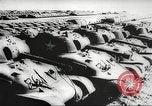
Allied campaign against Nazi Germany in 1944 during World War II. Tanks, artillery and supplies piled up in England for invasion of Europe. Allied soldiers from various Allied nations like Britain, America, New Zealand and South Africa gathered at docks. The soldiers loaded onto transport ships. Soldiers get into landing crafts. Supreme Commander of the Allied Expeditionary Force General Dwight D. Eisenhower at a map in Headquarters as he plans the invasion of France. The Allied invasion fleet underway in the English Channel to invade France. A map shows the location of Caen, France. Allied aircraft in flight and view at aircraft door as line of paratroopers jump. Massive group of parachutes in the sky as paratroopers descend. Explosions occur at a coast. Landing crafts beached and soldiers come ashore amidst heavy firing. Rockets and artillery being fired. Vehicles on the beach. A truck burns. A map depicts the area under Nazi German occupation before World War II and the recapture of those areas by Allied armies in 1944.
Montage of Scenes from Allied invasion of France in World War II
First scene of film shows waves rolling in on a shoreline. Next, four transport ships are seen underway in the Atlantic ocean. A transport ship is docked next to a large pier where war materiel is piled up and some allied soldiers are standing in formation, while others are proceeding across the pier. Closeup of the soldiers on the move reveals that they are British soldiers in battle gear. A wider view from atop a building shows the area to be industrial in nature, with smoke rising from foothills in the distance. Change of scene shows several U.S Landing Craft Infantry Large, LCI (L)s numbered: 322; 85; 86; and 325, docked in England, preparing for the D-day invasion of Europe in June, 1944. A formation of four American B-24 Liberator bombers is seen in flight. Clusters of bombs are seen falling from aircraft and exploding on the ground below. Paratroopers are viewed as they jump from an airplane. A convoy of LCI (L)s underway in the English Channel. Closeup of one (LCI number 31) is seen from a low flying airplane. Another view of LCIs silhouetted against light-reflecting water. American soldiers wading ashore, unopposed, from LCI number 36, during the continued invasion of Southern France, in August, 1944. Post D-day view from overflying aircraft of Allied troops assembling and moving inland from the Normandy beachhead. Closeups of Surrendering German soldiers carrying a white flag. Closeups of German prisoners. One of them displays his uniform sleeve identifying him as a member of Hermann Goering Division. He also wears the Iron Cross and another medal.
Allied forces fighting in naval battles, Normandy landing and aerial view of Normandy (WW2)
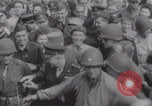
Soldiers form a human barricade to make way for important Allied military officials such as General Jacques Philippe Leclerc (Free France), United States General Omar Bradley and British Field Marshal Bernard Montgomery. United States General Omar Bradley walking during World War II. United States General George Patton uses a pair of binoculars. United States Army conducts mopping-up operations in a destroyed French town. United States infantry move through a forest. Soldiers walking on a street. Television host Alexander Scourby narrates while holding a book titled “Breakout and Pursuit” by Martin Blumenson. An excerpt of the book “Breakout and Pursuit”. United States, British and Canadian troops engage in a naval battle with German forces on the English Channel July 1, 1944. Gun turrets of battleship aiming and firing at German position. Battleships firing artillery. Thick smoke forms from heavy firing from naval artillery. Soldiers climbing down a marine rope ladder. Smoke covers the Normandy coast after Allied ships fired at German positions. Allied infantry wade through the waters after landing near a beachhead in Normandy on D-Day June 6, 1944. Famous shot of some soldiers collapsing after reaching the beachhead after landing. Some soldiers attempt to swim to reach the beach. Smoke forms away from the beach. A line of Allied infantry wade through the beach. A barrage balloon floats over a beach in Normandy. Alexander Scourby shows a map of Western Europe during World War 2 and points to the area of Northwestern France to demonstrate the goal of Operation Cobra. Aerial view of marshlands and hedgerows in Normandy. Tanks are seen on marshlands. German soldiers enter a French village. German soldier carries an MG42 machine gun. German troops sprinting near a berm. Explosion from bombing. German troops ducking in a berm alongside a hedgerow. A bomb explodes in field.
German Chancellor Adolf Hitler and Prime Minister of Italy Benito Mussolini discuss strategies for war in the European Theater.
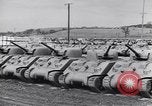
Officials confer during World War II. Allied war material stacked on a port in England, including U.S. tanks, trailers, razor wire, fencing, and trucks in preparation for invasion of Europe in 1944. American and British soldiers work and load the supplies for their shipment to the war front. U.S. soldiers unload at a beach site. British Army soldiers roll a covered artillery piece . It has a chalk handwritten label on the gun barrel that says, "Slim's Deadly Poison" and an image of skull and cross bones. Laborers building a German fortification in coastal France. German General viewing English Channel from coastal fortification along the Atlantic Wall. German Chancellor Adolf Hitler and Prime Minister of Italy Benito Mussolini confer in a meeting. The officials discuss strategies for the war over a large map. Newspapers with English headlines speculating about the coming Allied invasion. George Marshall and other Allied officers of the War Council of the united nations assembled at a large conference table and in discussion for the Invasion of Europe (D-Day invasion of France).
African American soldiers engaged on all fronts in World War 2
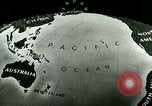
Film opens with map of the world showing the various theaters of operation in World War II. Narrator refers to Allies liberating town after town, as they advance. View of American troops being welcomed in a European town during an advance (probably Italy in 1944). Next, African American troops are seen boarding troop transport ships. A huge convoy of ships is seen from the air. Huge piles of war materiel on a dock. Ammunition being delivered by landing craft from the transport ship USS Hunter Liggett (APA-14) to American troops at a beachhead in the Pacific. An African American sailors directs the lowering of a piece of artillery from a ship into a landing craft. Construction equipment being used to clear the way for a new landing field. Docks, roads, and bridges being built as the Allies advance. American troops in the swamps of the South Pacific. American Army engineers clearing trees to build the Alaska Highway (ALCAN Highway) in 1942. Corps of Engineers building the Ledo Road (from India to China) during the war. African American soldiers building a bridge across a river in Europe. A U.S. Army truck under fire, driving along a dirt road in Europe as shells burst all around it. U.S. troops firing various kinds of field artillery and tank guns. U.S. infantryman using a flame thrower. Closeup of African American soldier using a bayonet and others firing small arms. A tank being blown up by artillery fire. A Japanese Mitsubishi A6M3 Zero aircraft maneuvers overhead in the Pacific theater. An African American soldier runs to man his Browning .50-caliber, water-cooled antiaircraft machine gun, and begins firing as the Zero fighter plane strafes his position. Closeup of Japanese pilot in his cockpit and his machine guns firing from leading edges of his plane. His rounds strike all around the U.S. gunner, who turns and follows him with more fire. His tracers show behind the plane. Closeup of the African American gunner as he continues firing. View of the Japanese airplane rolling over and diving. Next the Japanese plane, aflame, crashes on a tropical island and explodes. (Note: It is apparent that some of these combat scenes have been made up of clips from other sources, edited into this film.) (World War II; WW II; World War 2; World War Two)