


 Francais
 Deutsch
 Italiano
Refine Your Search
+"Germany" +1936 stock footage and images
- Showing 67 to 72 of 144 results more
more Hide
Hide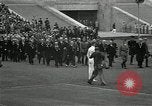
Adolf Hitler arrives at a stadium and the players of the participating nations march during the XI Olympiad in Berlin.
Scene from the 1936 Olympic games held in Berlin, Germany. A band plays music. German Chancellor Adolf Hitler with German officials arrives at the Olympic stadium. A young girls presents him a bouquet. Spectators seated in the stadium cheer. The players of the participating nations march. A man holds the Nazi flag and marches. A man in the center speaks into a microphone. The players stand in the background. Hitler at a podium. A man holds the Nazi flag and takes an oath.
Athletes train in preparation for the Berlin Olympics.
Italian release of 1936 Berlin Olympics film. Olympic village athlete camp in Elstal, Wustermark, Germany. Birds on trees and cranes on river bank. Athletes run through a forest and a wading stream to prepare for Berlin Olympics. They take steam bath and then dive and swim in a river or lake and lounge on a deck by the water.
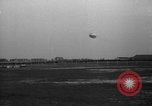
German zeppelin airship, LZ 129, Hindenburg, arriving at Lakehurst Naval Air Station in New Jersey.
Airship LZ 129 Hindenburg descending over Lakehurst Naval Air Station in New Jersey, after traveling from Germany, on its first flight to the United States, May 9, 1936.

Some rocket motor designs of 1930s and speculation about future of rocketry
Liquid Rocket motor design drawings of various pioneers in the field, from the American Rocket Society, including: Constantin Paul van Lent (aka Constantin Tselentis,aka Constantin Lent, aka Dr. Constantin Paul van Lent) 1936; Alfred Africano, 1937; Reed,1937; Wild,1938; H.F. Pierce and Nathan Carver, 1938. Slates refer to the post World War I period through about 1938, as the beginnings of rocket flight, and the immediate subsequent period as the second phase of achievement that could lead to high altitude and long range rocket missiles and even manned spaceships. Slate suggests that future of rocketry is limited only by our imagination. Next are imaginary, science fiction scenes like a science fiction movie, showing a major city, in Germany, as a rocket ship travels away from it, and eventually showing Europe, and the earth from outer space, as the rocket travels into the blackness, beyond. Slate comments about eternal longings related to human flight.
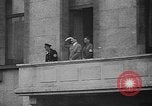
Brief views of Hitler at Nazi rallies and parades during late 1930s.
Film opens showing Adolf Hitler, in uniform, on the balcony of his new Reichs Chancellery on Wilhelmplatz (completed in 1939). He is accompanied by Deputy Fuhrer, Rudolf Hess and Schutzstaffel Leader, Julius Schrek. Supporters crowd the square and cheer them. Scene shifts to a nighttime rally, and then to Closeup of Hermann Goering on a balcony with others (unidentified). Glimpse of a Schutzstaffel brass band marching in torchlight parade and Hitler saluting from a balcony. Schutzstaffel assembled in Wilhelmplatz (77 Wilhelmstraße, 10117 Berlin, Germany). Some spectators climb a tree to get better view of events. Crowd returning Nazi salute to Hitler standing alone on Reichs Chancellery balcony. Inserted slate reads: "Memorial Day, 1936."
Emperor Hirohito inspects Japanese Troops and Adolf Hitler and Mussolini coalesce and coerce support in World War 2
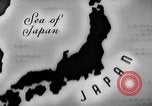
Descriptions of Axis forces and intentions in an American produced propaganda film. Animated map shows Japan. Emperor Hirohito inspects Japanese Troops. Troops bow down in front of the emperor. Group of Japanese women also bow down to the emperor. Masses of German citizens at packed rallies in Germany, crowded with people cheering Nazi leadership. Military demonstrations in Axis countries with military forces in their respective uniforms in each country and masses of decorated flags carried high. Picture of Adolf Hitler, Benito Mussolini and Emperor Hirohito. Adolf Hitler addressing Reichstag in an animated speech with much gesticulating calling on Germans to follow him and he'll 'make them masters of the world.' Mussolini speaking to a gathered crowd and rallying support for the fascist cause. Hirohito speaking and Japanese forces answering with "bonzai" shouts. Italian soldiers massed in front of Colosseum in Rome. Italian officers in blackshirt uniforms. Brownshirt uniforms of Germans. Views of Japanese officers in uniform. Scenes of Axis government buildings in various cities: The Reichstag in Berlin, the House of Deputies in Rome, and the Diet in Tokyo. Legislatures in each country cheering their leaders as they speak. German ditch digging crew listens to military foreman and shouts heil Hitler. German brown shirts approach a residence and use butt of gun to force entry. Italian Soldiers raising daggers or bayonets up high and also placing their helmets atop bayonets on rifles. Newspaper headline reads 'Hitler executes more Anti-Nazi Leaders'. Dramatized depiction of slaying of socialist leader Giacomo Matteotti in Italy in 1924 by fascists, and Viscount Saito in Tokyo in February 1936. More headlines of other anti-Axis leaders. Views of large cathedrals from street level. People praying in church - a woman praying the rosary and an elderly man praying. German Doctor Alfred Rosenberg speaking in 1938 and decrying organized religion. Newspaper headlines recount mistreatment, imprisonment, and slaying of religious leaders. German Doctor Goebbels speaks over a microphone. German leader Julius Streicher speaking in 1935.