


 Francais
 Deutsch
 Italiano

Refine Your Search
+"Germany" +1945 stock footage and images
- Showing 31 to 36 of 2008 results more
 Hide
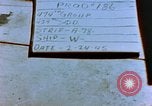
Two soldiers arrest suspected Nazis and a woman takes firewood out of debris in Germany during World War II.
Activities of civilians in Germany during World War II. Two U.S. Army soldiers arrest two suspected Nazis. They stand and interact at the entrance gate of a building that is under guard by American forces. Scene changes to a bomb damaged Atlas relief carving on a destroyed building. Next scene is a wide view of a totally destroyed area from bombing, with the same portion of broken wall with the Atlas carving seen at center. A German woman walks through rubble and debris from bombing, carrying two stacks of broken wooden timber pieces for firewood. (Location is possibly Nuremberg. Despite film slate stating 2-24-1945, these shots appear to be more likely April or May 1945.)
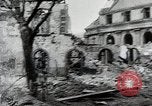
End of World War 2 in Germany, with Allied forces advancing in Germany; destruction of German areas and German forces surrender
American Troops occupying Germany in 1945, near the end of World War II in Europe. Ruins of German cities. White flags displayed from windows. German civilians distraught over destruction of their homes and towns. Towns ablaze in the night with ambulances passing through. Scenes of utter destruction in Basel, and Wurtzburg. Destruction of Essen, Germany, including the Krupp munitions works. German ME-109 plane by the roadside.A truck passes by. Abandoned Marder II Panzerjaeger in the woods. Bombed columns of German soldiers, with equipment and dead German soldiers along roadways. Massive groups of German soldiers surrendering under guard of Allied forces.
German civilians dig graves and bury Nazi atrocity victims in Gardelegen, Germany.
German civilians forced by U.S. Army soldiers in World War 2 to dig mass graves for Nazi atrocity victims of the Gardelegen Massacre, in Gardelegen, Germany. Bodies of slave laborer political prisoners on the ground, including Russians, Poles, and French, many of whom had come from the Mittelbau-Dora Concentration Camp and the Hannover-Stöcken Concentration Camp . A large barn in the background on the Isenschnibbe estate, showing evidence of fire damage, where many victims were found by the U.S. Army 102nd Infantry Division on April 14, 1945, after having been locked in the barn which was then set on fire on April 13, 1945. German civilians uncover nearby existing hastily dug mass graves containing piled victims. Dead bodies placed in new graves and covered with dirt. Civilians under U.S. Army direction dig long, mass grave trenches to bury the dead.

American troops fight against the Germans as American aircraft bomb Germany during World War II.
Allied operations in Germany during World War II. A map of Germany. A headline in a newspaper reads 'Russians strike Berlin'. People stand on a bridge in Cologne. View of Cologne cathedral. Past events show Nazi troops during a parade in March, 1936, crossing the River Rhine during rearmament of Germany. U.S. soldiers in advance in Germany in 1945, in combat from house to house in a German town. The German soldiers being taken as prisoners of war. Scenes with Nazi German soldiers with their hands up in the air. A large group of German Prisoners of War being marched on a road under guard by American soldiers. Allied aircraft bombard German towns. P-38 aircraft taking off and gun camera footage while strafing a target. P-38 landing on a snow covered airfield. An American single-propeller fighter aircraft crash lands with difficulty and slides into another parked aircraft on the snow. Aerial views of B-24 and B-17 aircraft in formation flight. Bombs being dropped in night bombing raids and day bombing raids over Berlin, Germany. Smoke rises. Aircraft in flight as they leave behind vapor trails. United States soldiers on the ground in combat with enemy Germans in a German town. Infantrymen fire rifles and advance house to house. Wounded Americans being carried on litters for medical care. Germans fire at the wounded Americans.Sergeant Peter Di Guiseppi, from Pennsylvania, of 1st Armored Division, being interviewed. Private Pat Brady of Hollywood California narrates an incident where a gunner aboard a tank fired fiercely at the enemy. He talks about tanks getting caught in a fire and the following rescue efforts.
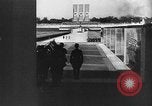
Nazi Party ceremonial grandeur is contrasted to the horrors perpetrated under the 3rd Reich
6th Nazi Party Congress at Nuremberg, in 1934, featuring a "Totenehrung" ceremony, honouring dead. Nazi SA ( Sturmabteilung) and SS (Schutzstaffel) troops in precise formations fill the Zeppelin Field Luitpold Arena, leaving only a wide pathway to the Ehrenhalle war memorial. View from behind honor guard standing at the Ahrenhalle, as Adolf Hitler, flanked by SS leader, Heinrich Himmler (in Black) and Viktor Lutze, head of the Sturmabteilung (SA), approach. Three huge banners with swastikas are seen in the far background. Scene shifts to 1945. American troops are now assembled at the main grandstand (Ehrentribüne) of Zeppelin Field. The American flag covers the wreathed swastika sculpture at the top of the Grandstand. View of German soldiers, who have been mustered out, mingling with civilians in a town. Some speak with an American soldier, who is part of the U.S. occupying force. Scene shifts to the Yalta conference in February, 1945. Winston Churchill, Franklin D. Roosevelt, and Joseph Stalin are seen seated while their most senior military staff members stand in the background. Allied leaders sit around a large conference table. U.S. Secretary of State James F. Byrnes, sits near Prime Minister Winston Churchill. Scene shifts back to Nazi era. Joseph Goebbels, Reichminister of Propaganda is speaking and haranguing a crowd. In contrast, German soldiers are seen conversing with occupying American soldiers. This is contrasted with more scenes of Nazi leaders giving impassioned speeches to a hall filled with Nazi faithful. German soldiers, prisoners of war are seen directed by U.S. military police, behind a barbed wire enclosure. Large numbers of German prisoners of war in an open holding area. Closeups of some. Bucolic scenes of farmers working in fields and herds of sheep and cattle. Hitler speaking in a forceful, animated way and haranguing an audience of rapt listeners. German civilians standing quietly in a group. (Narrator refers them being the people of Beethoven, Goethe, and Martin Luther, as statues of those iconic Germans are shown.) In dramatic contrast, numerous dead bodies of victims are being shown to German citizens by American troops, at Nordhausen, Buchenwald, and Bergen-Belsen concentration camps. This is contrasted against views of German people folk dancing in traditional costumes, German contributions to science (view of Albert Einstein speaking) and industry (view of professional glass blowers at work). Glaring contrast shows German civilians moving the body of a concentration camp victim; several civilians being shot dead by a firing squad (unseen); Rudolf Himmler; and an image Germany being destroyed, as result of the Nazis. American soldiers are loosely assembled in an open field. by the Elbe River at Torgau, Germany on 26 April 1945. American and Russian officers greet each other at the site, where their armies have met in World War 2. American and Russian soldiers mingle and greet one another. Views of Allied forces entering Germany. Another scene of victims' bodies stacked at a concentration camp. French soldiers examine stake where prisoners were tied and executed in the Gestapo headquarters on Paris France. Other views of the Gestapo prison, where victims were buried. Examples of torture devices used to coerce information from prisoners. More views of stacked bodies of victims. Germans carrying bodies from a concentration camp. General Dwight Eisenhower and General George Patton visiting the Ohrdruf Concentration Camp. Burned remains of victims. Closeup of General Patton. German officials and citizens confronting horror as they are compelled to walk through the camp. A huge wagon loaded with bodies of the dead. German women appalled and repelled by the sights. Countless numbers of dead victims covering a large courtyard. German citizens compelled to carry body of a victim from the yard. Others carrying bodies of victims. Large numbers of German citizens, seemingly shamed and remorseful at the revelations. A group of German men carrying shovels and others carrying crosses to commence burying the victims appropriately. Men carrying victims bodies in open wooden caskets along a road lined with spectators. Coffins of victims laid out in a cemetery. (Narrator alludes to them never forgetting.) German men gently place covered coffins in a long mass grave.
Scenes of World War II as the Allies converge through Germany towards Berlin.
Animated map shows direction of Allied forces converging on Germany, Western Powers from the West, and Soviets from the East during final phase of World War 2, in Europe. Newspaper headline reads: "Russians strike for Berlin."The New York World-Telegram newspaper headline reads: "Yanks Cross the Rhine!."U.S. Army troops seen in house-to-house fighting in Germany.American troops standing at Rhine River viewing Cologne, Germany. The cathedral at Cologne. Film of Hitler's troops crossing the Rhine in 1936 contrasted with views of many German prisoners of war being marched under Allied guard, in 1945. USAAF P-38 lightning aircraft taking off on mission against German targets. View from Allied aircraft strafing German target which explodes. A P-38 landing on a snowy airfield. USAAF P-47 of the 388th Fighter Squadron (C4), 365th Fighter Group, landing and skidding sideways off the runway. It slides in the snow and strikes another P-47 aircraft with engine running, on the ramp. B-24 Liberator bombers taxing for takeoff. Formation of USAAF B-17 bombers dropping bombs all over Germany. Formation of B-17s at very high altitude, leaving contrails behind them. U.S. infantry and armor fighting in snow-covered streets of German city. Allied troops, including Polish soldiers, fighting in the snow. Allied wounded being carried while under fire from German forces. U.S. Sergeant Peter Di Guiseppi and Private Pat Brady being interviewed. De Guiseppi remarks that the war seems like it will never end. Brady recounts being in a tank that hit a mine or something that exploded and abandoning the tank faster than he could ever imagine. He hunkered down in a ditch while bullets flew all around him, including the ammunition from the destroyed tank.