


 Francais
 Deutsch
 Italiano
Refine Your Search
+"Japan" +1944 stock footage and images
- Showing 49 to 54 of 106 results more
more Hide
Hide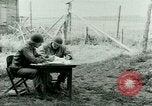
SPF-X Prisoners interrogated by a U.S. Army Major asking about Hitler, Nazi party and Japan as ally at a compound in France.
SPX-F Prisoners interrogated in France. A U.S. Army Major with the help of an interpreter interrogates prisoners in compound area. A soldier stands at the back. The German prisoner comes and the Major asks questions about Adolf Hitler, members of Nazi party and views about Japan as an ally. (World War II period).
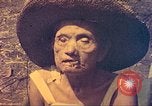
U.S. Army 77th Infantry Division soldiers speak to a wounded Japanese woman in Guam,Japan during World War II.
United States Army 77th Infantry Division in Guam, Japan during the Guam Operations of World War II. A wounded Japanese woman speaks to a U.S. soldier. A soldier wearing a helmet stands at an intersection directing the traffic. A pole in the background with directional signs pointing towards Piti Navy Yard and Agana. Soldiers on an army jeep.
A convoy of U.S. Army 77th Infantry Division soldiers pass through a forest area in Guam,Japan during the Guam Operations.
United States Army77th Infantry Division in Guam, Japan during the Guam Operations of World war II. Soldiers aboard an army jeep passes over a dirt road in a forest area. A jeep convoy loaded with supplies. The soldiers seated along the road. A dead Japanese man in a small hut. A burning United States M-4 Sherman tank. Soldiers examine two burning Japanese tanks.
The soldiers of U.S. Army 77th Infantry Division pass through a forest area in Guam,Japan during World War II.
United States Army 77th Infantry Division in Guam, Japan during the Guam Operations of World War II. A convoy of M-4 Sherman tanks and jeeps passes through a forest area. Soldiers walk through bushes. The soldiers pass a burning hut.
U.S. Army Air Forces B-29 bombers bombard Japan and Japanese attack U.S. airfield in Saipan during World War II.
U.S. aircraft bombard Japan during World War II. U.S. Army Air Forces B-29 aircraft on an airstrip in Saipan. Pilots being briefed by Brigadier General Emmett O' Donell. Officers make final checks about the mission on a map. B-29 aircraft take off for the bombing mission. Aircraft in formation flight. Bombs being dropped on Tokyo and smoke rises as bombs impact. Aircraft return to the air base after the mission. Smoke rises from the airfield as a result of Japanese attack. B-29 aircraft on fire and smoke rises. A Japanese bomber aircraft goes into a kamikaze suicide dive. Smoke rises from the airfield. Wreckage of B-29 aircraft.
The Rise of Japanese militarism in the 20th Century
Film opens showing reenactment of Japanese attack ostensibly against Formosa, in 1894. Japanese troops and artillery are shown. The event is depicted in a critical political cartoon. Next, Japanese Admiral Heihachiro Togo is seen in 1904, standing with other naval officers. Then, Japanese warships are shown, firing barrages of naval gunfire at the Russian fleet in Port Arthur, Manchuria. Huge black clouds arise from burning ships. Scenes of Japanese people celebrating their naval victory. Date shifts to 1910. Cartoon depicts Japanese annexation of Korea. Cartoon illustrates Japanese actions in World War I when, siding with the Allies, Japan acquired the German-held Shandong (Shantung) Peninsula of China, as well as German-held Marianas, Carolines, and Marshalls islands in the Pacific. Japanese representatives are seen participating in Post World War 1 international activities. They signed the so-called Five-Power,Four-Power, and Nine-Power treaties, and participated in the League of Nations. Glimpse of two Japanese officers, followed by cartoon depiction of the Mariana, Caroline, and Marshall Islands, that Japan insisted on keeping. Cartoon shows them being fortified. A Japanese military marching band parades down a city street while being cheered by spectators on the sidewalks. Next, Japanese military General, Baron Tanaka Giichi, is seen in uniform with other officers. Cartoon illustrates the so-called Tanaka Memorial document that Baron Tanaka allegedly presented to the Emperor, in 1927, outlining a strategy to conquer the world. Cartoon then illustrates plan of conquest by acquiring Chinese manpower; Manchurian iron and coal; Siberian timber, coal, wheat, and metals; Tin,oil and rubber from Malaysia and the East Indies. The United States is shown as the last conquest. Views of ordinary farm and factory activities in the U.S. Cars parked in the Ford Motor Company factory lot. Japanese officials and legislators meeting in the Diet (Parliament). Japanese theater patrons and a Japanese woman singing with an American-style band, are shown as examples of activities the Japanese Government sought to discourage. A Japanese female ensemble in traditional dress, playing traditional instruments, is shown as more desirable. Western dancing and western hollywood movies are shown and narrator states they were forbidden by the Japanese government. Japanese movie scene depicts ancient martial arts. A musical production on stage displays German Nazi swastika flag , Japanese rising sun, and symbol of Kingdom of Italy, celebrating the axis alliance. Japanese men are shown playing the ancient game of Chu Shogi, instead of playing Western card games. People are shown in a library, where Western books are replaced by more militaristic tomes, such as: "If we fight" by Admiral Shinsaku Hirata, March 15, 1930 (shown on film slate). Slate goes on to quote about attack on Hawaii as the first battle in war of the Pacific. Film cites another approved Japanese publication: "Arguments Against American Policies" by Kawashima Seichiro, Christmas Day, 1924. It discusses distruction of the American fleet and subsequent landing on the U.S. West Coast.