


 Francais
 Deutsch
 Italiano
Refine Your Search
+"Manila Philippines" +1946 stock footage and images
- Showing 1 to 6 of 18 results
The Philippines gains independence from the United States on July 4, 1946; also scenes from 1941 Japanese invasion WW2
The Philippines are established as an independent nation. Crowds of Filipinos gathered at Rizal Park (Luneta Park) in Manila on the July 4, 1946. View of Independence Grandstand (a temporary structure built in front of the Rizal Monument) with American flag and Philippine flags on tall flag poles.. View looking down on General Douglas MacArthur at a podium, speaking into microphones. Camera pans over various segments of the audience. A map shows the Philippine Islands in context of its neighbors in the Pacific Ocean. Camera pans closeup across faces of many Filipinos gathered at the independence event. View of the Jones Bridge over the Pasig River in downtown Manila. Heacock’s Department Store on the Escolta. The Legislative Building. (later the National Museum of the Philippines). Ocean going ships in a harbor. Cargo being offloaded from a ship onto smaller boat. An industrial complex with eight tall smoke stacks emitting smoke. Steel and petroleum plants. Filipino workers in an assembly plant. The Legislative building with people coming and going. Air raid sirens sounding and people running in streets of Manila at onset of Japanese invasion of the Philippines in December, 1941, at start of World War 2, in the Pacific. People running across the Jones Bridge, seeking shelter. Others boarding a bus. Smoke rising from Japanese bombing. Glimpse of Japanese tanks entering Manila during attack and invasion. Japanese infantry climbing a hill. Bodies of persons killed during the Japanese invasion. Glimpse of Japanese troops occupying Corregidor. U.S. General Wainwright negotiating the surrender of Corregidor with Japanese General Homma. View of an American warship firing during the U.S. campaign to defeat the Japanese on islands in the Pacific. An American landing ship carrying U.S. troops who storm ashore. General Douglas MacArthur striding ashore with a retinue of officers, at Leyte, Philippines, on October 20, 1944. as he keeps his promise to return to the Philippines. Views, back again, to MacArthur speaking at the Independence Day ceremony in Manila on July 4, 1946. Also seen at the ceremony are: U.S. Senator Millard Tydings, (co-sponsor of the 1934 Tydings–McDuffie Act, which provided independence to the Philippines after a 10-year transition under a limited autonomy), and Paul V. McNutt, U.S. High Commissioner of the Philippines, who read President Truman's proclamation of Philippine Independence to the assembly. Camera pans over the gathering which includes many U.S. Service personnel in uniform. The oath of office is administered to the elected President of the Philippines, Manuel Roxas. At the conclusion, the American flag is lowered by Paul McNutt, as President Roxas raises that of the Republic of the Philippines. A celebratory parade in Manila includes a float with signs reading: "Let's Produce and Rebuild," among other things. Other floats represent "Mountain Province," and "The City of Manila," "The University of the Philippines," and "The Division of City Schools." One float, sponsored by the Chamber of Commerce, contains a huge replica machine gear, and models of an aircraft and a ship. It's message is about turning the gear that helps make the nation great. American and Filipino soldiers march, carrying their respective national flags. A white-helmeted military band plays for the marchers. Final scene shows large loose formation of military aircraft in flight very high above the Independence Grandstand, at Rizal Park.
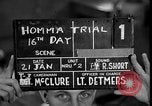
Major Tisdell recalls events of April 8, 1942 in Bataan, Philippines during the Homma trial in Manila, Philippines.
U.S. Army Major Achille C. Tisdell testifies before a military tribunal in Manila, Philippines during the trail of Japanese Army General Masaharu Homma for World War II crimes. Major Tisdell takes an oath on the 16th day of the Homma trial. He says that he was aide-de-camp to Major General E.P. King, Commanding General of the American forces in Luzon in April, 1942. Major Tisdell recalls that Japanese forces had pushed back the American forces in Bataan to a point that it was difficult for the Americans to reorganize. He also talks about the lack of ration for the American forces. Major Tisdell says that U.S. reserves were released for the forces. He says that on 9th April, 1942 General King was unable to make contact with Japanese commander and Colonel Edward C. Williams volunteered to make contact with the Japanese.
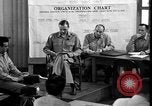
Major Tisdell talks about American surrender to the Japanese in 1942 during trial of General Hommal in Manila, Phillipines.
U.S. Army Major Achille C. Tisdell testifies before a military tribunal in Manila, Philippines during the trial of Japanese Army General Masaharu Homma for World War II crimes. Major Tisdell, aide-de-camp to Commanding General of the American forces in Luzon Major General Edward King, says that Colonel William and Major Marshall went in a jeep to contact the Japanese forces. They met the forces at a bridge. Japanese infantry elements led them to head quarters. Tisdell says that a Japanese Major General kept Colonel Williams as a hostage allowing Major Marshal to return to the American headquarters. After his return on April 9, 1942 General Edward King assembled some officers.
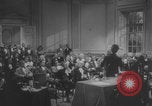
Filipino citizens after United States occupation of Philippines
Dramatization of the Second Continental Congress during the American Revolutionary War. The United States Declaration of Independence. The Thomas Jefferson Memorial (16 E Basin Dr SW, Washington, DC 20242, United States) in Washington DC. Bronze statue of Thomas Jefferson. The statue of United States President Abraham Lincoln at the Lincoln Memorial (2 Lincoln Memorial Cir NW, Washington, DC 20002). President Woodrow Wilson meets European leaders in France after World War I. Artistic depiction of United States soldiers fighting in the Spanish-American War. Map showing the Philippines, one of the two territories acquired by the United States after the Spanish-American War. Filipino students attend a class. They listen to the teacher standing in front of them. Behind the teacher are two blackboards. Two American consultants working with a Filipino man at the Manila City Planning. A scale model of Manila. Men constructing a house in the Philippines. Filipino men carry an entire native Kubo nipa house as a form of “Bayanihan”. A parade in Manila in 1946. The United States grants independence to the Philippines on July 4, 1946. Paul V. McNutt, High Commissioner to the Philippines, reads a proclamation at the ceremony held at the Independence Grandstand in front of the Rizal Monument. Filipino women wearing traditional Filipiniana dresses attend the ceremony. The United States flag is lowered as the Philippine flag is raised.
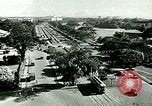
Agricultural and trade being carried out in the Philippines.
A film about events leading up to the independence of the Philippines and the life of people thereafter. Traffic in Escolta business district in Manila, Philippines. San Sebastian Cathedral (Pasaje del Carmen St, Quiapo, Manila, 1001 Metro Manila) in Quiapo district, Manila. Huts in a village. Men work in a paddy field. A Filipino landowner with his family. Farmers plow a field with the aid of carabao buffalo or ox drawn plow. Cane sugar loaded on a railroad car being transported. Filipinos work on cane in a field. Filipino farmers work in an abaca field to obtain Manila hemp or abaca. Abaca being processed to obtain hemp. A rope being made from abaca hemp in a factory. The rope being rolled out of the factory. Ores of chromite and gold being transported in containers. Workers at a gold mine. People at the Manila Stock Exchange. Exports being loaded onto merchant ships at a port.
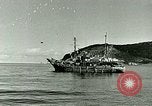
A diver gets underwater and recovers Filipino currency in the Philippines (WW2)
A film about events leading up to the independence of the Philippines. A boat underway off the coast of Manila Bay, Manila, Philippines. A diver puts on a mask aboard the boat. The diver being lowered into the water to search for coins part of the Philippine Commonwealth treasury before World War II. The diver underwater. A heap of Commonwealth period Philippine Peso coins.