


 Francais
 Deutsch
 Italiano

Refine Your Search
+"Soviet Union" +1941 stock footage and images
- Showing 13 to 18 of 157 results more
 Hide
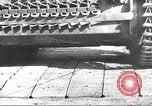
German invasion of Soviet Union (Operation Barbarossa) in Belarus during World War II.
Operation Barbarossa, the German invasion of the Soviet Union during World War II. Panzergruppe Guderian operating in Belarus (Each vehicle displays a white "G" on its fender.) . Closeups of tracks on German Panzerkampfwagen II (Sd.Kfz. 121) tanks rolling across a wooden bridge.Views flip back and forth between the full views of tanks and of their tracks and wheels. A German soldier rides on the tank gun in one view. The tanks including, Panzerkampfwagen (Sd/Lfz/141/1 Pz.Kpfw III Ausf.L), speeding along a dirt road, accompanied by half-tracks armed with antiaircraft guns (SdKfz Flakwagen). One also tows a field piece..One of the half-tracks is protected by logs and sandbags. The German column passes a knocked out smoking Soviet BT tank at the side of the road. Soldiers on motorcycles and a covered German 15cm Kanone are also seen. More views of the advancing armor column. View from a German invasion vehicle crossing an alternate bridge over a river, on their way to Grodno. (A destroyed bridge is in background.) Next, the city of Grodno (or Hrodna) is seen in a broad view from a bridge on the near bank of the Nieman (or Nyomen or Newman) River on June 23, 1941. Smoke rises from the city, across the river. German armor and vehicles move across the bridge German infantry enters the city past burning buildings.
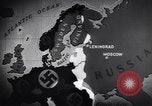
German Operation Barbarossa on the Eastern front in World War II
Animated map shows extent of German controlled areas in Europe following their conquest of the Balkans in World War 2. Norway is under their control and German forces threaten Leningrad and Moscow. A soviet defense line is shown on the map. The German attack is shown to come from 5 directions on June 22, 1941, with the launch of German Operation Barbarossa. A sky filled with German Heinkel He 111 bombers is shown. German Panzer III tanks with 75 mm guns. Army trucks carry German troops into battle. German soldiers on motor cycles and infantry advance under fire. Animated map shows principal German targets as Leningrad, Moscow, and Kiev. It then shows beginning a drive from the North to encircle Leningrad. Arrows show where German Marshal Fedor von Bock's forces drove 480 miles into Soviet territory. Slates identify cities being overrun by German invaders, including: Pskov, Novgorod, Brest-litovsk, Minsk,Mogilev, and Vitebsk. On July 17, 1941, a German tank is seen entering Smolensk, past the Dnieper River threatening Moscow, itself. To the south, German forces, under Marshal Gerd von Rundstedt, cut deep into the Ukraine. Newspapers world-wide consider the Soviet forces close to defeat. Slate shows communique from the German High Command stating: "The issue in the East is already settled. Smolensk is the last halt on the road to Moscow." German infantry marching. Scene shifts to heavy artillery being fired by Soviet forces in a snowy scene clearly later in the year. Animated map shows German forces very close to Moscow on October 15, 1941, forcing the Soviet Government and all foreign missions to move to Kuibyshev, 700 miles to the east. Adolf Hitler, in a speech on October 3, 1941, states that the enemy is broken and will never rise again. Animated map shows 500 thousand square miles of Soviet territory occupied by German forces. Views of fires burning in Russia. Damaged and abandoned Soviet industrial plants. A German guard atop a hill looks down on thousands of Soviet people in the occupied areas of Russia. Damaged and abandoned Soviet T-26 tanks. Glimpse of damaged Soviet aircraft and field artillery. Headline in New York World Telegram newspaper reads: "Berlin Admits Russ War May Last Winter." Another headline reads: "Red Army Holds Push On Moscow." Weary German soldiers traveling in horse-drawn wagons, pulling field artillery. Soviet and German war planners are seen at work. Slate quotes Adolf Hitler saying: "A single blow must destroy the enemy, without regard for losses... A gigantic all-destroying blow." German armor moving along a road. Animated map shows this technique in the German invasions of Poland, France, the Balkans, and Yugoslavia. In contrast, the Soviet planners are seen, as map illustrates how they intend to take advantage of the vast area of their land by holding lines of defense an falling back as necessary to keep engaging the invaders across interior of the Soviet Union. Soviet infantry are seen marching along a road. German troops riding atop their tanks. Soviet troops forcing German invaders into close combat in her cities. Soviet soldiers running in a city and firing heavy machine guns. Bomb damage and rubble inhibit German armor mobility in cities. Cities where this kind of Soviet resistance prevailed were: Rostov, Kharkov, Kiev, Kursk, Smolensk. German troops leaving a city with heavy black smoke rising in the background. More views of cities where Soviet troops are engaged German forces in House-to-house battles, including: Odessa, where the Old Opera Theater building is shown sandbagged and relatively undamaged. The Odessa NI tank, created from an STZ-3 agricultural tractor.
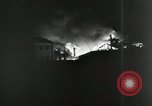
Buildings and infrastructure burned during the invasion of the Soviet Union by Nazi Germany (WW2)
Houses, factories and buildings on fire before the arrival of advancing Nazi German troops in Ukraine during Operation Barbarossa of World War II. People set flames to their fields, houses, so that it does not fall into hands of enemy. Soviet troops dynamite dams and hydro power plants to halt German advance in December 1941.
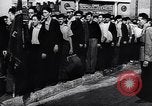
Soviets mobilize for war on the home front during the German invasion of Russia in World War II
A huge number of local men, volunteering to join the Red Army, are seen parading (in civilian clothes) through a Soviet town, in 1941, during time of the World War 2 German invasion of the Soviet Union, known as Operation Barbarossa. Men lined up at an outdoor recruiting station where Army officers and a clerk are seated at a table. View of a man signing his name and date of birth a sheet of paper. Next, he shakes hands with all the recruiters. Next, recruits are seen walking in loose formation. They are still in civilian clothes, but carry sacks with their first government- issued belongings. Change of scene shows workers in a factory and miners working in a coal mine. they use a machine driven conveyor to move chunks of coal from the mine. Scientists at work. The man at extreme right is Soviet Nobel Laureate Physicist, Pyotr Leonidovich Kapitsa (Peter Kapitza). He heads the Department of Oxygen Industry. attached to the USSR Council of Ministers. Oxygen bubbles in a scientific glass device. Several views of fiery molten steel flowing in a steel mill. Older retired man back at work in a machine shop, operating a milling machine, to help the war effort. A man using calipers as he instructs a woman in a machine shop. Closeups of a young women working on various machines in the shop so they can become war production workers. One woman at a lathe stops to inspect a piece of turned steel she is making. A man hot forging a part on a drop forge. A woman monitoring machinery controlling the forge. Women from rural areas in the Ukraine attend a class to learn about tractors and farm work that they will take over with men away at war. Instructor using a large illustration to explain parts of a tractor. One of the women manipulates a tractor part. Another adjusts a carburetor. One closes the side hood of a tractor. One woman gets behind the wheel of a tractor, learning how to drive it for the first time. Her instructor manipulates its gears as they drive it forward. A line of school children walks in a village with their teachers. Next, the girls are seen cultivating crops on a truck farm, and the boys are seen working in a wheat field. Three boys are assigned "Sentry Duty" and climb wooden towers to maintain lookout for invading German paratroops, enemy aircraft, or other forces. An older man performing similar duties on a rooftop in a village. Another man on the lookout atop a wooden tower. An old man with a rifle on the lookout. Another man holding a rifle in a wheat field.
Various scenes of Soviet Forces headed toward the Eastern front and engaging German forces in counter attacks (WW2)
Film opens showing heavy artillery firing at nighttime. Marshal of the Soviet Union, and Chief of the Soviet General Staff, Aleksandr Mikhaylovich Vasilevsky, is seen alone in a room, reviewing a map. He uses a pair of dividers to make a measurement. Next, antiaircraft guns fire at night, as many searchlights point up in the night sky. A view of the Kremlin. A formation of Cossack cavalry crossing a bridge in winter. Snow on the bridge and surrounding area. A formation of soviet troops,dressed in cold weather gear, marches single-file across snow and ice. Soviet Army tractors towing 152mm howitzer field guns on a snowy road. A contingent of Soviet soldiers, in white helmets, marching toward the front, in the snow, followed by some horse-drawn equipment on sleighs or sleds. Artillery tractor towing a 152mm howitzer field gun. Open trucks carrying Soviet solders. More views of Soviet troops headed to the front, in the snow, passing residential buildings on the way. Soviet soldier looking through binoculars as German Junkers 88 bombers fly overhead. Soviet gunners employing several different types of antiaircraft guns. A Soviet armored car moving across the snow, and a tank destroyer moving near woods. A downed German bomber with dead crew member lying in the snow, nearby. Soviet pilots on a flight line looking over their orders. A line of fighter planes is parked on the snow in the background, including Lavochkin-Gorbunov-Gudkov LaGG-3 and other aircraft. Soviet airman in gunner's canopy on a bomber. Bombs being loaded and fused aboard Soviet bomber. Machine gun belt ammunition being loaded on an Ilyushin IL 4 aircraft. A flight line of IL 4 bombers parked in the snow. Two Soviet Petlyakov Pe-2 dive bombers in formation. Bombs falling through the air and exploding on snowy targets below. More Pe-2 bombers and bombs falling. View from underneath an artillery spotters balloon as it is retrieved by Soviet soldiers. Views of various pieces of Soviet artillery in the snow. Slate announces "December 6, 1941, Moscow strikes back!" (during Battle of Moscow in World War II). Various views of Soviet artillery being fired and shells exploding. Glimpse of the artillery spotter and balloon. A soldier lying frozen in the snow. Countless scenes of all kinds of Soviet artillery firing from various places interspersed with views of mounted Cossacks moving along a snowy trail in a wooded area. Soviet troops heading to tanks and other armor, hidden in the woods. They climb aboard them. Senior Soviet officers confer in the field. Air crews boarding IL 4 bomber aircraft and starting engines. Bombs exploding. Tanks moving. (One knocks down a tree.) The bombers taking off. Soviet soldiers watching.
Soviet forces demonstrating their prowess and weapons in 1941 during World War II
After credits, opening slate refers to the battle front of the future, battles of the Motherland. Opening action shows a Tupolev SB-2 Katyushka bomber taking off on a grassy field. Momentary glimpse of the nose of a Mig-1 with engine running. Then a stubby Polikarpov I-153 biwing aircraft takes off. Two of them are seen in flight overhead, and then several more. Scene shifts to some captured German prisoners of war being escorted by Soviet armed guards. Troops and more prisoners walk down gang planks from a large flat river barge. A T-26 tank sits overlooking the barge as its occupants depart under guard. Scene shifts to an advanced model T-26 Soviet tank moving across a field. Another is also moving in the background. Other tanks move past the camera, through sand, and past trees. A Soviet BT-5 tank speeds past the camera. Soviet troops firing Quad-mounted PM M1910 Maxim machine guns as antiaircraft weapon. Other antiaircraft weapons firing at a German Bf 109 aircraft in flight overhead. Aerial view of a German Stuka Dive Bomber (Ju-87). Soviet gunners firing a camouflaged 85 mm M1939 (52-K) anti-aircraft gun. A German Bf 109 fighter aircraft turns and makes a gentle dive . Next, a burning aircraft is seen plummeting to earth. A large explosion. Two 85mm antiaircraft gins firing. More German aircraft are seen and another one is shot down. Several early ,model Soviet T-26 light infantry tanks run in formation over sharply rolling hills in what appears to be a testing or demonstration ground. several explosions occur near them as they move. Field artillery firing from concealed positions in woods. A tree is felled by shelling and an explosion nearby raises huge clods of earth. Soviet infantry charge through barbed wire. One soldier carries a mine detector. Soviet troops charge through woods. Several German prisoners of war are taken. Numerous German prisoners seated on the ground in an open field.