


 Francais
 Deutsch
 Italiano
Refine Your Search
+"United States" +1945 stock footage and images
- Showing 37 to 42 of 2149 results more
more Hide
Hide
Trinity test - the first ever Atomic bomb tested in Alamogordo New Mexico, United States.
Shows the first atomic bomb explosion in history, on July 16, 1945, resulting from the work of the Manhattan Project. Atomic bomb tested at an experimental station in New Mexico, United States. Bomb explodes and a mushroom cloud forms, seen from cameras 6 miles away. Smoke and fire emerges. (World War II period).
United States soldiers in combat with Japanese forces in towns and in city of Manila, Philippines (WW2)
Street fighting in Asia during World War II (Pacific Theater). Republic P-47 Thunderbolt fighter takes off from field. P-47 fighters dive bombing Japanese-occupied towns as American infantry squads advance in battle-scarred town. The U.S. soldiers employ rifles, bazookas, rifle grenades, hand grenades, and flame throwers (which destroy wood and other lightly constructed buildings). Americans advance under fire from Japanese snipers and return fire. United States soldiers use flamethrowers on wooden houses. A dead Japanese sniper in rubble of building. A Japanese soldier running to surrender, carrying a white flag. A staged exercise in a Burmese village, to demonstrate proper techniques for combating occupying enemy in such a setting. Huts and building in village. Soldier signals other soldiers. Two persons acting as Japanese soldiers inside a building. American soldiers wade through water. Acting Japanese soldier walks to the river side with an empty bucket. American soldier attacks the acting Japanese soldier from behind. Views of various Japanese cities, like Tokyo, Yokohama and Nagoya. Traffic with pedestrians on road. Smoke arising from U.S. artillery shelling of Manila. U.S. Army artillery battery firing field pieces at targets in Manila. Smoke in the streets during the 1945 Battle of Manila. U.S. Soldiers advance through burning Filipino buildings. They advance in groups. U.S. soldiers firing in streets and helping wounded soldier to cross street in front of the import-export business Levy & Blum Inc (345 Echague, Quiapo, Manila, Philippines). They take cover behind rubble. Soldiers engage in street fighting against the Japanese in front of boarded store in Ongpin street, Binondo (Manila Chinatown district). Troops pass by a wrecked building. U.S. soldiers gathered around a chart. They fire gun from hole in wall. Soldiers check houses for booby-traps. Soldier at window of building. Tanks and troops advance. Smoke screen in street. Soldier talks into radio. Captured Japanese march under guard.
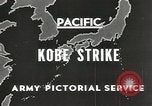
United States B-29 bombers drop incendiary bombs over Kobe, Japan
"Kobe strike" shows United States B-29 bomber aicraft dropping 3200 tons of incendiary bombs over industrial targets in Kobe, Japan during World War 2. Firebombing causes pillars of smoke to rise up. Narrator speaks of strikes on other Japanese cities also and relates statement by General Arnold that beginning July 1945, industrial Japan will be hit by bombs at the rate of 2 million tons per year, or 5480 tons per day, adding that "by the end of 1946, Japan will have ceased to exist as a bombing target."
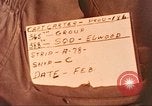
United States Army Air Force 365th Fighter Group strafe German held positions during World War II.
United States Army Air Force 365th Fighter Group over German held targets in February 1945. Aerial view of smoke rising from bombed buildings on the ground. View of green fields. A bomb damaged building.
Views of the United States. Farms, cities, highways, and beaches. Destruction in Japan by atomic bomb. U.S. infantry in combat
Farmers harvesting grain and corn with machinery on American farms with a narrow tractor harvester. Steel mills and heavy industry and cargo railroads in the United States. Industrial views with smokestacks releasing much smoke and smog (also pollution scenes). Scenes of New York City with busy streets filled with cars, buses, and truck traffic, together with pedestrians. Many varied 1940s and 1950s cars on the roads. Elevated and also aerial views of U.S. highway networks busy with 1940s and 1950s cars. Views of Jones Beach, on Long Island, New York. Scenes of destruction in Japan from the atomic bomb, with sweeping views of destroyed city in Hiroshima or Nagasaki circa 1945 or 1946. U.S. Army infantrymen engaged in house-to-house fighting in Europe during World War II, firing rifles and moving between points of cover in a city filled with rubble.
The Signal Corps recruits being trained and study communication equipment in the United States.
A U.S. military training film titled "Pro Patria Vigilans" on the wartime and peacetime activities of the U.S. Signal Corps. United States Army General Douglas MacArthur aboard the U.S. Army Battleship USS Missouri during the Japanese surrender ceremonies of World War 2 in 1945. General MacArthur speaking on board the ship at the closing of the surrender proceedings. Aircraft flying in formation overhead. Antiaircraft guns directed towards the aircraft. Signal Corps recruits train at Fort Monmouth, New Jersey. The recruits dive and swim across water. The soldiers attend lecture by an officer. A sign reads: 'Field Radio Course'. Men working in the radio room are trained. Views of soldiers learning to operate radar. Various radar dishes. Closeup views of radar screens. An officer training the soldiers with the help of a model. The coastal defense training of the soldiers. The soldiers study the communication equipment. Soldiers working on communication switchboard equipment, telegraph, and teletype machines. A small messenger aircraft takes off and lands near the message center. A sign outside the building reads: 'Master Message Center'. Soldiers receive a map and clear it through the message center. Spinning equipment in the message center (possibly related to decoding or encryption). Officers seated at a desk, discussing a map.